MIL-GAC
The 1000 and one of the 1000
Barcelona, May 2025
From the 2014 edition (Ed. La Malcría)
Circular From Ed. Mayo 37 (1972)
Radicalization of the Class Struggle
ARMED AGITATION: A RADICAL DEMAND OF THE WORKERS’ MOVEMENT
Self-Dissolution of the Military-Political Organization Called M.I.L. (1973)
Robbers or Revolutionaries? (1973)
Gangsters or Revolutionaries? (1974)
A Critical Analysis and a Critique of Analysis (1975)
A Theory of Critique and a Critique of Theory. (1975)
On Some Exercises of Subversive Practice at an International Level (1975)
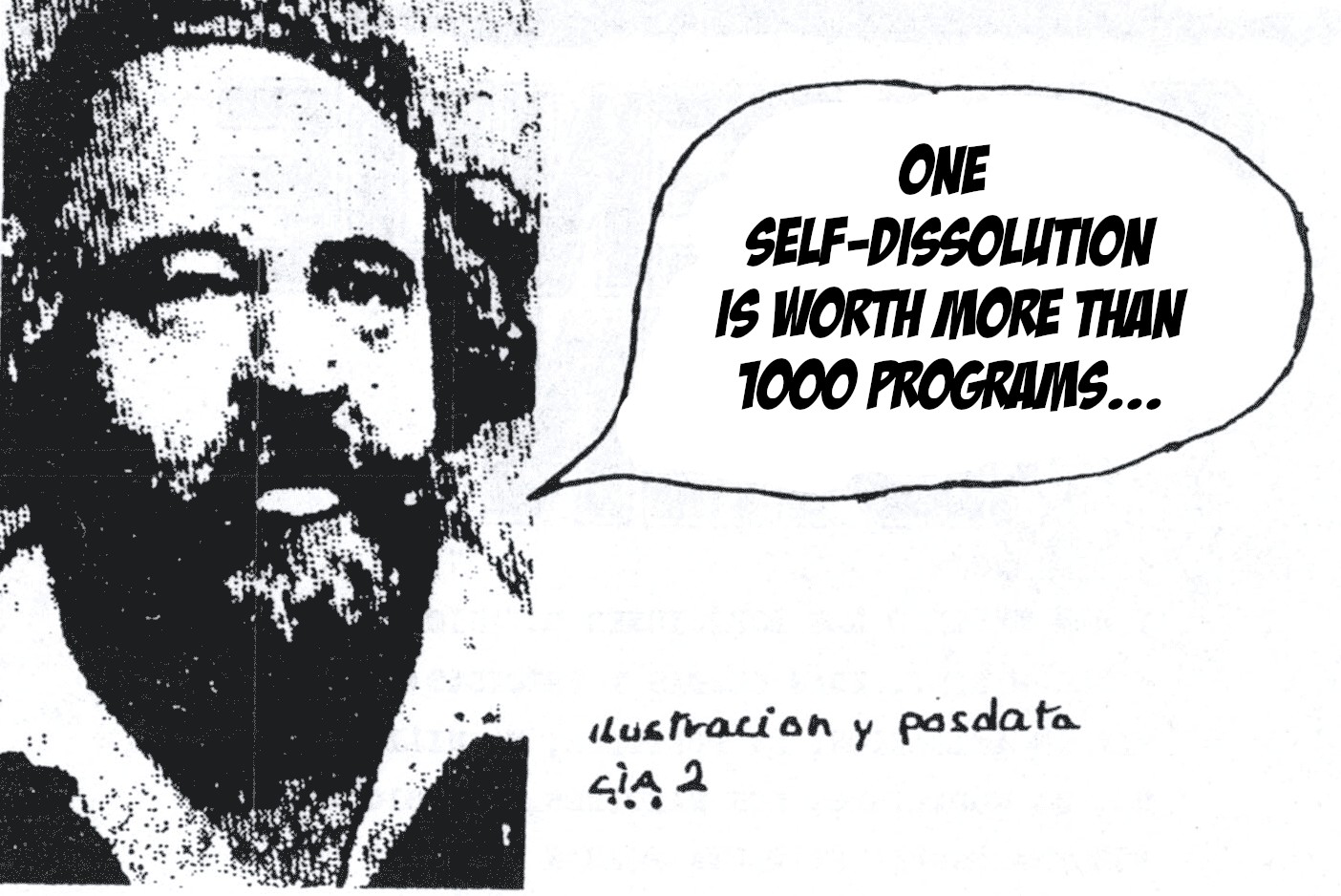
Today marks the 77th anniversary of the birth of Salvador Puig Antich, a militant of the revolutionary communist group MIL-GAC [Iberian Movement of Liberation–Autonomous Combat Groups] who at the tender age of 25, tragically earned the international fame of being one of the last people executed by garrotte by the hands of the the spanish State on the 2nd of March, 1974.
Though it was in fact quite small, the MIL-GAC was probably the most theoretically advanced revolutionary group in the peninsula at that time. While their political positions were informed by the historical dutch-german and italian Communist Left, they were also in close proximity and collaboration with the french “ultra-left” milieu grouped around La Vieille Taupe, and made ample use of fresh propaganda tactics such as detournement popularized by the Situationist International.
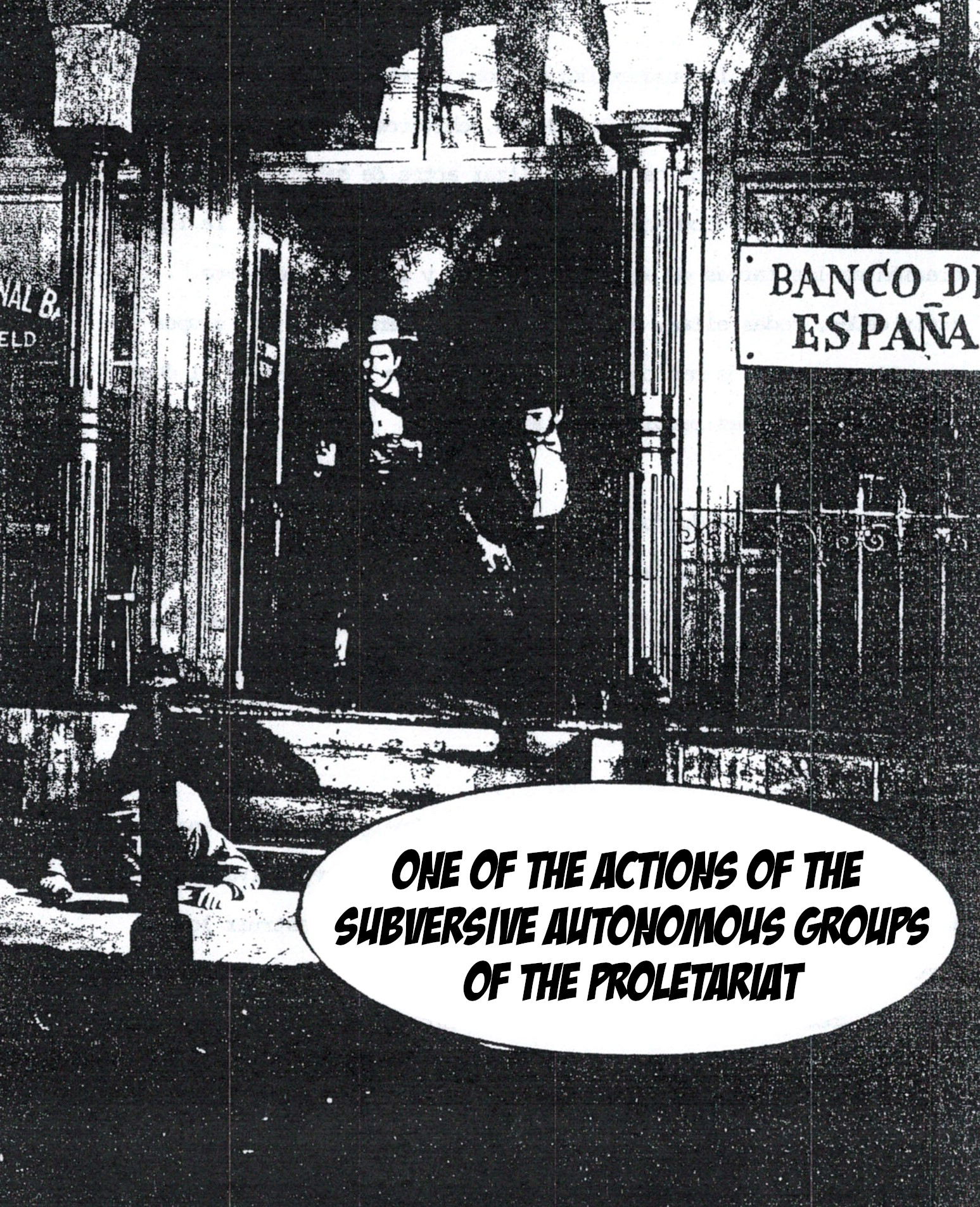
Their practice of armed agitation, bank robberies and hold-ups, etc. was carried out with the aim of supporting workers’ struggles such as wildcat strikes, as well as funding the publication and distribution of both historical and original theoretical texts and revolutionary balances of the contemporary struggles in the region, under the name Ed. Mayo ‘37.
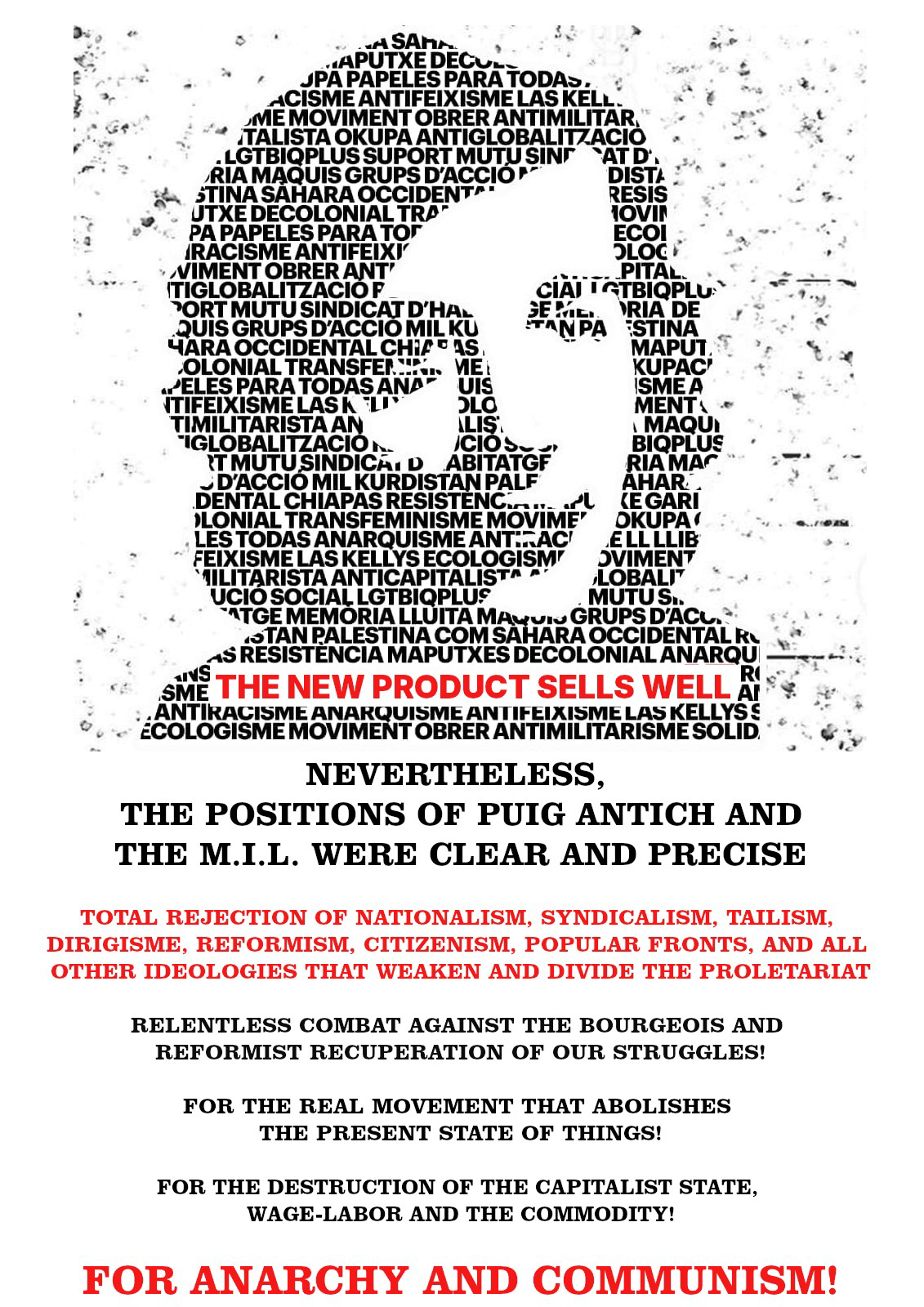
Sadly, although Salvador is commemorated each year as a victim of the Francoist regime by various groups, ranging from bourgeois Catalan nationalists and democratic liberals to anarcho-syndicalists, the militant revolutionary positions he died for have been woefully glossed over, neglected, obfuscated, or distorted. His image is used shamefully to promote the very ideologies that the MIL frontally opposed with unrelenting ruthless critique.
For this reason, we have decided to return from a long hiatus in order to publish the first english translation of the pamphlet “Las 1000 y una del 1000” originally published in 1984, recompiling texts from the MIL-GAC and its immediate milieu.
The texts speak for themselves. Though over 50 years have passed since their original publication, their sharp insights and radical postures are just as applicable under the conditions of today, and we hope that this contribution will help to inform and inspire new generations of revolutionaries to take up the arm of critique and the armed critique, in the measure of which the conditions of the class struggle demand.
Editor’s Note
This publication was translated and adapted from the spanish edition published by our dear friends at Ed. La Malcría (2014). Every effort has been made to preserve the general format of that edition including translated reproductions of the graphic material therein.
Wherever possible corrections have been made through comparison with more recent re-publications, such as those from the now defunct website mil-gac.info (2007) and the recompilation of selected texts published online by Ed. Inter-Communistas (2017).
Nevertheless, at the time of printing it wasn’t possible to fully confirm the integrity of the following texts:
-
“Circular from Ed. Mayo 37 (1972)
-
“1000… or 10,000…”
and consequently a few obvious errors have been either omitted (marked by “[…]”) or corrected and translated using pure guesswork (marked in brackets). As such it is recommended that any reference to or re-publication of that material be accompanied by a disclaimer, keeping this fact in mind.
Feel free to contact us about possible errors, to submit corrections, feedback, etc.
malcontent.editions@riseup.net
Malcontent Editions
May, 2025
malcontent.noblogs org
From the 2014 edition (Ed. La Malcría)
This pamphlet contains texts directly linked to the MIL, between 1973–75. The sources are:
-
C.I.A. (International Anarchist Conspiracy), Ediciónes MAYO 37, and C.O.Ñ.O.
-
C.I.A. was published by M.I.L-G.A.C. and Ed. MAYO 37 by some of its members, and C.O.Ñ.O. was published by people in conceptual affinity with them.
For our part as La Malcría we have simply dedicated ourselves to redoing the layout after the scanning of a libretto which was in bad conditions of conservation.
Circular From Ed. Mayo 37 (1972)
It can be affirmed that the traditional forms of the framing of the proletariat have entered into a manifest crisis. Otherwise, it would be impossible to understand autonomous Factory Committees with the “official” committees, the proliferation of completely (and often in open contradiction represented by the most reformist and counterrevolutionary sectors of the C.C.O.O.), which arose during the development of the most recent workers’ struggles in Catalonia, especially in the conflict of the enterprises Elsa and Solvay (which spurred on a “solidarity” strike of more than 18,000 workers of Baix Llobregat), during which they brought into play, despite their material limitations (leaflets, contacts with other enterprises) a broad sense of self-organization and a clear takingup of revolutionary consciousness (so clear that the dirigiste reprimands, and their appendices ocular and “vanguardist” groups, had no other remedy than to show the “masses” their true face: attempts at organization, control of appointments and contacts, pacts with the employers, conversations in the union while the strikers clashed with the police, concessions to the bourgeoisie and, finally, the complete paralysis of the struggle).
The Workers’ Movement’s will for self-organization not only manifests its refusal to submit to reformist political leaderships, but also its rejection of their programs, their reformist political content; in short: its refusal to integrate into the old forms of the framework of capital (trade unions, the Communist Party, etc.) that offer as the only exit reformism that [reinforces] the counterrevolution.
In the same way, it radically rejected attempts by small groups and “vanguards” to take over the leadership that reformist organizations are being overwhelmed by.
These small groups, in their understood that the failure of consisted of “bad leadership,” tailist opportunism, have not yet traditional organizations has not but rather that the place they occupied as “political leadership” is disappearing as such within the Workers’ Movement, and that, from now on, it is not a question of electing a “good” leadership, but rather completely eliminating the division between leaders and within the Workers’ Movement.
This “new” content of the executors, breaking the hierarchy Workers’ Movement is becoming generalized, organized, and clearly and concisely setting forth the general conditions that characterize it. In its daily struggle against Capital and the bureaucracies, the working class is becoming clearly aware of objectives. At every step of meaning of the centuries-old its situation and delimiting its the Workers’ Movement the radical phrase “the emancipation of the workers is the task of the workers themselves” is being retaken. We believe we can summarize in the following four points the most pronounced general conditions that deeply characterize what the workers’ struggles of recent years suggest:
-
radicalization of the Workers’ Movement in all its aspects (generalization of the use of violence, extension of the content of the struggle to all the repressive aspects of society...).
-
an ever wider break with the Workers’ Movement dirigiste tendencies within the
-
progressive development of the level of political consciousness, understood as the creation by revolutionary consciousness, an the Workers’ Movement of its own attempt at resolution of its own problems posed by its own development, etc.
-
a marked attempt at self-organization at all levels: breaking the dependency on the technical level of the reformists of the C.C.O.O. (machine, contacts,...) and on the ideological level, etc. Taking into account, then, the current state of the development of the workers’ movement, according to the position we have just expressed above, we can now move on to defining the minimum objectives we seek with these publications. [...] For us, theoretical and political objectives do not exist independently of one another, but, on the contrary, are dynamically related: in such a way that reformist theoretical objectives can only lead to reformist political practice, and vice versa. With this clarification, we are in conditions to move on to developing the topic at hand.
Theoretical Objectives
-
We intend to lay bare the communist practice of the proletariat throughout all its past and present struggles. And this, evidently, not only by means of texts that refer to the history of the revolution and which remain completely unpublished for the spanish proletariat (censored already by Capital, now by the stalinist bureaucracy), but also by means of those texts which, under the form of theory, the revolutionary achievements of the worldwide proletariat remain systemized, and which in some way, have either been hidden and disparaged, or have been suspiciously distorted.
-
In such a way to accomplish annihilating every kind of mystification surrounding the Capital, from [...] stalinism, [or revolution (be it coming from any other] kind of bureaucracy), ripping out the radical content that can be found underneath any revolutionary struggle, and sending the revolutionary MYTHS that maintain the new exploiters (“the traditional organizations”) to the dung-heap of History. It’s not simply a matter of putting a series of “explosive” texts within reach of the revolutionary nuclei, but rather, fundamentally, of knowing how to use them as a political weapon. It must be known that at a certain moment, stemming from the contradictions of Capital and from the position of the Revolutionary Movement, it’s possible to convert a political weapon, and in this case, a clandestine, non-legal distribution. It’s not enough to publish a book, and nothing more, in order to learn a theoretic struggle ; it’s necessary to know what book and why, to whom it will be distributed, and what will be used as the channel of distribution...
-
For us, theory is not just one more facet of the Revolutionary Movement, but it is inseparable from it, in such a way that every step forward that the Revolutionary Movement makes corresponds to a new theoretical exposition, a restructuring at all levels, opening up a whole series of possibilities which were unthinkable on the step that just came before it.
So, by the conditions in which the Workers’ Movement finds itself currently in Catalonia, we believe that it’s no longer a possibility, but a necessity to elaborate such a radical critique capable of “filling” the theoretical void which the practice of this very Movement makes evident, to supply it with the necessary elements for the rupture with reformism and the different “vanguardisms” to be realized in its totality, and to continue to reach a strategy (theoretic, political and organizational) which will solidify and generalize the practical achievements realized by the Movement.
-
For that it is necessary not to forget that it’s the Real Movement which opens up its possibilities and which corresponds to the same task of meeting them. Either we participate actively in the construction and in the functioning of the Movement, or we turn into one more sectarian chapel out of the many that exist and which we try to combat… For us it’s not a matter of indoctrinating, but of clarifying and elucidating real conditions, and the first of them is our own relation to the Real Movement.
-
There exists, on the other hand, a whole series of themes so minor in our country, that they appear to be condemned to indifference or to specialization, but they now radically affect not only the conditions in which currently the class struggle is resolved, but directly the evidences laid out by the development of the Communist Revolution. Namely, Urban Development (although it would appear to be addressed by those involved in Neighborhood struggles, they don’t do so in a radical way), Art, Sexuality, Science, and a long et cetera… We believe that any strategic option which intends to be revolutionary must refer to the totality of the social facets, and must not dedicate itself exclusively to the meticulous elaboration of the “workshop” strategy. We must not forget that Capital is, above all, the totality of social relations.
-
Moving forward, then, we intend for Theory to be never again the POSSESSION of a “Truth”, of a “knowledge” which is presented in front of us, and which is necessary to possess (“and according to the proposals in use the only way to do them is by means of the theory”) but rather an EXPRESSION of a real movement which is developed in front of us and to which, it appears, we form a part. To limit oneself to possessing “the Truth” is to do no more than cling voluntarily to the circle of western rationalist philosophy, to integrate political activity with the program of Capital.
Political Objectives
-
Integration of the publications into the entirety of the revolutionary movement in Catalonia and in the rest of the zones of the spanish State. Creation of a distribution infrastructure to be as wide as possible, generalizing contact and participation with the revolutionary nuclei. 2.- Contribution on all levels to the development of a radical critique of all aspects of society, using the means which are necessary in each case. Evidently this contribution cannot remain mere theoretic participation and support, but the political and organizational aspects must also be received. This is to say: the contribution to the the creation of an “open” strategy which has as its objective the destruction of the existing relations of production, distribution and consumption and the realization of the communist revolution.
-
To reinforce, in the measure which is possible, the autonomist tendency of the Workers’ Movement. “directorates” in the bosom of integration of the Movement into the Put an end to the myth of the Movement, breaking the program of Capital, and its “dependency” in respect to whatever kind of dirigisme. Fight for the generalization and extension of radicalization. theoretical and practical
-
“Accelerate” the symbol of the class struggle, clarifying past experiences and the current practice of the struggle.
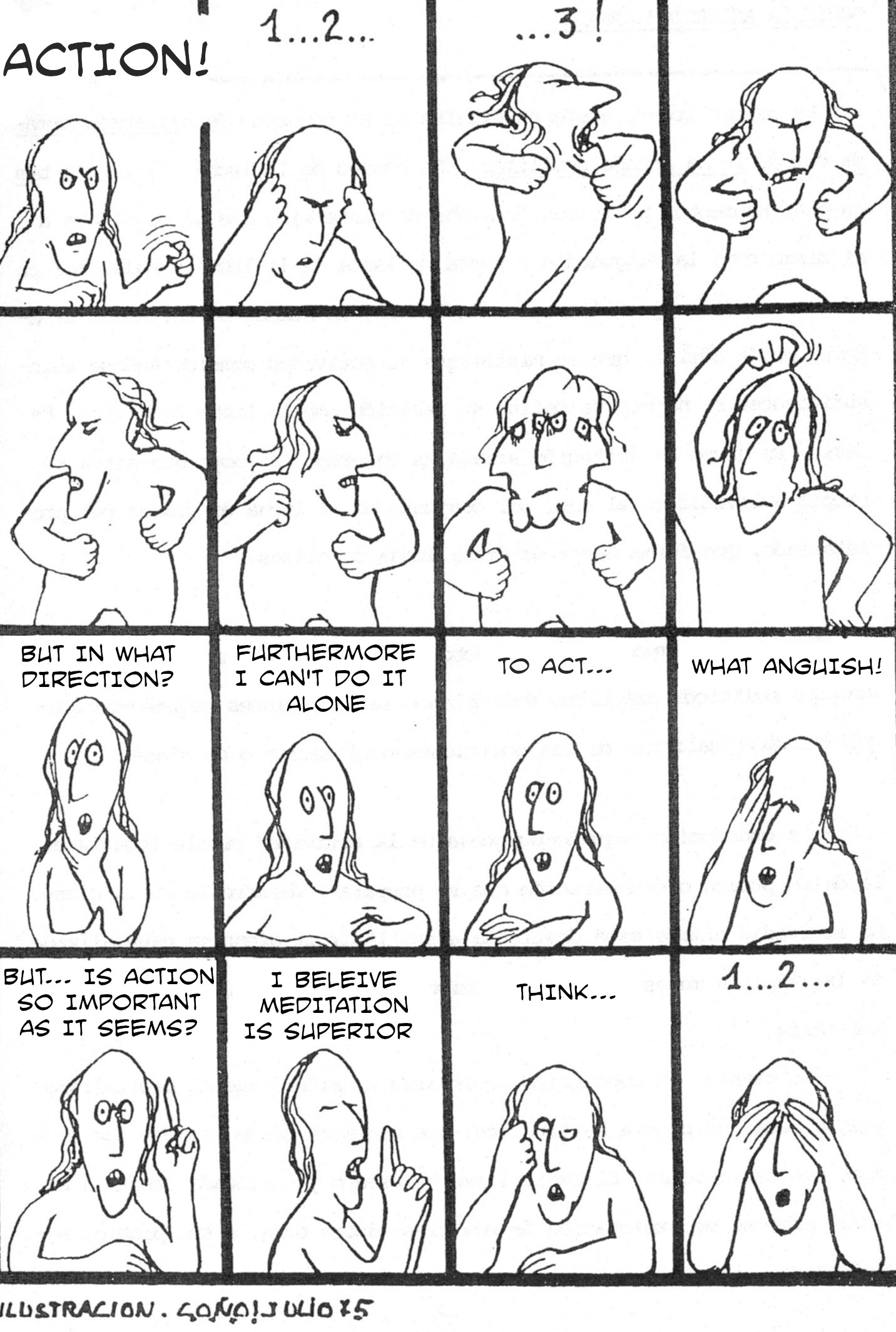
On Armed Agitation (1973)
Firstly, we want to distinguish the concept of armed agitation from that of armed struggle or military struggle. A nucleus of military struggle doesn’t seek political approaches towards class struggle, but rather considers itself to be the vanguard or launching point of the struggle, and as such finds all justification within itself.
In contrast, a nucleus of armed agitation can’t allow for its activity to become mystified by considering themselves to be selfsufficient, but rather it defines its relationship with the class struggle. Meaning, a group of armed agitation is a support group which situates its own activity in the heart of the entirety of the class struggle of the proletariat, which forms a part of that class struggle. This is very important for us since it implies some practical political approaches delimiting petty-bourgeois or individualist positions from proletarian or class positions. — The petty-bourgeois conception of revolutionary activity is that of a putsch or a conspiracy which is prepared and developed within the class. Armed activity is destined to substitute the generalized offensive of the broad masses, and the final insurrection is substituted by an always minoritarian struggle. – In contrast, the proletarian conception considers that capitalism advances towards its own destruction, that it has always engendered its own contradiction.
In the process of the exploitation of one class by another, capitalism has created and unified against itself its own gravediggers, the proletariat. This is not to say that the workers’ struggles don’t present a whole series of limitations: very limited revindications, a firm wall of repression which they bang up against, weakness and isolation of the struggles. The workers’ struggles must move from the defensive to the offensive, from peaceful revindications to the violent and relentless struggle, from spontaneous outbursts to the organization of that spontaneity. All of this isn’t easy. Nevertheless, the results achieved in this direction are increasingly greater and the revolution sees its forecasts confirmed: the emancipation of the workers will be the task of the workers themselves. In short, armed agitation is considered and effectively constitutes itself as one of the facets or aspects of the proletarian class struggle from the current level up to that of the general insurrection to which it inclines. By means of its practice of necessarily limited actions, armed agitation shows that the level of violence at which it’s possible to act here and now, and therefore at which it must act, is far superior to that which had been generally believed.
Agitation marks the direction of the class struggle of the broad masses, helping them to orient themselves, radicalize and advance with an increasing firmness. At the same time, the concrete objectives of this agitation also serve a function of support for the struggle of the masses. Ultimately, the very existence and effective functionality of armed agitation within the conjunction of the class struggle, as well as the foreseeable generalization of nuclei dedicated to such kind of activity, comes to support some radical political approaches: — That which is often spoken of about the “struggle against repression”, always in defensive opposition and at the halfway point without being able to see that there’s no other struggle against repression than the generalized insurrection… — That of which the true struggle against the system is not simple putschism but rather the proletarian revolution, the first step of which is to shift from the defensive to the offensive in an increasingly generalized way. In short, for anyone who has a proletarian conception of the revolution, armed activity is an activity in support of the struggle of the masses and their general insurrection. For the military or political vanguards, in contrast, the struggle of the masses is only an activity in support of their organizations. It is this order of priorities and this difference in appreciation of the entirety which distinguishes the communists from the petty-bourgeois in the bosom of the class struggle.
Radicalization of the Class Struggle
The class struggle in the Peninsula is undergoing a progressive process of radicalization. The evolution on a global level confirms and reinforces this evolution. most immediate past. From the find any other outlet but continuity. This spontaneity Therefore, let’s take a look at the outset, the class struggle couldn’t the spontaneous outburst without made a step forward in trying to organize itself in permanence under the name of Comisiones Obreras [Workers’ Commissions, C.C.O.O].
As we all know, the reformism of the C.P. invaded and manipulated the Commissions, it gave institutionalization and forms them an openly bureaucratic of struggle in clear retreat from the initial positions (Joining the C.N.S.).[1] The failure of development and the economic crisis have blocked the way for the reformism of the C.P. and for syndicalist reformism, politically overtaken by their left flank and in the face of this system incapable of satisfying their most modest demands.
Facing this crisis of reformism, which is reinforced by the crisis of reformism on a global scale, there arise a series of groups and groupuscles to its left that limit themselves to attempting to substitute certain people with others, to substitute the C.P. with the new vanguards. The repressive escalation which has followed the economic crisis and the incapacity of the system to meet the needs of the working class has blocked the path to these new strategies. On the other hand, the groupuscles have spent almost all of their energies on internal struggles and dissensions, schisms, sectarianism, etc… Which has separated them from the broad masses.
Therefore, the reformist groups, with the P.S.U.C. and BANDERA,[2] present this failure of the groupuscles as if it were their own triumph, as if the working class was returning to their ranks. We make reference to this evolution so that something may be understood. Since the Burgos trial more or less, to put a date on it, the working class has seen the paths of reformism, as much as those of the vanguardist groupuscles, to be closed definitively. A new period has opened up. After an initial moment of despondency, the working class has demonstrated its will to march forward in its revolutionary struggle.
With such objective radical attitudes and subjective conditions, now only truly have viability. This circumstance is characterized by outbursts like those of the SEAT in Barcelona, Ferrol, Vigo, etc… It is in such circumstances, propitious to radical attitudes, where the tasks which we currently assign to armed agitation must be situated and understood. The working class has confirmed, with its own experiences of struggle, the non-viability of reformism and the vanguardist groupuscules in the bosom of the class struggle and in spite of that it does not abandon the struggle but rather is disposed to move forward, carrying a series of radical initiatives to term, among which can be found the new attempts of Plataforma, the spontaneous outbursts of a radical character, armed agitation… Like so, armed agitation here and now is situated in a circumstance of the entirety of the class struggle which is asking for a greater dynamism and firmness.
A nucleus dedicated to armed agitation has various objectives: — to meet concrete objectives, — to radicalize the workers’ struggle and multiply the appearance of nuclei dedicated to armed agitation, — to approach in the current transitory phase the step which goes from the current phase of radicalization of the class struggle towards the insurrection.
C.I.A. no. 1
PUBLISHED BY M.I.L.
March, 1973
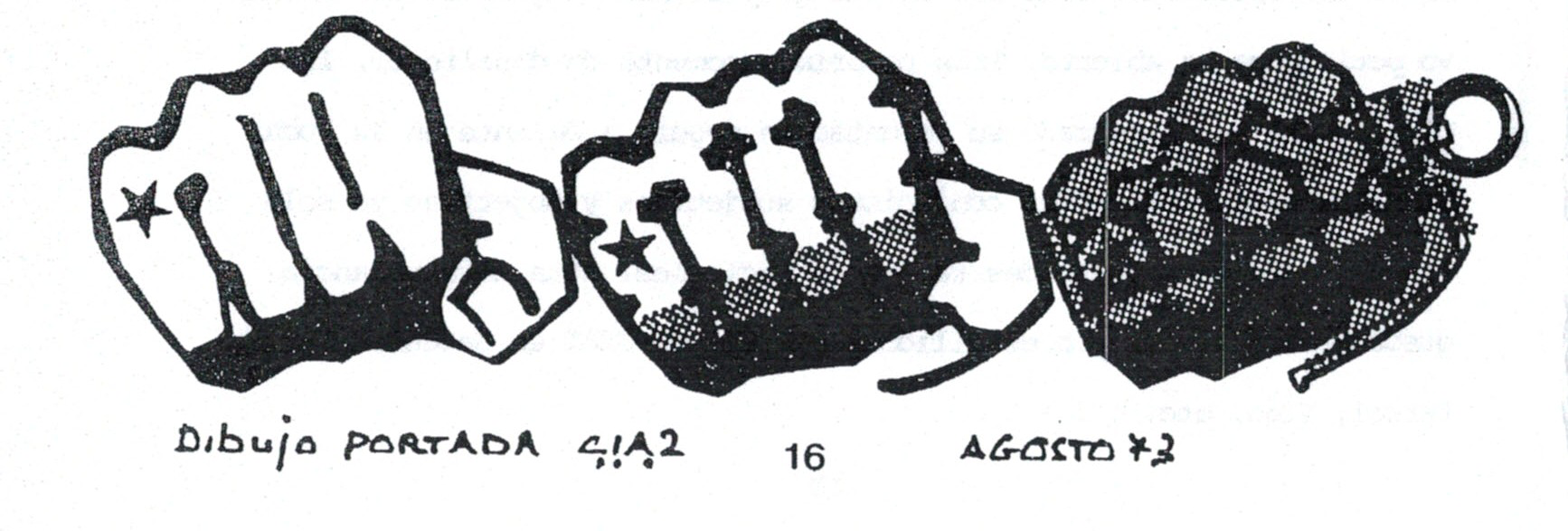
ARMED AGITATION: A RADICAL DEMAND OF THE WORKERS’ MOVEMENT
THE SITUATION DEMANDS THE COMPLETION OF A WHOLE SERIES OF VITAL WORKS FOR THE CONSOLIDATION OF THE AUTONOMOUS STRATEGY OF THE CLASS STRUGGLE. YET IT IS EVIDENT THAT THESE TASKS (RECOVERY OF MATERIAL, REINFORCEMENT OF SOLIDARITY WAR CHESTS, ETC.) CANNOT BE CARRIED OUT BY PETTY-BOURGEOIS ACTIVISTS, WHO CARRY ALONG THE SAME DANGERS OF POLITICAL CONTROL AND DIRIGISME AS THE C.P. AND OTHER LENINIST GROUPUSCULES.
IT’S URGENT TO CONFRONT THE POLICE REPRESSION WITH ARMED PROLETARIAN VIOLENCE. OVER THE YEARS WORKERS’ GROUPS HAVE ORGANIZED THEMSELVES SPONTANEOUSLY IN THE STRUGGLES, FORMING SELF-DEFENSE GROUPS, PICKET-LINES, ETC. THESE RESPOND TO THE DEMANDS OF THE MOMENT IN A PURELY EPHEMERAL MANNER.
THE GENERALIZATION OF THE STRUGGLES, TOGETHER WITH THE INCREASE IN REPRESSION, BRINGS WITH IT THE INDISPENSABLE APPEARANCE OF NUMEROUS AUTONOMOUS COMBAT GROUPS, WHICH CARRY OUT HOLD-UPS AND OTHER VIOLENT ACTIONS, SITUATING THEMSELVES IN A GENERAL CADRE OF ARMED AGITATION.
IT IS NOT, THEN, A GRATUITOUS ACT, OR A STRATEGY FOREIGN TO THE WORKING CLASS (LIKE THE PETTY-BOURGEOIS MILITARY GROUPS THAT DIVERT THE EVERYDAY VIOLENCE OF THE WORKING CLASS TOWARDS NATIONALISM, FOR EXAMPLE). IT’S A TACTICAL DEMAND OF THE WORKERS’ MOVEMENT CORRESPONDING TO THE CURRENT SITUATION OF THE CLASS STRUGGLES, WITH THE SAME OBJECTIVES: THE SELF- ORGANIZATION OF THE CLASS THAT WILL PERMIT IT TO ARRIVE TO THE INSURRECTIONARY STRIKE.
for libertarian communism
for the self-organization of the class struggle
for self-management
towards the insurrectionary strike
long live anarchy
[reproduction of a flier which appeared in barcelona, 1972]
Self-Dissolution of the Military-Political Organization Called M.I.L. (1973)
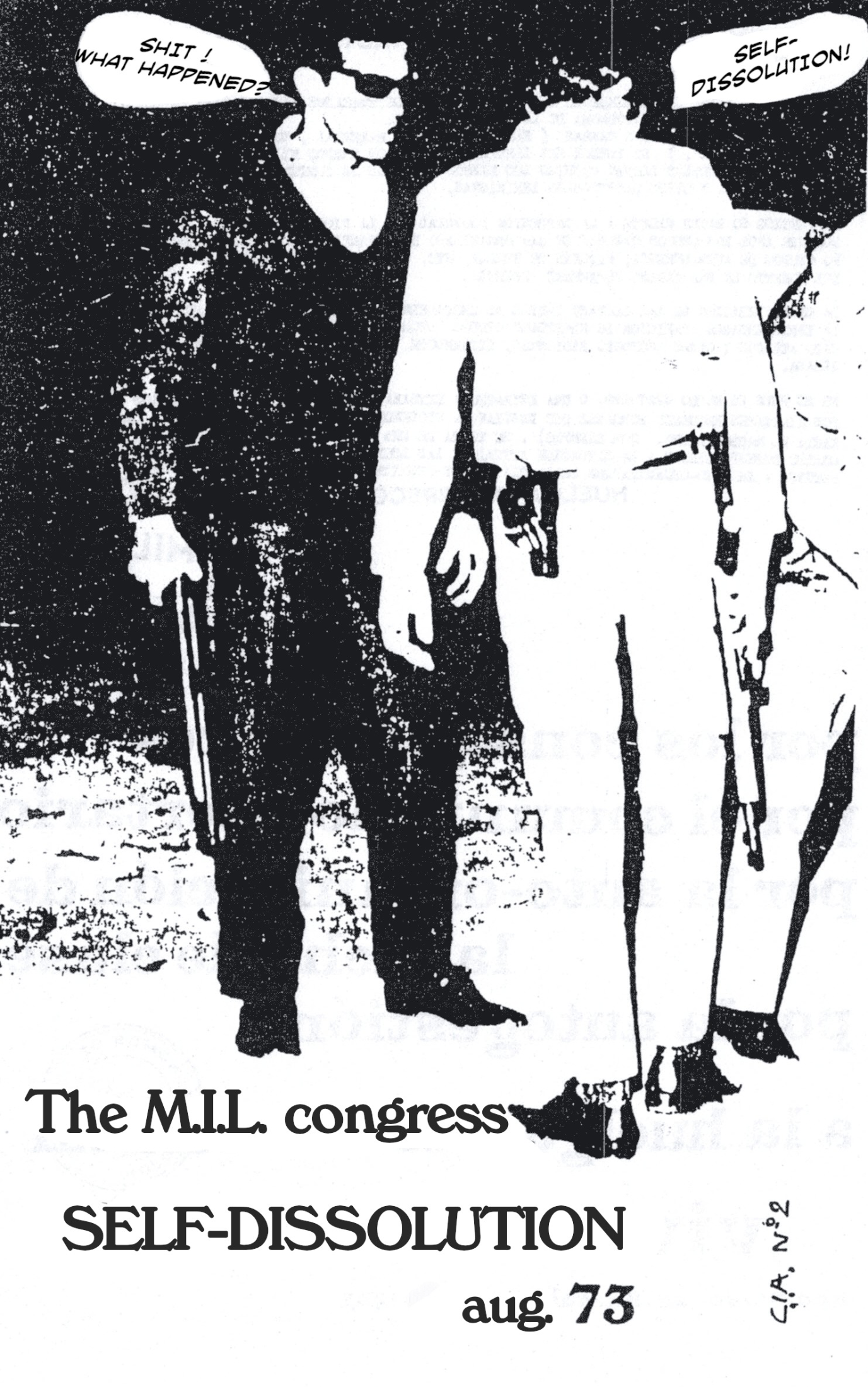
August 1973 – The congress of the MIL is held, approving its self-dissolution as a measure prior to the creation and consolidation of a new combat organization: the G.A.C. (Autonomous Combat Groups)
THE CONGRESS OF 1973:
SELF-DISSOLUTION OF THE MILITARY-POLITICAL ORGANIZATION CALLED M.I.L.
After the failure of the international revolution of 1848 and stemming from the ideologization of its theory, the impossibility of the Capitalist system to reproduce itself was foreseen.
In accordance with this theory the sovereign organs of the class struggle and those of the socialist revolution were two:
-
The reformist unions
-
The reformist parties in control of those unions and applying in their name a political practice of participation in the bourgeois parliament.
But in reality, reformism (parties and unions), only served to reinforce the subsistence of the system.
At the start of the century it could be confirmed that Capital was reproducing itself — contrary to the prediction of the theorists of the labor movement — and for the following reasons:
-
Reformism was totally incapable of eliminating Capital’s system through the sole dynamic of the problem of its reproduction (the crisis of the capitalist system: Belgium 1904, Russia 1905, Belgium 1906, the theorizing of the wildcat strike by the German Left, the outbreak of the imperialist war 1914–1918, Russia 1917, Germany 1918- 19, Hungary 1919, Italy 1920, fascisms, the crisis of ’29, etc…)
-
It remained clear as such that neither parliamentary parties nor reformist unions were the organs of the social revolution, but rather nothing more than organs of Capital’s counterrevolution (Germany 1919, Hungary 1919, Russia 1921, etc...)
The socialist revolution is only put to a halt by parliamentary parties and reformist unions, and furthermore it finds itself forced -with or without the reproduction of Capital – into an antireformist practice, that is to say, partisan to its action of antiparliamentarianism and for class organization (revolutionary syndicalism, barricades, terrorism, workers’ councils, etc…)
In the wake of the final consequences of the Global Crisis (fascisms, the “Great Depression” of ’29, the inter-imperialist war 1939–45, the post-war reconstruction of Capital during such critical moments until the following crisis of the reproduction of Capital, etc…) after seeing the objectives of the reduced to only those of the antifascist anticapitalist struggle struggle, it was again proposed not only the urgent need for anti-parliamentarianism and class organization, but to move on from purely antifascist objectives to the objectives of the Communist Movement, which in its crescent phase is the International Revolution.
Therefore, we can say that since the middle of the sixties the worldwide revolution imposed itself. We resurgence: see this revolutionary
-
May of ’68 in France and the large and important strikes in Italy of ’69, in which the unions were superseded;
-
In Belgium, the miners of Limburg in ’69 violently attack the Unions over the course of an unprecedented strike.
-
A wave of strikes in Poland 70–71, in which the bureaucrats of the Communist Party are judged and hanged.
-
Paris of ’71: important labor strikes at Renault and expropriations in the Latin District
-
Revolts in numerous prisons in the USA, Italy and France ’72–73, and the strike of miners and dockers facing up against the powerful english unions, and widespread revolts in the ghettos of the USA, Japan, etc…
During this time, countless wildcat strikes broke out across Europe and America, winning all the points on the globe. The manifestations of the reappearance of the proletariat on the stage of class violence are considerable at a worldwide level (absenteeism in the companies, sabotage of the production process, etc.)
In Spain, the wildcat strikes and the manifestations of latent rebellion made themselves felt in full force. The combativeness of the workers hadn’t reached such peaks since the physical and moral destruction of the spanish proletariat by international capitalism in the civil war (1936–1939)
-
’62-’65: the creation of Comisiones Obreras beginning from the wildcat strikes in the mines of Asturias, the assault on the commissary in Mieres, strikes of transportation and metalworkers in Barcelona, etc…
-
66–68: The entryism of all traditional parties and organizations into Comisiones Obreras, as well as the attempt to be inducted into the C.N.S. stemming from them, and implanting a reformist line within the C.C.O.O., groupuscular schisms, etc.
-
70–73: Huge proletarian struggles all over Spain: Erandia, Granada, at Harry-Walker, at SEAT, Ferrol, Vigo, Vallès, Sant Adrià del Besos, Navarra, etc., wherein — in distinct forms – all hierarchic control over the struggle was rejected, materializing in the burning of leaflets, the expulsion of groupuscule activists from the worker’s assemblies and widespread violence, etc.
The MIL is a product of the history of the class struggles in these last few years. Its appearance comes together with the grand proletarian struggles that de-mystified the bureaucracies — reformist or groupuscular – which wanted to integrate that struggle into their “party” program. It was born as a specific group of support to the most radical struggles and fractions of the workers’ movement in Barcelona. At every moment it is conscious of the need to support the proletarian struggle and its support as a specific group is material, it is of agitation, of propaganda, by means of the word and the deed.
In April of 1970 the MIL laid out an open critique of all reformist and leftist lines. (The Worker’s Movement in Barcelona). In this same year it developed a critique of leninism (Revolution until the end). Its critique of dirigisme, groupusculism, authoritarianism, etc. brought it at that moment to break with the rank-and-file organizations which wanted to take hold of the struggles and experiences carried out in common – such as that of Harry Walker -, and as such to groupusculize. The MIL, stemming from political isolation and for the sake of its political-military survival, went on to make political compromises with military groups: for example, with the nationalists, who in that moment were the only ones that accepted moving on to the armed struggle. Such forced compromises, made due to the group’s isolation, brought it to forget its previous perspectives.
There is no communist practice possible without a systematic struggle against the traditional workers’ movement and its allies. Inversely, there’s no effective action against them if there isn’t a clear comprehension of their counterrevolutionary function. Until now, all of the revolutionary strategies have tried to exploit the different difficulties encountered by the bourgeoisie in their management of Capital. When they have demolished the weakest of the bourgeoisie, they have organized capitalism. If the bourgeoisie were strong, they condemned themselves to poverty. And today is when the proletariat rejects these strategies and imposes its own: the destruction of capitalism, negating itself as a class. Today, the working class attacks capital in all its manifestations of exploitation: framing, authoritarianism, exploitation, etc… The only possible form of action is revolutionary violence by means of word and deed.
Its most advanced fractions organize themselves for concrete revolutionary tasks as much in the factories as in the neighborhoods: against the C.N.S., against the bureaucratized and reformist C.C.O.O., against the P.C.E. and the whole variety of groupuscules, situating them at the same level as the current managers of Capital (the bourgeoisie). The consolidation of the revolutionary struggle of the working class is the selforganization in the workplace, by means of factory committees, neighborhood committees, and through the coordination and generalization of the struggle, applying the class struggle line, the communist line. The practice of the MIL comes together, then, with the development of the Communist Movement, forming a part of it. Therefore it is proposed to attack every kind of mystification.
The current society has its Laws, its Justice, its Guardians, its Judges, its Tribunals, its Prisons, its Crimes, its “Normalcy”. Facing it, there appear a series of political organs (parties and unions, reformism and leftism...) which pretend to act against this situation when in reality they do no more than consolidate the current society. Justice in the street is no more than denouncing and attacking all the mystifications of the current society (parties, unions, reformism, leftism, laws, justice, guardians, judges, tribunals, prisons, crimes, in short – their “normalcy”).
The rejection of this conformism in practical action leads in fact to the constitution of revolutionary associations, individually or collectively.
An association of revolutionaries is that which carries a unitary critique of the world to its ultimate consequences. We understand unitary critique as the global critique against all the geographic zones where the different forms of the power of socioeconomic separation are installed, and also pronounced against every aspect of life.
It doesn’t go towards the simple self-management of the current world by the masses, but towards its uninterrupted transformation, the decolonization of everyday life, the radical critique of political economy, the destruction and overcoming of the commodity and wage labor. Such an association rejects all reproduction within itself of the hierarchical conditions of the dominant world. The critique of revolutionary ideologies is nothing other than the unmasking of the new specialists of the revolution, of the new theories which situate themselves upon the backs of the proletariat.
“Leftism” is no more than the extreme left of Capital’s program. Its revolutionary morale, its voluntarism, its activism, are nothing more than products of this situation. They walk the route of controlling and directing the struggle of the working class. As such, every action which does not bear the perspective of total rejection and critique of capitalism, remains within capitalism and is recuperated by it. Today, to speak of workerism and activism, and to bring it into practice, is Communism.
To speak about armed action to wish to avoid the step towards and about the preparation for the insurrection is the same: today, it’s not valid to speak of politicalmilitary organization; such political racket. Therefore, organizations form a part of the the MIL is self-dissolving as a political-military organization and its members ready themselves to take up the communist deepening of the social movement.
Definitive conclusions from the M.I.L. Congress
August 1973
CIA no.2
Published by MIL
International Anarchist Conspiracy
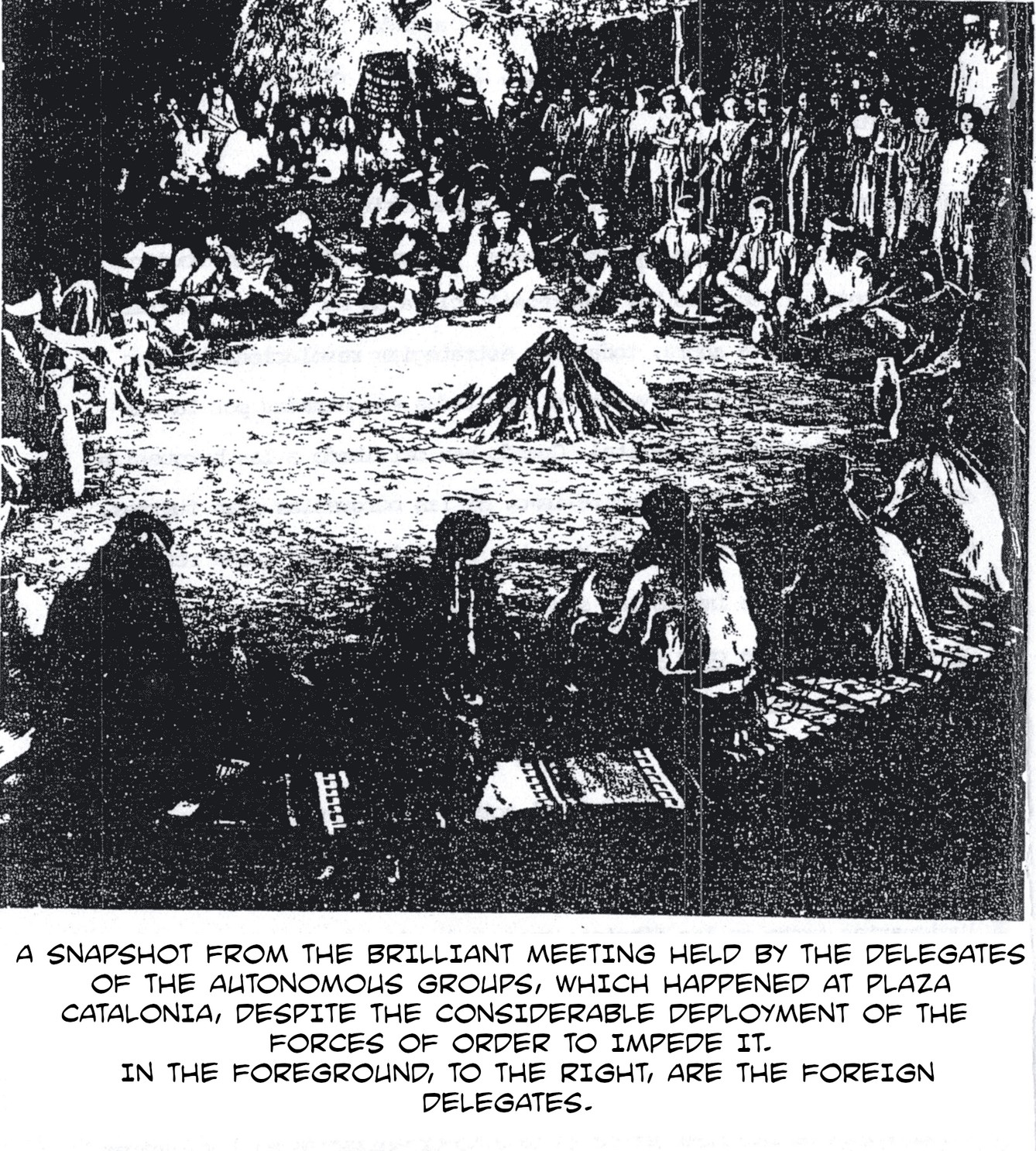
POSTSCRIPT: Terrorism and sabotage are weapons that can be used by every revolutionary. Terrorism by means of the word and deed. Attacking Capital and its loyal guardians – be they from the left or the right — and like so is the current inclination of the Autonomous Combat Groups who have broken with all of the old workers’ movement and promote some precise criteria of action. The organization is the organization of tasks; It is for this reason that the rank-and-file groups coordinate for action. Stemming from these realizations, the organization, politics, activism, moralism, the martyrs, the initials, our very tag, have passed on to the old world.
So, every individual shall take, — as it has been said – their own personal responsibilities in the revolutionary struggle. There aren’t any individuals who self-dissolve, it’s the political-military organization MIL which self-dissolves: it’s the step towards history which causes us to definitively leave behind the prehistory of the class struggle.
1000… OR 10,000! (1973)
During the second half of the ‘60s, the revolutionary movement was reborn on a global scale. The wildcat strikes of the miners in Limburg (Belgium ‘67) May ‘68 in France, the Hot fall of ’69 in Italy, the insurrectionary strike in Poland of ‘70–71, the uprisings in the north american ghettos... etc. etc. In short, thousands of struggles around the world show us the resurgence of the violence and of the revolutionary movement which translate into: the total rejection and negation of the unions, the struggle for the abolition of authority and hierarchy, sabotage of the production process and of the commodities in the enterprises... etc., etc.. This resurgence of the revolutionary movement has manifested in Spain with struggles similar to the rest of the world: generalization of company committees and commissions in permanent rank-and-file struggles against Capital’s system of exploitation, a total boycott of the unions (spring of ‘71), wildcat strikes and violent actions of the class in the factories and neighborhoods (AEG in Terrassa, Harry- Walker, SEAT Erandio, Granada, Ferrol, Sant Adriá, Cerdanyola, Pamplona, ...) These struggles present themselves to us as a manifestation of the self-organization of the class for the destruction of the wage system and of the capitalist state for the implantation of communism. In this resurgence of the revolutionary movement, the only intervention of the communists is the resolution of the tasks which are posed by the real movement in its struggle for the abolition of Capital. The proliferation, on a global scale, of specific groups responds precisely to what is the organizational form proper to the communists at the resolution of said tasks, which in every geographical-historical situation adopts its concrete forms. The “1000” is one of the concrete forms which the specific groups in Catalonia take in order to develop the task of agitation by means of word and deed.
With the appearance of the first wildcat strikes and actions of class violence, the “1000” was born in support of those strikes. This support and participation translates into bringing the texts deliberately forgotten by the counterrevolution into to the streets, and raising the issue of communism with new texts. For communists, approaching the problem of the abolition of the system of Capital today requires the demystification of reformism, of groups and groupuscules which are no more than the left and extreme left of the program of Capital. It is the presence in this old world of ideologies transformed into strategies and of strategies transformed into ideologies, which try to introduce themselves as vanguards in the working class, which has obliged us to treat them as such: from strategies of poverty to the poverty of strategies.
The realization of the tasks which we have imposed upon us demands from a long infrastructural process. During these last three years, the “1000” had expropriated a bank, they found themselves obligated to break with a rank-and-file group when this group wanted to transform a revolutionary struggle of the proletariat into a model of struggle to follow, and therefore to groupusculize, ideologizing itself, while at the same time it provided socialized printed material to rank-and-file groups, while at the same time… etc...
The revolutionary violence developed by the specific groups is a global response of the proletariat to the physical violence of Capital. The manifestations of rage, of fury, etc... are expressions of the everyday humiliation of the proletariat, they are expressions of the latent revolutionary civil war. The task of the specific groups is the communist deepening of this social situation. The collation of the agitation and the dynamic of the necessary infrastructural process carried us towards the start of a military-political organizational process in clear contradiction with the task of the communist deepening of social contradictions. Facing this reality the “1000” dissolved itself. The communists who belonged to the self-dissolved “1000” continued the task of agitation in specific groups called “GAC” (Autonomous Combat Groups).
In September of ’73 certain communists, organized in different autonomous combat groups, were arrested by the armed forces of Capital. After the detention, the bureaucratic-juridic repression apparatus stayed its course, resulting in the physical elimination of these persons. Today, the political left, as much as the right wing of Capital try only to justify, by finding a “humane” solution, their need to destroy their antagonist: communism.
We communists of the G.A.C.-September-73 consider that the intensification of the struggle by the destruction of the system which engenders the repression is the best way to develop solidarity with the victims of reprisals.
We call upon all revolutionaries of the world to make their struggle against repression its demystification, and to treat it as such: as a logical and fatal necessity of Capital; to distribute historical texts about the proletarian struggles which are censored by the counterrevolution, current texts which approach the issue of communism in different parts of the world; for them to settle the issue of revolutionary violence; in short: we call on all the revolutionaries to intervene in the communist deepening of the social contradictions within the system of Capital.
!NEITHER MARTYRS NOR TRIALS!
!NEITHER JAILS OR SALARIES!
!LONG LIVE COMMUNISM!
Autonomous Combat Groups (G.A.C.)
—Sept. ’73
Robbers or Revolutionaries? (1973)
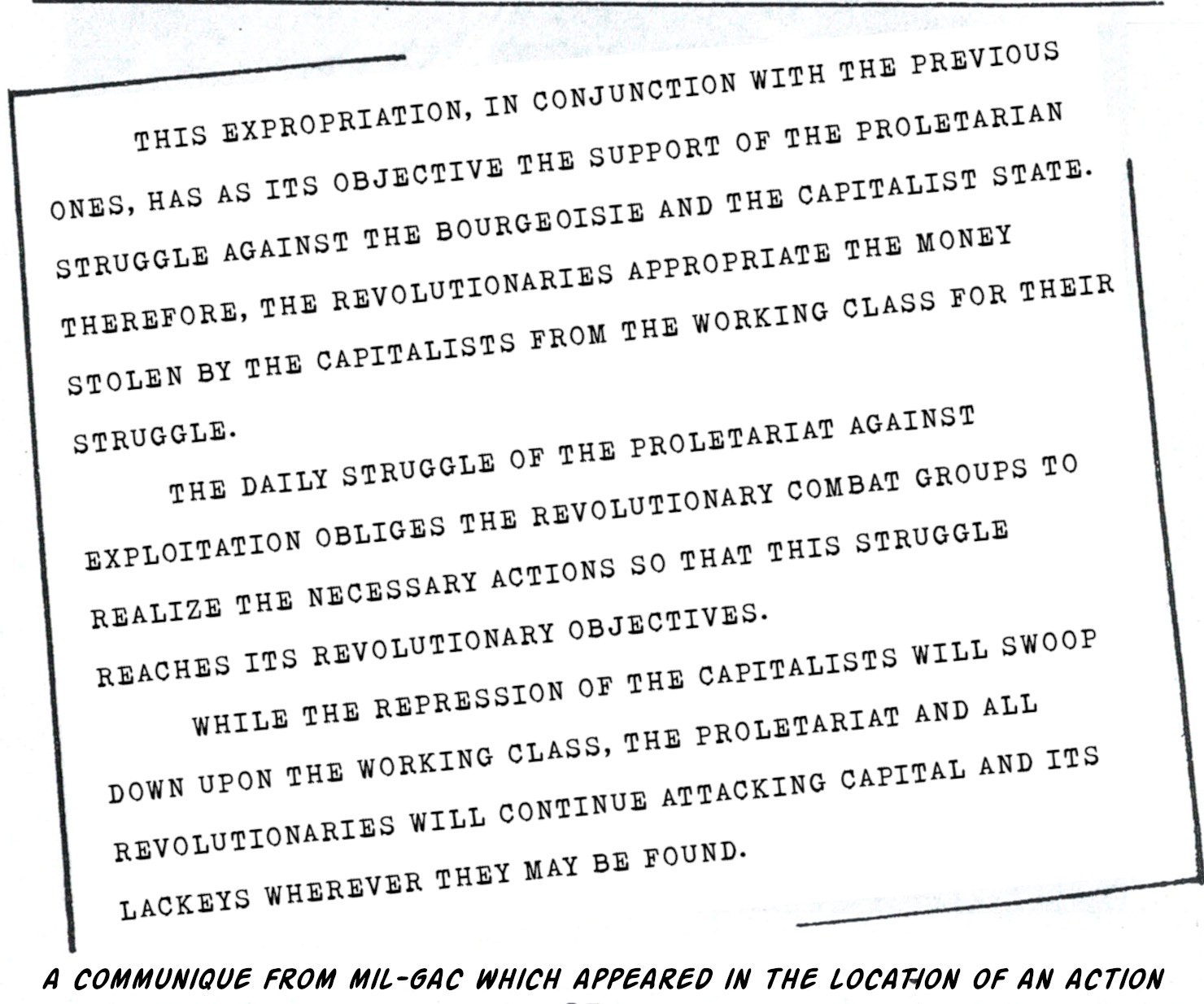
When one battles against capitalist exploitation in a society which exists thanks to that exploitation, the defensive organs of that society try to eliminate their revolutionary enemies. When, almost two months ago, the police tried to arrest some militants of the M.I.L. (Iberian Movement of Liberation) and used their weapons against them, gravely injuring one of these revolutionary militants, the instrument of the repression in service of this capitalist society lashed out once more against the enemies of exploitation. But it was not enough to try to eliminate them physically: it was necessary, furthermore, to hide their true nature. Of them it was said that they were “quinquis”,[3] robbers, vulgar contract killers. None of this is true: the M.I.L. is a revolutionary organization, which pushes for class struggle, putting in the service of the workers a series of radical combat measures. The M.I.L. attacks private property, expropriating from the exploiting hands of Capital accumulated in the banks (a true expression, real and symbolic, of capitalist domination). These funds “recovered” by the M.I.L. from the hands of the exploiters, allow the financing of an anticapitalist armed agitation and also allow the provision of workers in struggle with radical means of combat: supporting strikes, realizing sabotages, enabling mediums of propaganda and of theoretic agitation, mining the very basis of the exploitative social structure to its roots. All of this without trying to direct, while making an effort to stay on the real level of the class struggle, without enrolling the workers into forms of struggle that exceed their concrete proposals. Today two death penalties weigh upon one of these revolutionary militants. Bourgeois “justice” exerts itself to accelerate its repressive action, without giving time for the true nature of its acts to be unveiled. This demands that we be rapid in expressing our condemnation clearly, not only in the face of the repressor’s deformative intentions, but also facing their desire to immediately execute the solicited punishments.
!FOR THE TOTAL SELF-EMANCIPATION OF THE WORKING CLASS!
!FOR THE PERMANENT STRUGGLE AGAINST EVERY SYSTEM OF OPPRESSION!
Collective of anti-authoritarian political prisoners
Modelo Prison, Barcelona
November 1973
Gangsters or Revolutionaries? (1974)
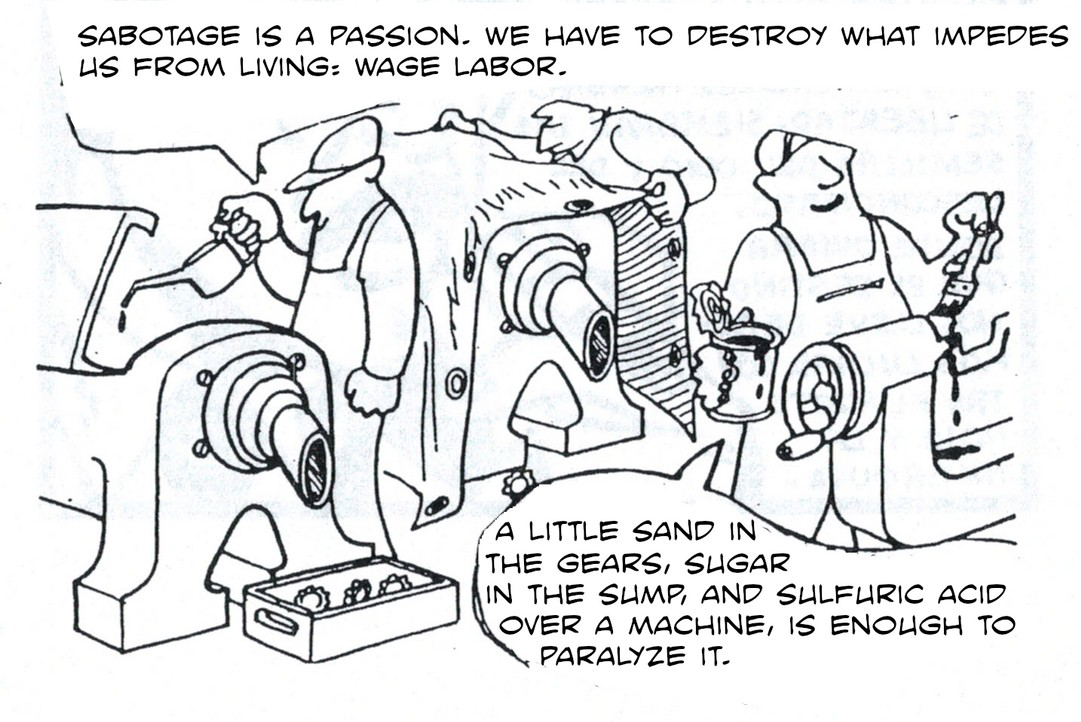
The “illegal acts” against persons and property – theft, robbery, hold-ups, terrorism and sabotage, etc.-, are proofs of the social misery engendered by the capitalist system: the exploitation of hunger, wage labor, the everyday humiliation of the proletariat, systematic mutilation of the environment, sexual and cultural repressions, the Police State, etc. The system of Capital transforms the social misery into a spectacle which it itself engenders, but it ceases to do so immediately when through the spectacle one can be permitted to see the existence of an ascendant and antagonistic social movement: the social movement towards communism. The sabotage against production: the trunk of war and printing material; the terror wrought upon the police, snitches, scabs and bosses; the theft of vehicles to realize acts of sabotage; the robbing and falsification of documents; the armed hold-up for the financing of the tasks of armed and theoretic agitation; etc.;etc...; these activities, all them, which currently are being carried out by specific groups, are the means which the proletariat uses for the development of its revolutionary tasks. The social world engendered by Capital is violent by necessity. The reproduction of capital implies systematic destruction (hunger, wars, ...etc.). The violent character of the class war is imposed by the nature of the system which engenders it. Lay-offs, arrests, violent expulsion of strikers, assassinations, war councils, trials, etc, etc, are repressive measures utilized systematically by Capital to halt and destroy the indestructible: the social movement towards communism. The proletariat, by exceeding the frame which capital had anticipated in the use of these repressive measures, creates situations of generalized struggle that favor its revolutionary development. The stagnation of the revolutionary process of the workers’ movement, which after the wars of the years 1936–45, had lost initiative and manifested itself in the process of integration into Capital of the Workers’ organizations by means of the reformist program. Starting from the last two decades, the proletariat has made the first steps on the global scale in the resurgence of the revolutionary movement, firstly by means of sporadic wildcat strikes, and later with the generalization of these spontaneous struggles, and the development of the task of agitation of the specific groups; but the Workers’ movement must still assume its fundamental task: the CLASS ORGANIZATION capable of driving the proletariat towards communism.
Barcelona.
Modelo Prison,
19th of July, 1974
A Critical Analysis and a Critique of Analysis (1975)
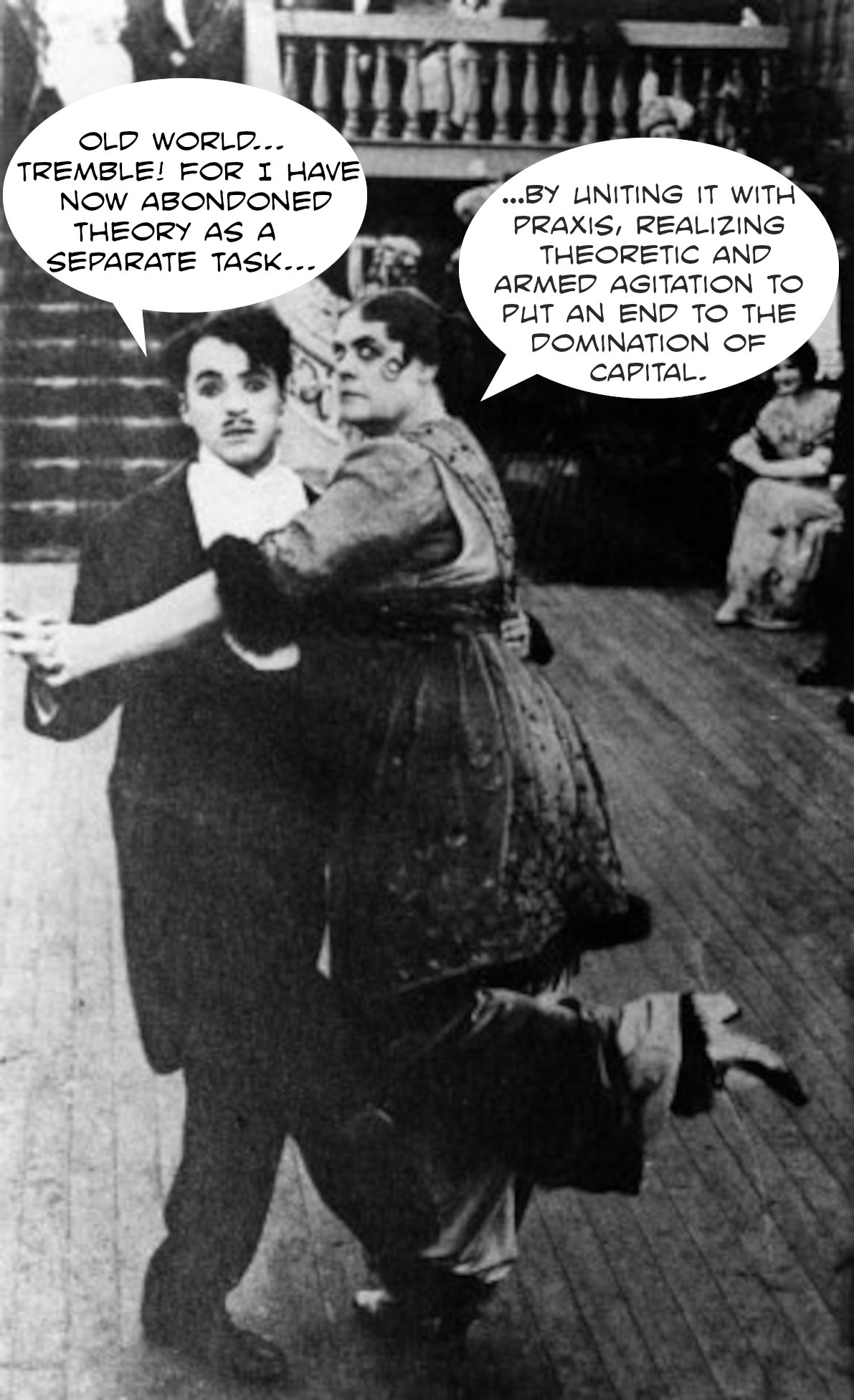
...In the ex-MIL, there were not two tendencies, one “anarchist” and another “marxist”, to maintain that is [to] completely [falsify] that which really existed in radical global vision....[What] we understand as radical, [is] the attack on Capital at its economic basis: the means of production, the commodity, exchanges, economic deposits, their expropriation and socialization in the hands of the revolutionary proletarians....Tactically the use of revolutionary violence is an urgent necessity for all proletarians who want to manifest their desire for the realization of their being and at the same time their own negation as proletarians atrophied by the State. What obliged us to use it is the development and accumulation of Capital. Violence is revolutionary when its utilization tends to transform and destroy the capitalist mode of production and its mediated representation, in other words wage labor and the commodity. And in no way does it mean changing, even by violence, the form of managing the capitalist mode of production....It is the proletarians who come together and organize in order to realize and satisfy their concrete necessities imposed by the domination of Capital, in a given moment of history, and it is in reality these proletarians who unite their individualities in order to act, be it collectively, be it individually, with sights on overcoming their alienation and daily oppression. It is they who decide the forms, the manner of their practice and their intervention, while at the same time they maintain between themselves, after the action, some informal contacts for the coordination of the tasks with sights on converting it from partial victory to total victory. This, annulling the relations of production of the capitalist type and the proletarian condition which allows their existence....Revolutionary violence, the insurrectionary strike, economic sabotage, subversive acts, absenteeism, the boycott, propaganda and radical theoretical critique complement each other and create a global whole of the rejection of Capital. The separated and exclusive utilization of one of them in permanence, in the current moment, on part of any proletarian group, signifies their complete divergence from the struggle, or their pretension for leading it as elements exterior to the proletariat. If in a given moment the evolution of the ex-MIL and of the GAC presented the question of the use of certain methods and forms of action, which in another historical moment the anarchists had used, it was because the real situation and the process of the struggle in Spain imposed it. This allowed putting an end to and liquidating a whole series of illusions, which existed in relation to certain practices of struggle, and at the same time it allowed reconsidering other objectives and forms of action, which would permit the formation and dynamization of an autonomous movement of proletarians. The utilization of these forms of action are not exclusive to the anarchists: an expropriation of capital in a bank can be realized by fascists, marxists, “bandits” or whoever; the means can serve distinct ideologies. Only the content of the action and its posterior use can determine its subversive and revolutionary character, meaning one that tends to create an agitation which makes possible the destruction of the social relations of production.
Proceeding from there, wanting to label some proletarians that use it as “artists”, is an easy solution used by some ideologies and notorious falsifiers, who are immersed in their consensual passivity, and who continue belonging to and defending the old world of capital, which they have never escaped from in spite of pretensions. What is evident is that the usage and monopoly over a tactic or strategy by one given political tendency cannot exist....The “idyllic” working class does not exist, and presenting the conundrum of its “liberation” is nothing more than a desire to dominate and control it. We are not “exterior” to the proletarian movement, we form a part of it inasmuch as we are proletarians: (individuals) excluded-from/deprived of the means of production, of information, of the satisfaction of our necessities and of the control of our daily lives.
A Theory of Critique and a Critique of Theory. (1975)
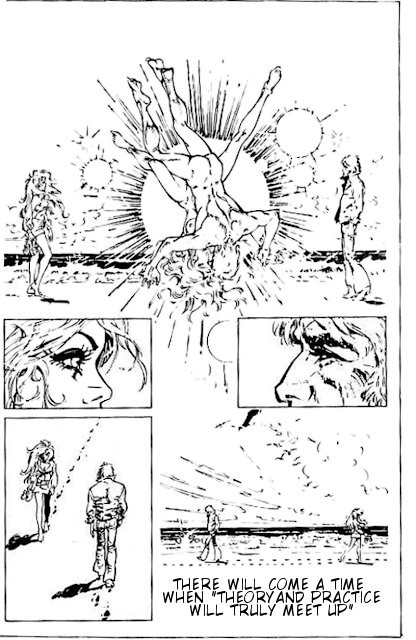
Proceeding from the creation of a concrete situation, and in function of our necessities as individuals, we publish leaflets or participate in the spreading of theory; and at no moment have we tried to participate in the international theoretical movement as a separate function. We only represent ourselves, we are a part of the proletariat. Through our practice and our experience within it, we find ourselves indisposed to the drawing of theoretical conclusions. Furthermore we criticize all the aspects of the old world of Capital and the new mystifications that its development implies. After analyzing the lessons of the historical confrontations of the autonomous proletariat against Capital, we think that our practice is consequent with the subversive theoretical content that the most radicalized fractions of the old workers’ movement had, adapted and updated to the new totalitarian domination of the commodity, and bearing now implicitly its own overcoming by means of deeds. We use theory as an arm of critique, which allows us to situate ourselves facing, and in relation to, the other tendencies which attempt to represent and monopolize the struggles of the workers’ movement. It’s a means, among others, to combat the completely false positions that are sustained by the parties and groupuscles of Capital, meaning the left and extreme left. Those specialized in the recuperation of the struggles, opportunism, historical falsifications in relation to the radical content of the struggles of the autonomous workers’ movement.
When the need exists to clarify some positions at a given moment of the struggle, when it’s necessary to to make an analysis of the evolution of, and a self-critique of the errors which have been committed in an action, in order to delve further into our objective, the destruction of Capital’s mode of production, we also participate in theoretic agitation. The justification of theory as a separate function on the part of some intellectuals who attempt to fight Capital solely with theory, in wait for the future revolution, serves them to give themselves the good conscience that they are really doing something. Among them stand out the “purists” and elitists, those that lay claim to anarchism or marxism, who always find justifications for not passing on to praxis – those who are waiting for the objective conditions, treating the proletarians who practice it, when not as counterrevolutionaries, as adventurers or bandits. Basing themselves on the imminence of the economic crisis which is approaching, and on historical fatalism, the capitalist mode of production engenders their own contradictions. After a scholastic and rhetorical exercise on this very theme, repeated tirelessly, they are permitted their self-justification and routine in the separated passivity of their consensual misery, permanently and exclusively spreading theory as a means of attraction towards a center which they attempt to control. The proletariat has nothing to do with these people, except to make the critique in deeds to put an end to the separation of tasks! A critique in deeds by the proletariat is worth more than a hundred years of separated theory! The prehistory of the class struggle has demonstrated that sufficiently. At the same time, by spreading our ideas, without any desire for partisan regroupment around them, it allows other proletarians or autonomous groups to get to know us by transposing real ideas about class organization, the theoretical situation and the forms of action. In addition to critically comparing our ideas with theirs, serving as an exchange of information or concrete propositions for actions; without this implying a total dependency for the groups or proletarians that put them into practice. The texts published are selected by us and by other proletarian groups. The only condition for their publication is that they respond to real necessities of the movement, with neither a factional nor sectarian thesis. All that tends towards this aim must be published, without it implying a sole model of action or of thought.
We don’t attempt to be a monolithic center of “theoretical” regrouping, in the sense that in the leaflets published there didn’t exist articles and texts that expressed distinct theoretical forms. One of our current tasks is that of facilitating the launching of publications by proletarians or by autonomous groups, in a manner that, through its practice, they go on to materially equip and in the course of the actual struggle these functions will become increasingly more useless, in the measure in which they have bestowed themselves with the means and materials necessary for the propaganda and the theoretical agitation expropriated from Capital and it’s organs of control. The use of an “anarchist” or “marxist” text does not for us imply identification with the ideology of the author. We use them in the measure that they reflect or propound a series of critiques which allows us to endow ourselves with a useful means of combat, adequate in a moment of our evolution, for theoretical clarification. For us the text must serve the class movement, integrating within it, and so losing its ideology, and not to the contrary, where the class is put to the service of the ideology of the author of the text. It’s a “political expropriation” in the same manner as an economic one, the text becomes merged and passes on to be socialized for its utilization by radicalized proletarians, and it is them who decide on its use and its distribution in the manner that is considered most convenient for their interests.
On Some Exercises of Subversive Practice at an International Level (1975)
... The current tasks of the proletariat in Spain and of the autonomous groups are:
-
The generalization of the class struggles and their extension at the national and international level;
-
The self-organization of the class, the places of struggle;
-
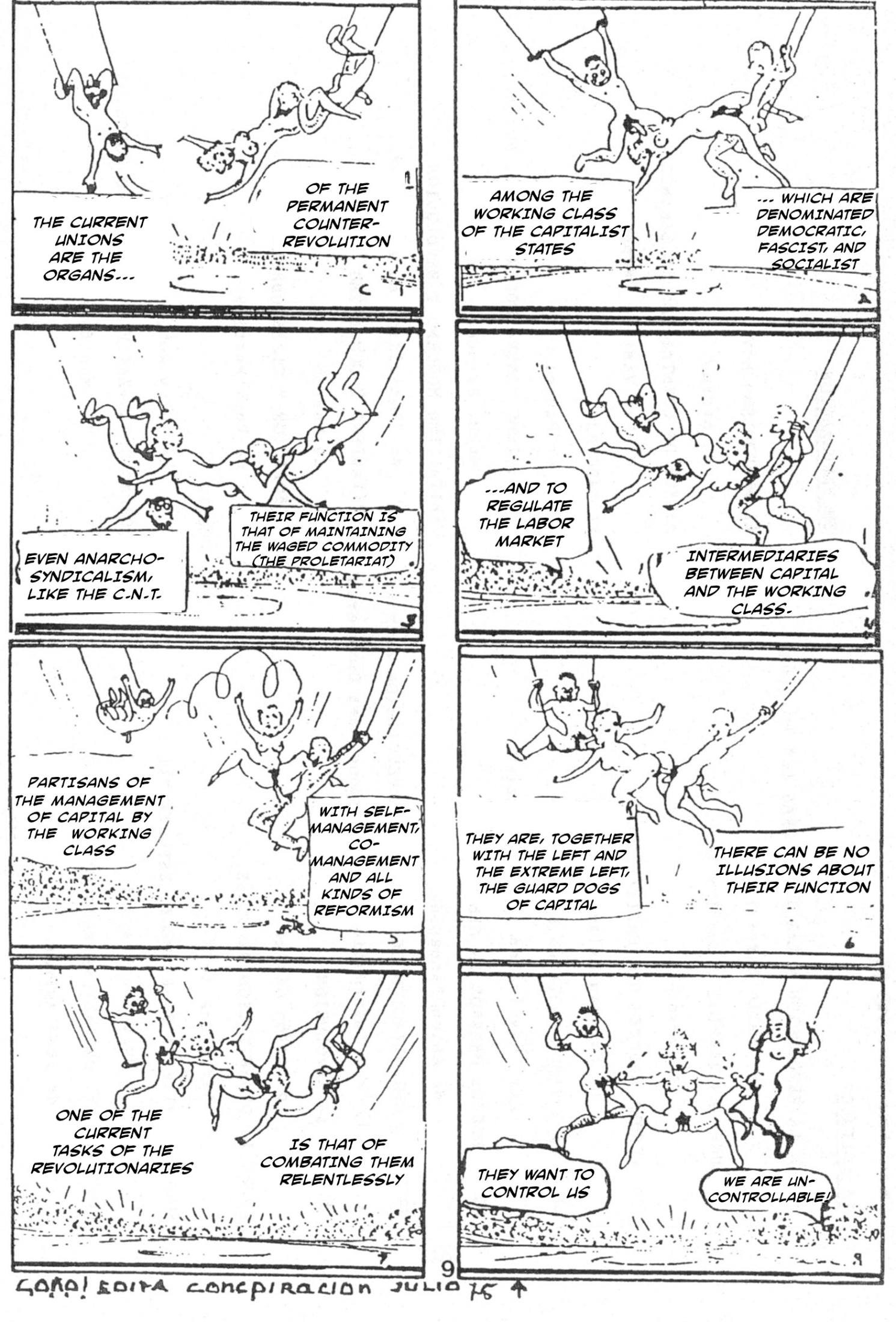
Fight Capital under all its forms: “democratic”, “fascists” and “socialists”;
-
demystification and struggle against the trade-unions, be they “fascist or democratic”, considering them permanent organs of counter-revolution;
-
Elaboration of radical alternatives which capitalism cannot satisfy or recuperate;
-
Organs of autonomous information and propaganda in the service of the class;
-
Organization of technical tasks imposed by the clandestine struggle: border crossings; documentation; economic mediums; weapons; etc.;
-
To finish the program interrupted in May of ’37 by the stalinist counterrevolution and the leaders of the C.N.T. and the P.O.U.M, and to bring it to its total realization, meaning the destruction of the capitalist means of production. The class union is made by the struggles and factory assemblies or outside of them; it’s the radicalized proletariat that organizes and is endowed with the necessary means for its self-emancipation.
It is the old ideas and the weight of the tradition of the old world of Capital, represented in the working class by the groupuscles of the extreme left, which the proletariat will have to destroy with the limitless acts of its subjective power acting collectively-, with its subversive content, and this so that it may put an end to the reign of generalized misery of the commodity and the separation of functions. This is the fundamental task that the proletariat will have to realize, to make possible the delimitation of the other historic tasks which as a class it is obligated to assume, if it wants to negate itself as a producer of surplus-value.
If not it will be the counterrevolution inside of the workers’ mediums who will reaffirm the barbarity of wage-labor and the empire of Capital over the proletariat in a totalitarian manner. The current organization of the tasks of poverty, is the poverty of the current tasks of organization.
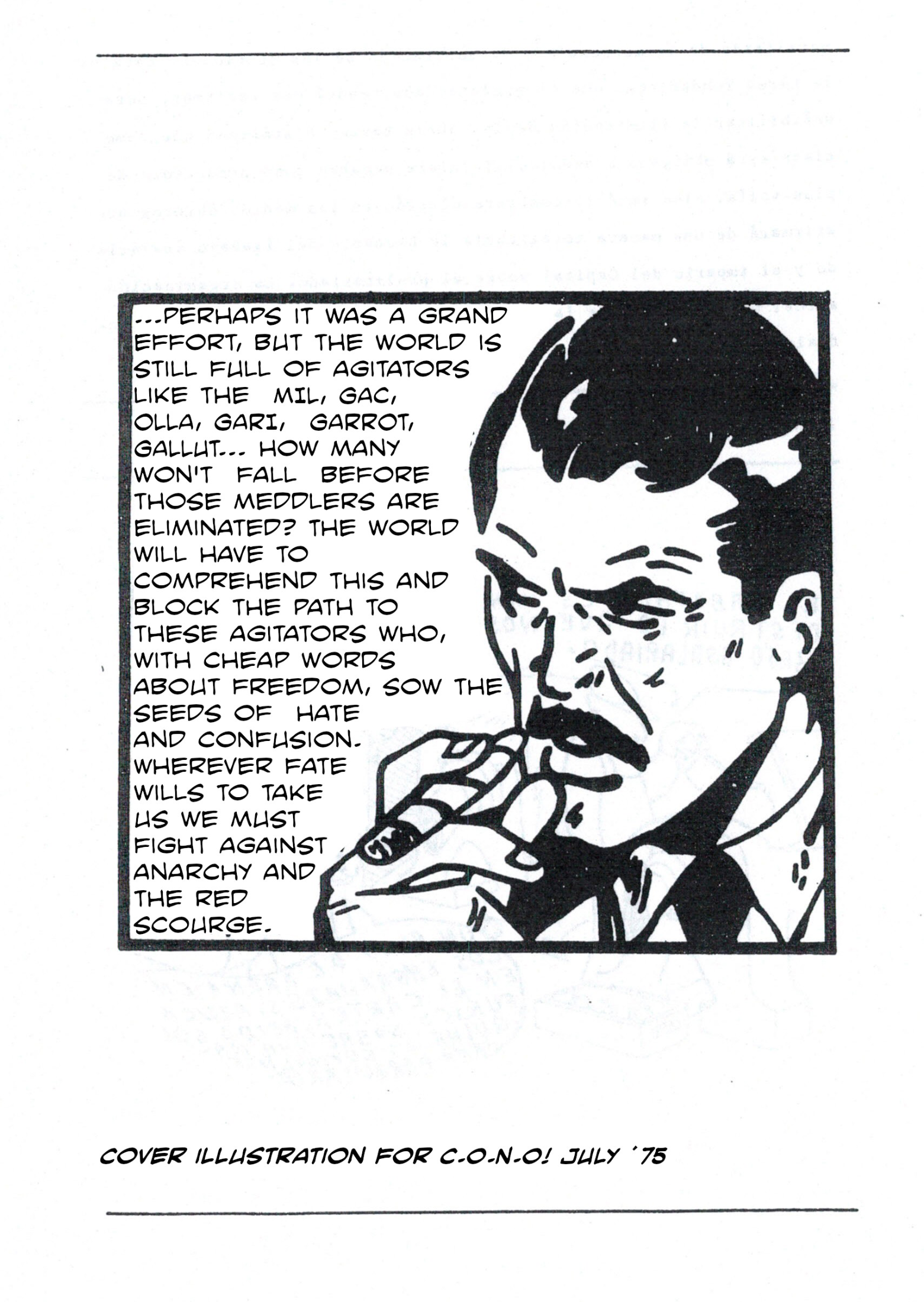
C.O.Ñ.O!
JULY 1975
[1] The Central Nacional Sindicalista [The National Syndicalist Central], a.k.a. Organización Sindical Española [Spanish Syndical Organization ] and more commonly known as the Sindicato Vertical [Vertical Union] — sole legal union under the Franco regime.
[2] The Organización Comunista de España (Bandera Roja) a Maoist group founded in 1968
[3] “Quinqui”, or ‘kinki” was a colloquial term used in a way akin to “punk” or “hoodlum”: referring to ‘lumpen’-proletarian youth