PDX Anti-Repression Committee
BETTER YOUR BLOC
What we can learn from the unsealed FBI affidavit for Jacob Hoopes.
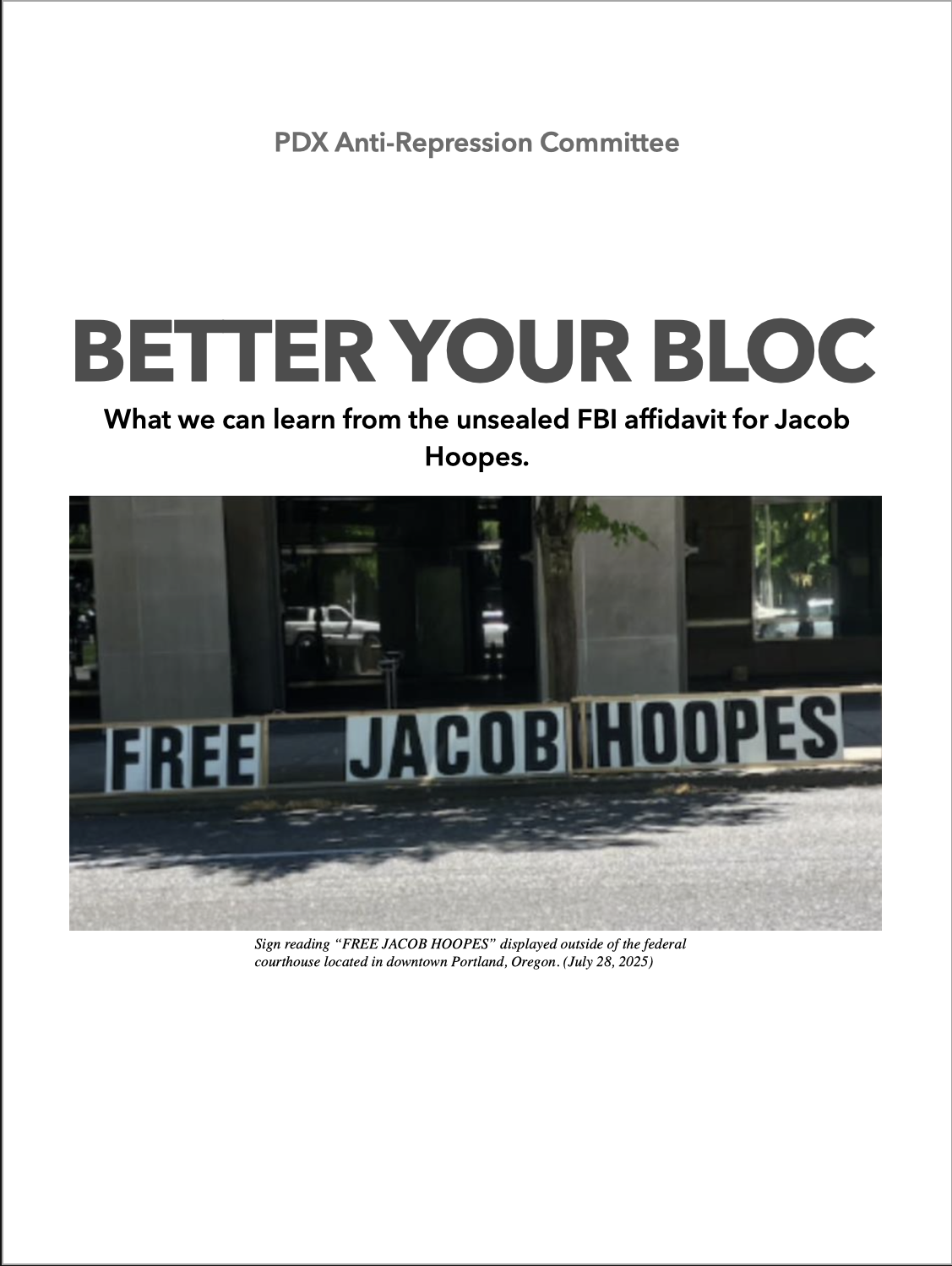
On July 25, 2025, 24-year-old Reed College graduate, Jacob Hoopes, was violently arrested by the FBI during a raid of his home in Portland, Oregon. Hoopes appeared in federal court on July 28, 2025 on felony charges of aggravated assault on a federal officer with a dangerous weapon, and depredation of federal property exceeding $1,000. The FBI’s criminal complaint against him was unsealed shortly after his initial court appearance.
Here’s what we know — and what you should know, too.
Hoopes’ criminal complaint was originally filed in federal court on July 24, 2025, at 4:00 p.m. — just 17 hours before the raid occurred on his home the following morning.
In the complaint, an unnamed FBI Special Agent alleges that on June 14, 2025, Hoopes was present at the ICE facility on SW Macadam Avenue in Portland, OR. On that day, a large crowd broke away from the end of a “No Kings Day” rally near the waterfront and made their way to the ICE facility, where a riot was later declared that evening.
The Special Agent included surveillance footage showing a masked protester, identified as “S1” (Subject 1), who appears to be throwing large rocks toward the front of the building.
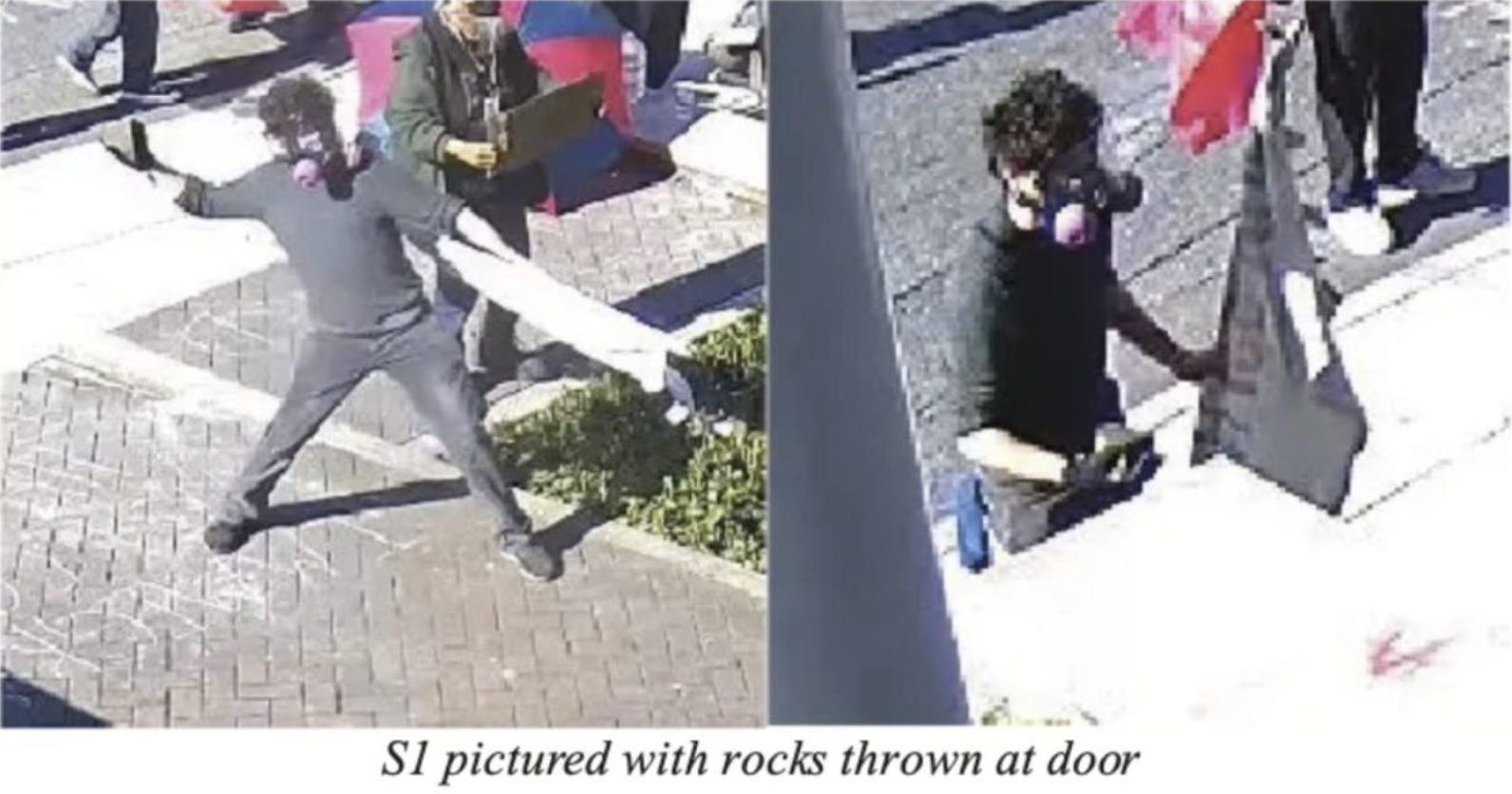
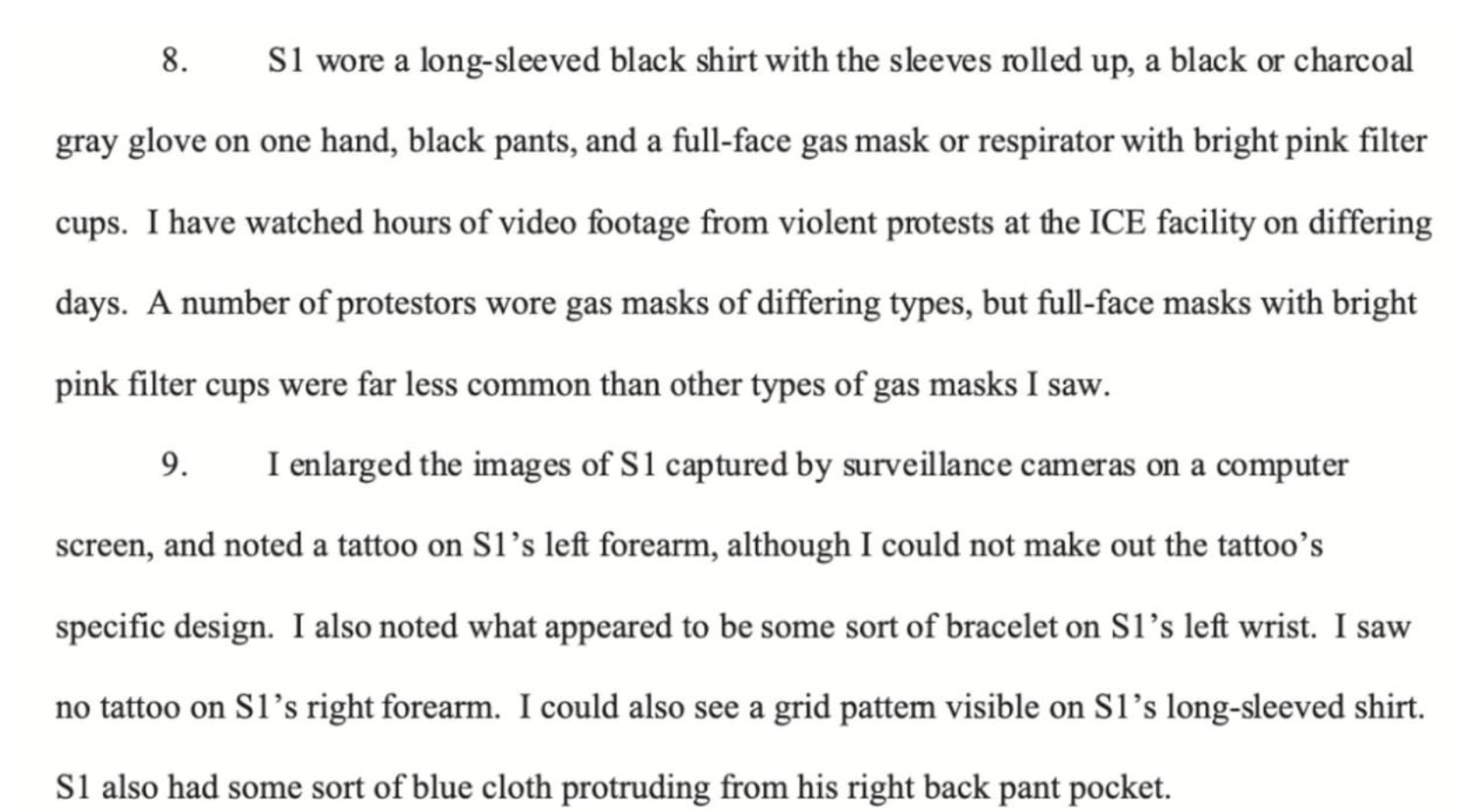
The unnamed Special Agent identifies “S1” based on the clothing and gas mask they wore, as well as a visible tattoo on the suspect’s left forearm and a distinctive silver bracelet on their left wrist. It is important to note that as part of their investigation, the unnamed Special Agent also mentions watching “hours of video footage from violent protests at the ICE facility on differing days”.
he unnamed Special Agent then alleges that during an attempt by federal agents to clear obstructions placed in the building’s doorway, “Subject 1” threw a rock that struck a federal officer in the face, causing significant injury. The officer is identified in the affidavit as “AV1” (Adult Victim 1).
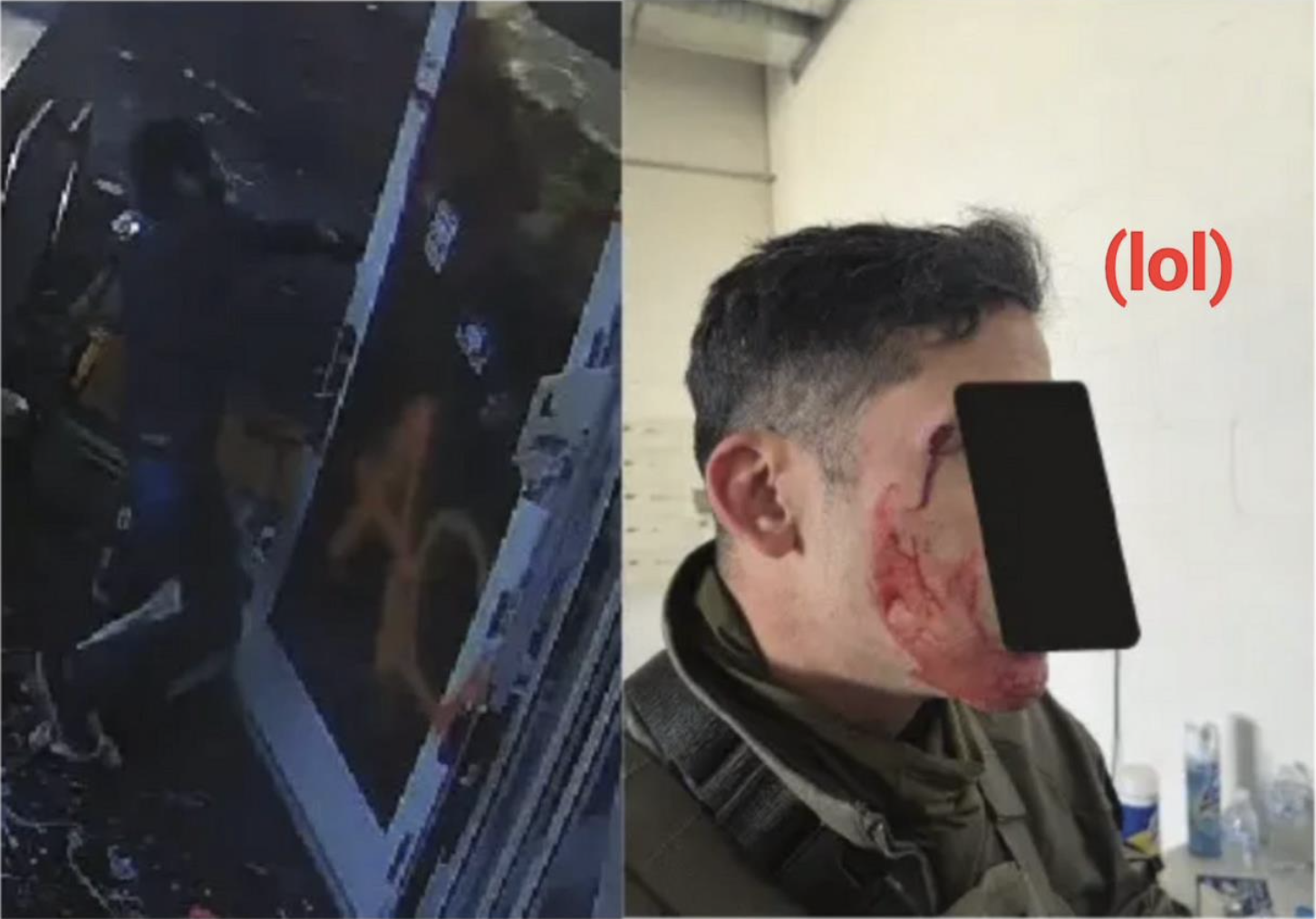
“AV1” was reportedly hit while wearing his gas mask and allegedly “bled profusely” from a wound above his right eyebrow. He alleges that he received first aid from other officers on site, which was unsuccessful, and later required further medical attention.
During the alleged assault, “AV1” claims he was able to clearly see “Subject 1” and identified him as “a male wearing a dark-colored long-sleeve shirt with the sleeves rolled up, black pants, and a full-face respirator with pink filter covers.” Shortly after the alleged assault, the criminal complaint alleges that “Subject 1” was seen with two “as-yet unidentified people” using the metal pole of a stop sign as a “makeshift battering ram,” striking the front door of the facility multiple times.
The affidavit alleges that “Subject 1” was “leading the charge” and caused structural damage to the door, with the estimated cost to replace it totaling $7,747.72. At this point, the criminal complaint provides a more detailed description of the tattoos on “Subject 1’s” left arm, described as “leaves.”
Later in the complaint, it claims that on June 20th, just six days after the alleged incident, “AV1” provided the unnamed Special Agent with a news article posted on OregonLive.com. The article was posted at 6:48 p.m. on June 14th, just shortly after the events alleged in the criminal complaint. The article includes a photo of a protester whom the Special Agent alleges is “Subject 1.” The image shows a protester without a face covering providing aid to another protester who appears to be injured.
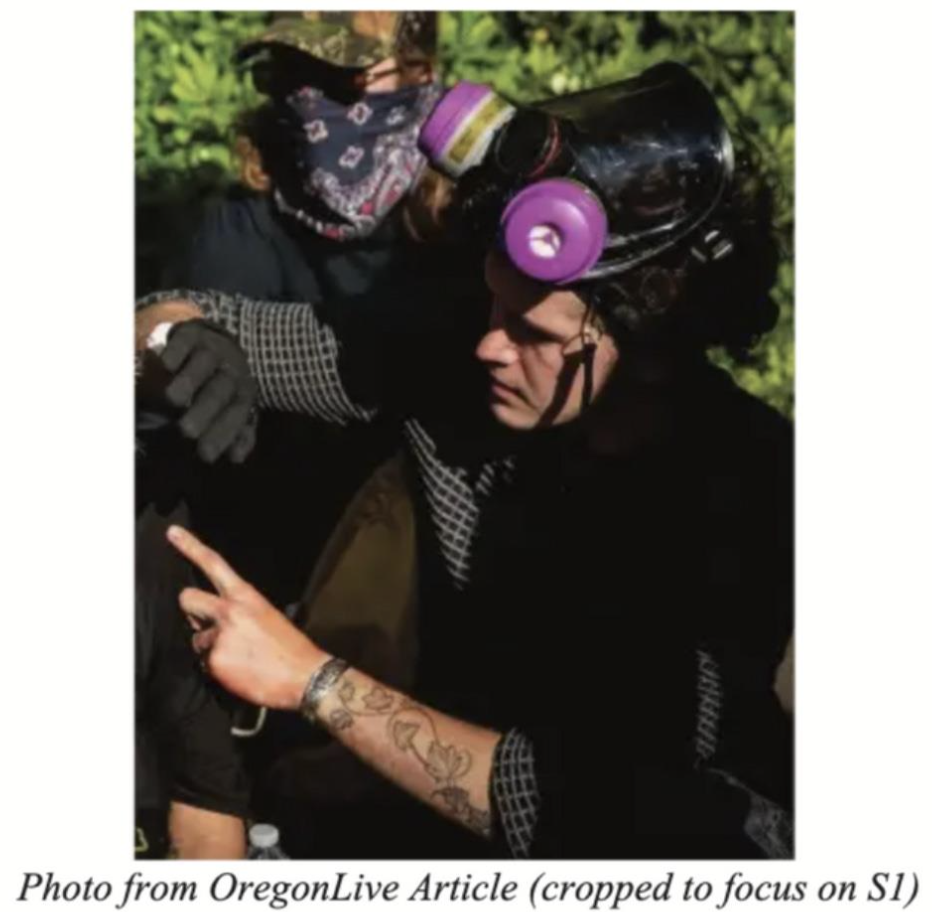
The criminal complaint further alleges that the specific photo from the OregonLive article was run through a commercially available facial recognition software during a demonstration for the United States Attorney’s Office. This software generated 30 possible comparison photos sourced from various public databases. The FBI field office in Portland reviewed all of these photos and identified one from a Reed College photo-sharing page. The complaint alleges that this image from the website shows a person similar in build to “Subject 1,”with a tattoo on the left forearm that matches the one visible in the OregonLive photo. It also notes that neither image shows tattoos on the right arm.
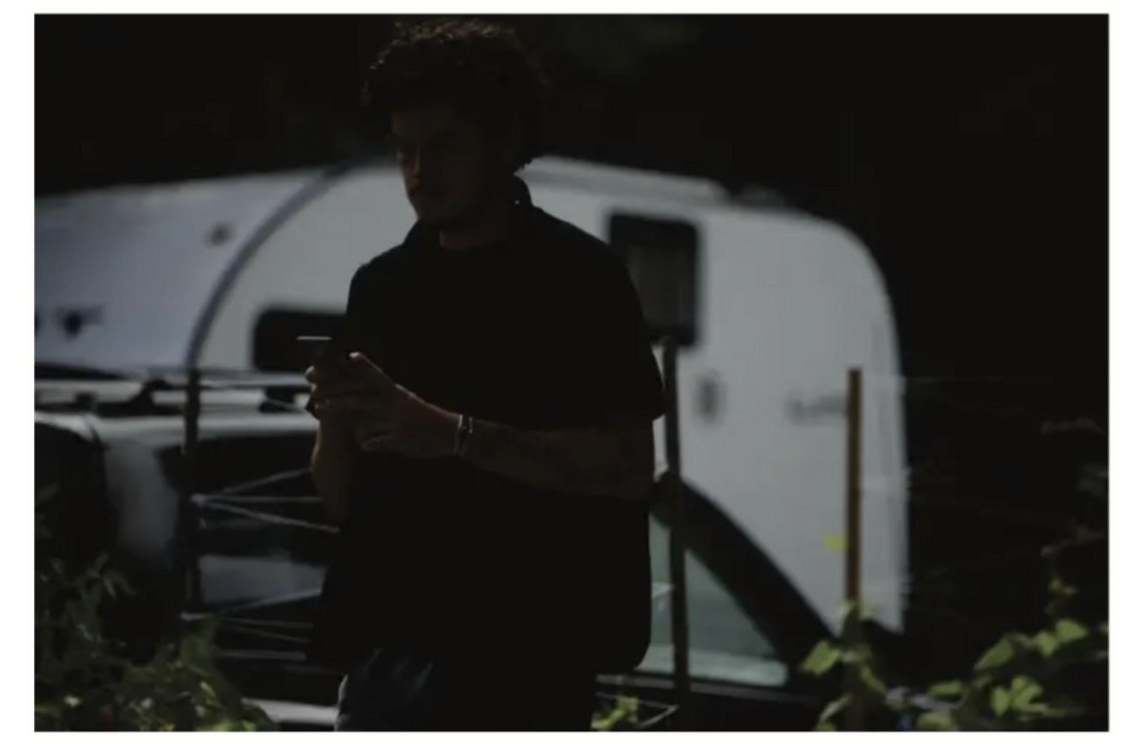
The software also returned an Instagram account under the name “Jacob Hoopes,” with a bio reading “Reed CS 2023.” The profile was private, and no additional content was accessed, aside from a visible profile photo showing an individual with long hair wearing a shirt with “REED” printed on the front.
The unnamed Special Agent then contacted the Director of Community Safety at Reed College, who provided alumni information about Hoopes to federal authorities. Notably, this information was shared without a warrant or subpoena, and Reed College has since terminated the Director, alleging that these actions specifically violated the school’s policies of protecting private student information.
The Special Agent then went on to use publicly available information from the Reed College website, which confirmed that Hoopes graduated in 2023 with a degree in computer science. The unnamed Special Agent then requested and accessed records from the Oregon Department of Motor Vehicles, where he found a driver’s license issued to an individual with the same name and address as the person listed in the Reed College alumni records.
According to the complaint, the Special Agent later conducted a spot check of the address listed in both the alumni and DMV records. Using binoculars, he observed an individual on the front porch of the residence who appeared to have the same leaf tattoo and silver bracelet on their left arm as “Subject 1.”
The FBI later conducted surveillance of Hoopes’ home on July 10, 2025 – 26 days after the events alleged to have occurred on June 14 and 15 days before the raid on his home. During this surveillance, agents captured a photo of Hoopes.
According to the criminal complaint, the photo shows the same forearm tattoo and silver bracelet seen on the individual identified as “Subject 1.” Once again, the complaint notes that there are no visible tattoos on the person’s right arm.
The affidavit concludes with a request for the court to seal all records submitted in support of the criminal complaint and arrest warrant. The unnamed Special Agent argues that sealing is necessary because the investigation remains ongoing, Hoopes had not yet been contacted by law enforcement, and he was likely unaware that he was under investigation. The agent further claims that disclosing any information could endanger individuals’ safety, lead to evidence tampering, intimidate potential witnesses, or seriously compromise the integrity of the investigation.
A United States Magistrate Judge signed the arrest warrant, and Hoopes’ home was raided at 9:00 a.m. the following morning.
All of this information raises serious concerns.
Hoopes is now the second person in Portland to be taken from their home by the FBI since June, in connection with alleged activity at the ICE facility on SW Macadam Avenue. Another individual was initially arrested by Portland Police at the scene of the June 14th protest and was later picked up on federal charges. However, Hoopes is the first to have no prior criminal record, no arrest, and to have his home also subsequently raided by federal agents.
While increased FBI activity in our community is troubling, there are also important takeaways here for those involved in resisting ICE operations here in Portland, as well as those engaged in broader liberation struggles.
It is increasingly clear that federal authorities are engaging in long-term, retrospective surveillance and prosecution of protesters, even weeks or months after the events in question. Hoopes’ case is just one example out of many. His federal complaint wasn’t filed until July 24, a full six weeks after the alleged protest activity at the ICE facility took place. This delay suggests that the FBI is quietly collecting intelligence, cross-referencing media, and compiling identities well after the fact, and largely outside public view. It is apparent that their investigations are relying almost entirely on open-source intelligence, including surveillance footage, media coverage, and private social media accounts.
Clearly, going home right after a protest without being arrested does not guarantee safety from later prosecution and capture.
When attending an action, it’s critical to obscure any identifiable features, for your safety and for the safety of those around you. Avoid exposing tattoos, faces, or other distinguishing marks while on the ground. Wear nondescript clothing that helps you blend in with the crowd. If you share protest photos publicly, always block out faces, tattoos, logos, or unique clothing items.
Better yet, reconsider taking photos at all.
Even well-intentioned posts can end up in a federal affidavit. So can your Instagram profile picture. Journalists aren’t always on our side, and neither is their reporting.
The fact that Hoopes’ arrest was based in part on an AI detected college event photo, a private Instagram profile, and binocular surveillance from a public street raises serious concerns. It showcases just how expansive and often indiscriminate federal scrutiny has become. The FBI is clearly willing to scrape through every available corner of a person’s life to build a criminal case, even when the evidence is largely circumstantial at best.
It doesn’t matter how “peaceful” you are or what kind of reputation you hold in your community, if you stand in their way, the Feds will paint you out as a dangerous threat.
This is why it’s essential to be prepared before anything happens. Know your legal rights. Memorize a legal hotline number. Set up a jail support plan and share an emergency contact list with trusted people. Assess how to prepare your home for a potential raid.
What Hoopes’ case illustrates is that state repression is methodical, and it is aimed at dismantling movements by isolating individuals and instilling fear. The best way to resist this is collectively, by organizing for legal defense, educating our communities about digital and physical security, and refusing to let these tactics deter our struggle for justice.
Hoopes isn’t deemed “peaceful” by the state, but that does not mean that he is any less deserving of support and solidarity. We know that the masses are not the ones that get to decide what is and is not peaceful, the state does. And when we legitimize this rhetoric of theirs that only “peaceful” protestors deserve our support, the state just continues to label more of us as “un-peaceful”. It is a way of manufacturing consent for our abductions.
We reject this rhetoric that we ought to alienate ourselves over how we rebel against our oppressors. Solidarity with Jacob and all those engaged in the revolt against ICE, innocent or not.
Free Jacob. Free literally everybody. Fuck ICE.