
Nestor Makhno
Under the Blows of the Counterrevolution: April-June 1918
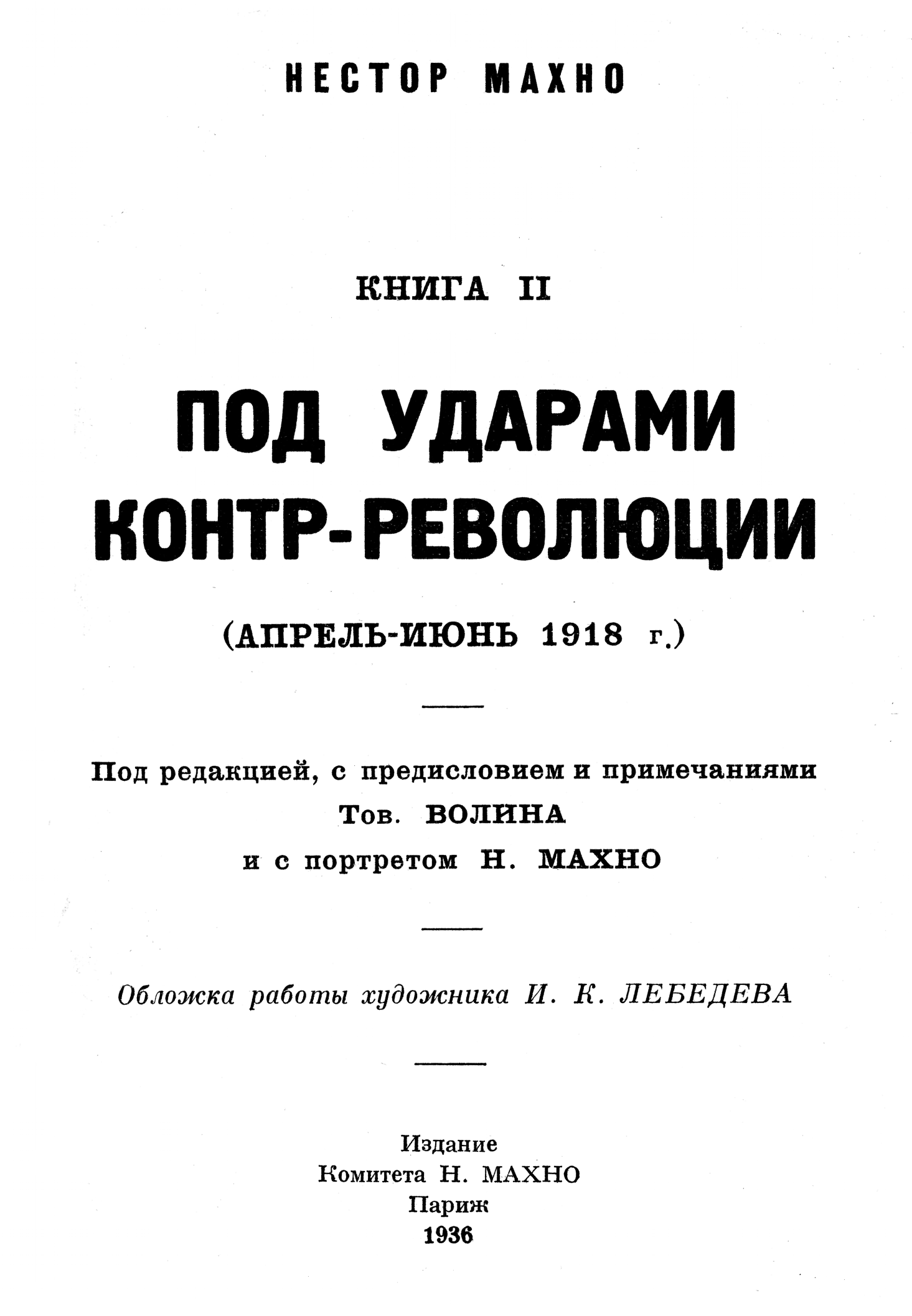
Title page of original (1936) edition
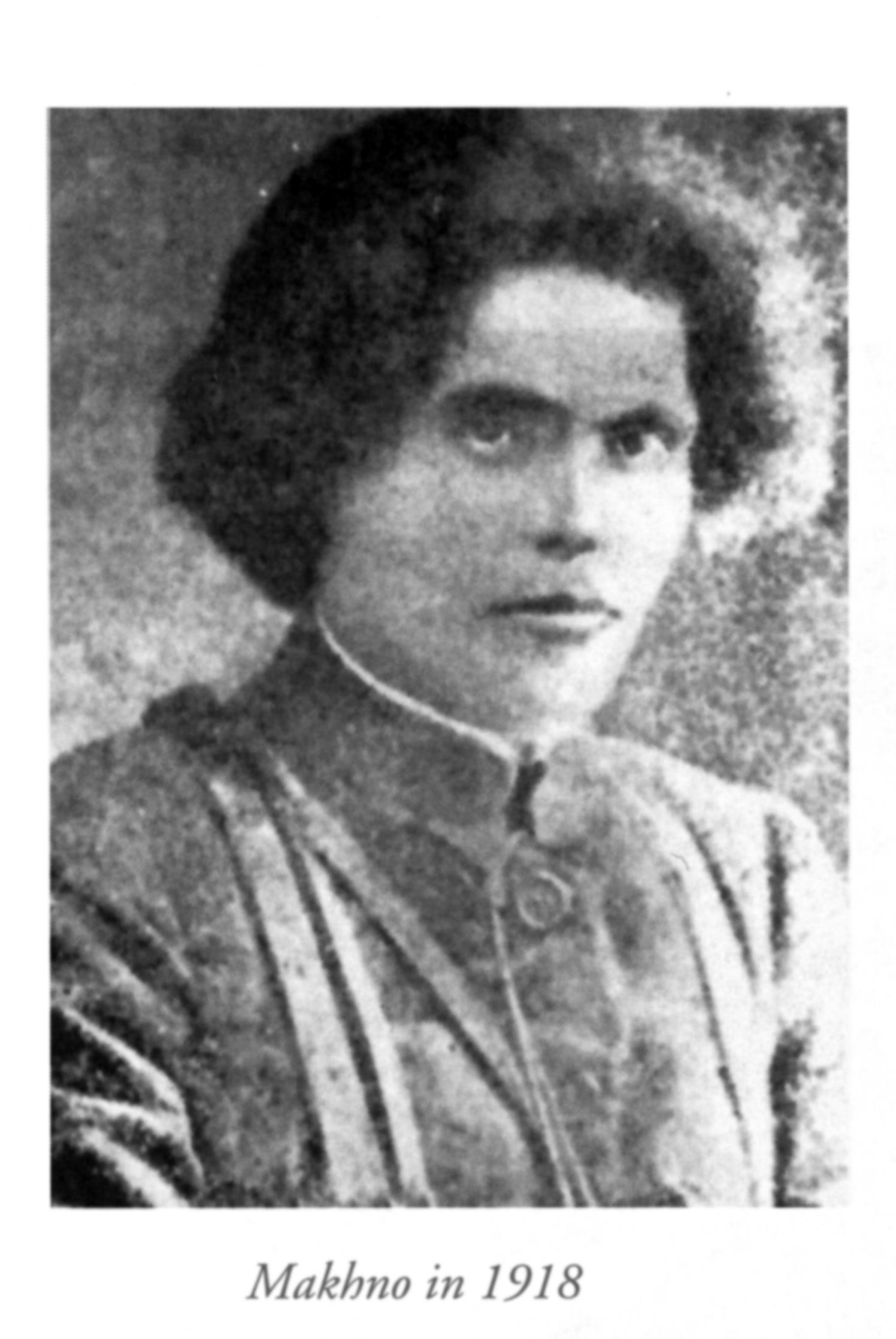
Portrait from original (1936) edition
Chapter 2: The Disarming of Maria Nikiforova’s Detachment.
Chapter 4: The Flight of the Agricultural Communes and My Search for Them.
Chapter 6: En Route With the Echelon of the Red Artillery Base.
Chapter 8: Meeting With People From “Revolutionary” Circles.
Chapter 9: Meeting With the Communards, Moving Them to Olshansk Khutor, and Saying Farewell
Chapter 10: Saratov: Local and Refugee Anarchists and My Avoidance of Certain Comrades.
Chapter 12: En Route From Astrakhan to Moscow.
Chapter 13: Moscow: My Meetings With Anarchists, Left Srs and Bolsheviks.
Chapter 14: Conference of Anarchists in Moscow at the Hotel Florencia.
Chapter 15: The All-russian Congress of Textile Trade Unions
Chapter 16: In the Peasant Section of the Vtsik of Soviets.
Chapter 17: The Kremlin, Sverdlov, and My Conversation With Him.
Chapter 18: My Meeting and Conversation With Lenin
Chapter 19: Meetings With New People and Gloomy Impressions. Preparations to Depart for Ukraine.
Chapter 20: En Route to Ukraine.
Notes to Chapters 8, 9, 12, and Some Others
From the Memoirs of Aleksei Chubenko
Translator’s Introduction
The Ukrainian Anarchist Nestor Makhno (1888–1934) intended to publish his memoirs of the Russian Revolution and Civil War in ten volumes but poverty and illness restricted him to finishing just three manuscripts of which only one was published during his lifetime. Under the Blows of the Counterrevolution, the second volume of Makhno’s memoirs, was issued posthumously in 1936. The book covers a scant ten weeks in the spring and early summer of 1918. It has interested historians mainly because of Makhno’s interviews with Lenin and Sverdlov (Chapters 17–18) but also includes eye-witness information about important but little known events of the Civil War and sheds light on the formation of Makhno’s views about the Russian Revolution which were to guide his actions over the next three years.
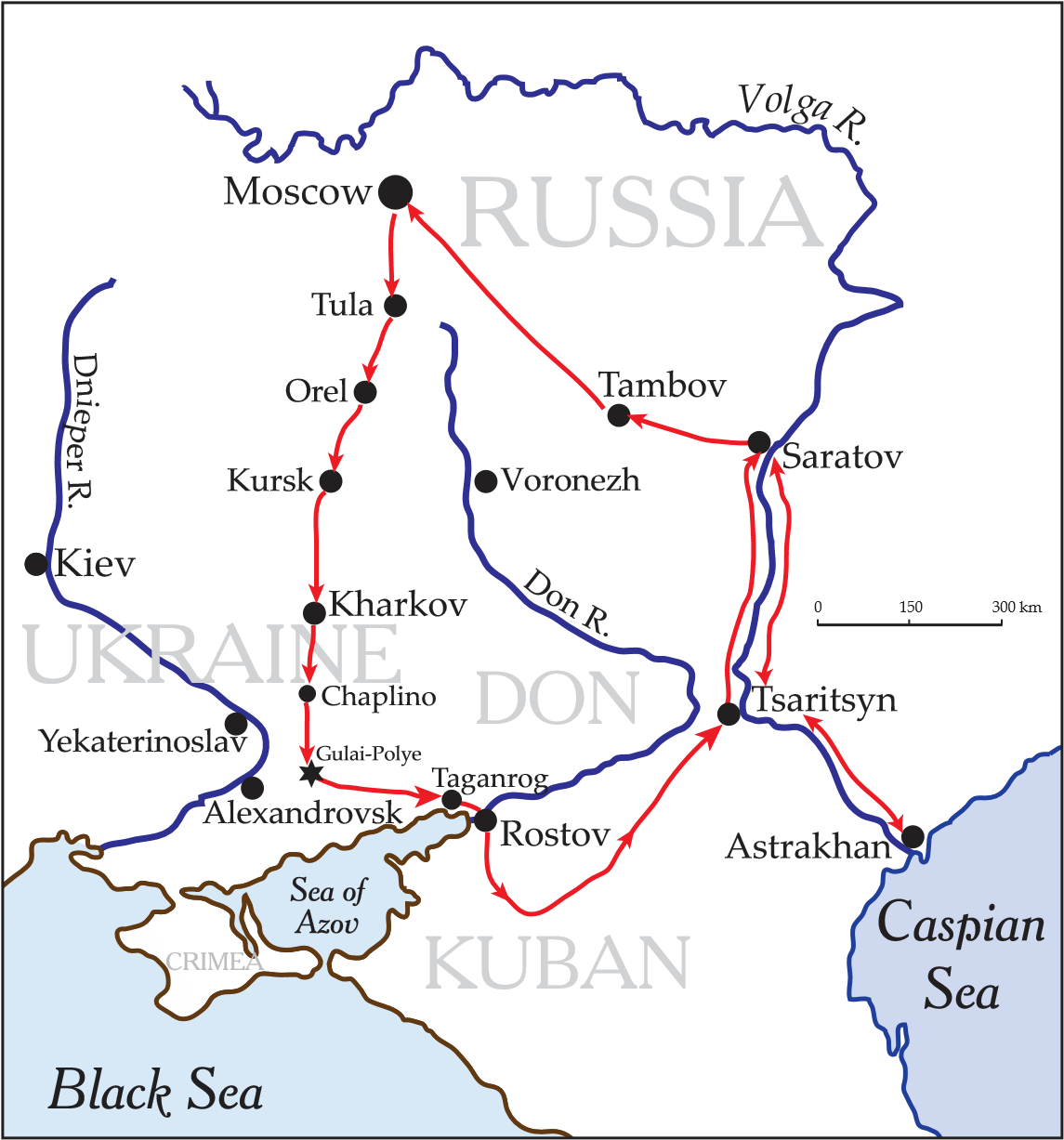
Volume II describes Makhno’s travels through a Russia which was in the opening stages of the protracted Civil War which followed the Bolshevik seizure of power in October 1917. In Volume I Makhno described the revolutionary process in his home village and raion (county) of Gulai-Polye.[1] This process came to an end in April 1918 when a fifth column in the village staged a nationalist coup shortly before an invading German force occupied the region. Makhno and his comrades were forced to join the stream of refugees moving east in advance of the relentless counterrevolutionary wave.
The German invasion was a consequence of the Treaty of BrestLitovsk, which casts a shadow over the events of Volume II. There were actually two Brest-Litovsk treaties, which officially brought an end to World War I on the Eastern Front. The first, signed between the Ukrainian nationalist Central Rada and the Central Powers (Germany, Austria-Hungary, and Turkey) on February 9 1918, allowed German and Austro-Hungarian troops to occupy Ukraine and requisition its food supplies and natural resources. (Makhno never forgave the nationalists for this alliance.) The second, signed between the Russian Soviet Republic and the Central Powers on March 3 1918, ended hostilities between Russia and Germany and obligated the revolutionary government in Moscow to withdraw its troops from Ukraine where they had been carrying on a successful war against the Central Rada.
The Treaty of Brest-Litovsk provided a “breathing space” (Lenin’s term)[2] for the Bolsheviks to consolidate their power. This involved, among other things, settling accounts with their erstwhile allies, the Anarchists. On the night of April 12–13 1918, the headquarters of the Anarchist Black Guard on Malaya Dmitrovka Street in Moscow was attacked by the Soviet secret police (the Cheka) and soldiers. This was a pitched battle in which both sides used artillery. Fighting also took place at some of the other two dozen buildings in the city occupied by Anarchist organizations. The night ended with complete victory for the government forces: about 40 Anarchists were killed or wounded and about a dozen Chekists and soldiers. Around 500 Anarchists were arrested, although most were soon released.[3]
Similar actions took place in other centres controlled by the Bolsheviks. In fact the Bolsheviks allocated significant forces to suppressing the Anarchists, diverting them from the struggle with their right-wing opponents. Soviet propaganda depicted this campaign as a police action against banditry and other criminal activities rather than elimination of a rival political group. In fact the head of the Cheka, Dzerzhinsky, emphasized, “It is not our intention or desire to carry on a struggle with ideological Anarchists.”[4] Nevertheless the largest Anarchist newspapers were shut down and Anarchist activity was limited by the authorities to low-key educational work. There was never to be a public “Trial of the Anarchists” in the Soviet Union as there were to be trials of other major political tendencies. Indeed, some form of legal Anarchist activity was to continue as late as 1937.
With the Anarchists subdued, the Bolsheviks were now free to move against the Left SRs, their other main threat from the revolutionary left. Makhno ran into many Left SRs on his journey and on the whole portrays them in a sympathetic light. They were close to the peasantry and seemed to be adopting positions similar to those of the Anarchists. But, as Makhno hints, their party was soon to succumb to the Bolshevik hammer, the main blow coming in the first week of July 1918.
The revolutionary government in Moscow had set up a Ukrainian People’s Republic which in principle was not subject to the treaty signed by the Bolsheviks (their coalition partners, the Left SRs, generally refused to recognize the treaty). The puppet government of this Soviet Republic tried to offer resistance to the invading German-Austro-Hungarian force and its nationalist allies (variously estimated at between 200,000 and 600,000 troops) but the forces at its disposal (15,000 to 30,000 in detachments of varying quality) were pitifully inadequate. Armaments were not a problem for the revolutionaries as Soviet Russia optimistically shipped 70,000 rifles and 1,800 machine guns to Ukraine. Armoured cars and trains were also available. The Gulai-Polye Anarchists were presented with 3,000 rifles, six cannons, and 11 railway wagons of ammunition although they only had about 500 partisans in the field.[5] It is perhaps a measure of the weakness of the Soviet rulers of Ukraine that they had to depend on Anarchists to do some of the heaviest fighting. The revolutionary forces found themselves engaged in a proxy war being controlled by the cynical Bolshevik leaders in the Kremlin who realized there was no hope of saving Ukraine but wanted to slow down the invaders so valuable resources could be evacuated to Russia. This mini-war ended in early May 1918 after a mere 70 days of hostilities with the complete occupation of Ukraine by Germany and Austria-Hungary.
As he set out on his journey as a political refugee, Makhno was still a person of only local significance and not the national or even world-historical figure he later became. [If the latter description seems excessive, consider that he succeeded in doing what had never when done before – to construct an entirely new social system based on Anarcho-communist principles in a region with a population of millions – at least for a time.]
Travelling east to the Volga basin, Makhno found himself in the midst of a “civil war within the civil war,” which included such dramatic events as the trial of Nikiforova, the sack of Rostov, the disarming of revolutionary detachments, Petrenko’s “siege” of Tsaritsyn, and street battles in Saratov. These episodes disappeared almost entirely from the Soviet historiography of the Civil War but students of Soviet history will recognize them as precursors of similar events in the Spanish Civil War and World War II.
Makhno was continually running into fellow victims of the tsarist prison system, some of whom he had known in Butyrki Prison in Moscow. He had natural allies in such people even though they might belong to rival political groups. (His friend Petr Arshinov once shared a cell with the future Bolshevik satrap Sergo Ordzhonikidze, a connection which he was able to exploit for a valuable favour.) Makhno also had papers proving he had been the chair of a revolutionary organ in his home town, documents which allowed him to be treated as one of the revolutionary elite in Russia. He had access to free meals, rooms, train tickets, and government jobs. Conveniently, his papers did not mention he was an Anarchist.
When Makhno finally reached Moscow, he encountered some of the most brilliant personalities in the history of Anarchism, including Aleksandr Borovoi, Petr Arshinov, Lev Chorny, Yuda Grossman-Roshchin, Aleksandr Shapiro, Wroclaw Machajski, and the founder of Anarcho-communism himself, Petr Kropotkin. Makhno judged the Anarchists he met by their willingness to go to the countryside and take up organizing work among the peasants, and found most of them wanting. In fact he became so disgusted with what he perceived to be the laziness of the urban Anarchists that one might speculate that he may have abandoned Anarchism by the time he returned to Ukraine in July 1918. But anyone who has spent time in the Anarchist movement will understand his state of mind – frustration with Anarchists but not with Anarchism.
Makhno managed to set up meetings with Sverdlov and Lenin by accident while tramping around the Kremlin trying to arrange living quarters. In his quest to avoid spending the night on a park bench he ended up dealing with the heads of state! His detailed account of his interviews with the Bolshevik leaders has been questioned by some historians because it takes the form of direct quotations although no transcript or indeed any kind of official record of the meetings exists.[6] Nevertheless Makhno’s account is convincing, especially since he came away with a grudging respect for Lenin. In fact the endless biographies and chronologies of Lenin’s life do not mention interviews with dozens of persons regarded as politically unreliable. It is noteworthy there is a record of his meeting with a dedicated Bolshevik working in Ukraine, E. B. Bosh, on June 26 1918 during which Lenin asked pointed questions about the attitude of the peasantry towards Soviet power.[7]
Lenin had another visitor around that time, the Ukrainian Bolshevik partisan leader Aleksandr Parkhomenko (1886–1921) who was later transformed into a Soviet hero of the Civil War, sort of a Communist version of Nestor Makhno himself. Parkhomenko had commanded a detachment which fought against the GermanAustro-Hungarian invasion of Ukraine and then, like Makhno, he fell back to Tsaritsyn where he was put to work in the Cheka. After Stalin arrived in Tsaritsyn in June 1918, he recognized Parkhomenko’s talent and dispatched him to the Kremlin to have an inspirational talk with Lenin, strikingly similar to Makhno’s interview. Parkhomenko went on to hold military commands in the Red Army in Ukraine, winning two prestigious “Order of the Red Banner” awards. According to the Soviet legend, he was killed in battle fighting heroically against the Makhnovists in January 1921. Parkhomenko’s life was the subject of several novels (including a reader for junior high school students) and a major motion picture (“Aleksandr Parkhomenko”) released in 1942. Many towns, streets, and factories in the Soviet Union were named after him and his face appeared on a postage stamp as recently as 1986.
Parkhomenko’s real story, retrieved from the Soviet archives, is somewhat different. Commanding a detachment noted for its lack of discipline and antisemitism, he and his entire staff were captured by the Makhnovists without putting up any resistance and he was executed as a war criminal for burning villages and killing defenseless civilians. The Makhnovists would also have remembered his murder of the Anarchist Maksuta in May 1919 during negotiations, in an incident strikingly similar to the killing of Petrenko described in Chapters 8–9 of the present volume. In pleading for his life, Parkhomenko invoked the name of his younger brother, an Anarchist commander in the Makhnovist Insurgent Army. This younger brother, unmentioned in the Soviet legend, was killed in battle two months later fighting the Red Army. There was also an older brother, a Bolshevik official who arranged exchanges of munitions for grain with the Makhnovists and had a high opinion of their efficiency. The full story of the Parkhomenkos, a poor peasant family torn apart by the Civil War, and their relations with Nestor Makhno, has yet to be told.[8]
Makhno’s discussion with Lenin allows an understanding of his differences with the Bolsheviks but also explains why he was repeatedly able to form alliances with them – alliances which were inherently unstable. Their enemies were the same (capitalists, landowners) and they pursued the same goals (soviets, communism) but the latter terms were understood differently by Anarchists and Bolsheviks. The Bolshevik slogan “all power to the soviets” was interpreted by the peasantry in a literal sense, Makhno told Lenin, and therein lay the tragedy of the Revolution in Ukraine.
But what are we to make of Makhno’s meeting with Kropotkin? The Anarchist sage had long been his spiritual mentor but the substance of their interview is almost entirely lacking in Makhno’s account (Chapter 14). The authors of various literary biographies of Makhno have been compelled to embellish this encounter with details for which no documentary evidence exists.[9] Within the future Makhnovist movement this meeting acquired a cultural significance as if Kropotkin had bestowed a blessing on Makhno. It must be noted that Kropotkin had virtually retired from active political life in 1918, partly due to infirmity and partly because he was no longer in tune with the movement he had done so much to inspire. Although invited to the many Anarchist conferences which took place in those days, he never attended any. Nevertheless Volin reported Kropotkin “took a keen interest in the Makhnovist movement and said that if he were young he would go work in the Makhnovist region.”[10] And according to Arshinov, in June 1919 Kropotkin said, “Tell Comrade Makhno from me to take care of himself, for there are not many people like him in Russia.”[11] This endorsement must also be regarded as apocryphal, since Arshinov was busy in Ukraine at the time.
At the risk of being intrusive, the Makhno’s text has been supplemented with numerous footnotes. These attempt to explain the complex events happening around him (with “fronts against the Revolution” popping up all over the place) and provide information about the identifiable people he met. In preparing his memoirs, Makhno had very limited means of verifying factual information and for the most part had to rely on his memory, which his wife Galina Kuzmenko described as “excellent.”[12] Since Makhno never finished his memoirs, he was unable to complete a number of sub-plots involving people such as Nikiforova, Polonsky, Voroshilov, and Zatonsky who kept re-appearing in his life (often with increasingly dire consequences). The footnotes try to fill this void by describing the outcome of his relations with these persons.
This edition of Under the Blows of the Counterrevolution includes the preface and endnotes by the editor of the original Russian edition, Vsevolod Volin (1882–1945). Volin was not the ideal collaborator for Makhno for the two men did not get along. Their differences were both personal and ideological. Makhno grew up in a remote village under conditions of extreme poverty and was largely self-educated. Volin was raised in a middle-class, urban household where both parents were physicians and he and his brother, a future literary critic, were tutored in French and German. Volin lived abroad for many years before the 1917 revolution while Makhno was languishing in tsarist prisons. Volin had occupied an important position in the Makhnovist movement for several months in 1919 but that experience later became a source of friction between the two men as Makhno was convinced Volin had betrayed the cause after being captured by the Bolsheviks in December 1919. In exile both men ended up in Paris where they developed different theoretical positions: Volin expounded “United Anarchism,” a synthesis of the three main currents of Anarchism (Anarcho-communism, Anarcho-syndicalism, and Anarcho-individualism); while the Anarcho-communists Makhno and Arshinov set forth the so-called “Platform,” a program which posited a degree of organization unpalatable to many Anarchists.
A war of words erupted between Makhno and Volin in the Anarchist press. Volin described Makhno as “paranoid” and “malicious”[13] while Makhno called Volin a “scoundrel” and “liar.”[14] Makhno was able to mount an able defense to Volin’s attacks during his lifetime, but after his death Volin had the field to himself and did much damage to Makhno’s reputation with accusations of drunkenness and debauchery.[15] Volin’s assertion in his preface that his relations with Makhno had “improved somewhat” before the latter’s death must be taken with a grain of salt since in Makhno’s last published article, an obituary for Nicolai Rogdaev, he went out of his way to express his contempt for Volin.[16] In fairness to Volin it must be said there is no evidence he tampered with Makhno’s text in any way and his reservations about Makhno’s views are confined to his preface and endnotes. A substantial extract from Volume II was published by Makhno in the emigré journal Rassvyet [Dawn] in 1932 and a comparison with Volin’s 1936 edition shows negligible differences.[17]
Makhno wrote his memoirs in the faint hope they would reach interested readers in Ukraine and Russia. In fact this only became possible in the 1990’s. In the Soviet Union his writings were not available even to professional historians. Of the other books published in the West about his movement, Petr Arshinov’s История махновского движения [History of the Makhnovist Movement] and Paul Avrich’s The Russian Anarchists were available in one copy each in special collections (restricted access) in Moscow and Leningrad respectively, while Alexandre Skirda’s Makhno: le cosaque de l’Anarchie was totally unavailable. In his preface to Volume 1, Makhno expressed the wish that his memoirs could be available in Ukrainian, but although they have been published in Kiev more than once since the demise of the Soviet Union, this has not happened.
I would like to thank Laure Akai, Nick Driedger, Will Firth, Nestor McNab, and Sean Boomer for encouragement in publishing this volume, with a special thanks to Gail Silvius for editorial assistance. I’m also indebted to the website www.makhno.ru and its many contributors who are dedicated to finding and preserving accurate information about the Makhnovshchina.
Malcolm Archibald
July, 2009
Edmonton, Alberta
Preface
I very much regret that a personal conflict with Nestor Makhno prevented me from editing the first volume of his memoirs, which was published still during the author’s lifetime. The absence of an experienced editor had a detrimental effect on this first book. And since its content was not of exceptional interest, it is not surprising that this first part of Makhno’s notes gave rise to a certain disappointment.
Not long before the death of N. Makhno, my personal relations with him improved somewhat. I considered proposing to him that I edit, with his participation, the rest of his memoirs. His death prevented me from following through on this intention.
After Makhno’s death comrades who were interested in publishing the continuation of his notes entrusted the job of editing them to me. I was also to provide an explanatory preface and some notes to the text, where necessary. (These notes the reader will find at the end of the book.)
I consider it necessary first of all to mention that my editorial task boiled down exclusively to imparting to Makhno’s notes a minimally literary form. I not only did not make any changes in the text which could remotely effect the meaning; but more than that, as much as this was possible I preserved untouched the style of the original – distinctive and in places quite colourful. The corrections introduced into the text had the exclusive function of making the book readable. For the uninitiated reader I must add that N. Makhno possessed only a grade school education, and had not mastered literary writing in the slightest degree (which, however, as already noted, did not prevent him from having his own characteristic “style”). In places, especially where he embarks on extensive theoretical discussions, his manuscript becomes syntactically illiterate. He fares much better in his vivid descriptions of events. The pages devoted to narrating such events could be left virtually untouched.
With respect to its actual content, Book II of the memoirs is more interesting than the first. Makhno’s observations during his travels through the whole of Russia in the summer of 1918, his meetings and conversations, his reflections, dismay, disillusionment and, finally, his decision to devote himself whole-heartedly to organizing peasant revolt in Ukraine for the struggle of a new, stateless social system – all this is extremely significant, indeed brilliant. Makhno’s stay in Moscow and his conversations with Lenin and Kropotkin are described in a lively fashion. The reader distinctly sees the gradual development of Makhno’s basic ideas. As we approach the end of the book, we have a excellent understanding of the author’s psychology. Before us stands the clear image of a person devoted to his personal ideal. The end of the book is suffused with great emotional tension.
The present, second volume of Makhno’s memoirs takes us up to July 1918. The author stops at the threshold, so to speak, of the huge peasant insurrection of which he became the chief motivator and organizer after July. The next, third volume (The Ukrainian Revolution), which takes us to the end of 1918, is still more interesting and important. He gives a complete picture of the first, preparatory stages of the Makhnovist movement (Makhnovshchina). It will be published immediately after the 2nd volume.
Unfortunately, Makhno’s notes for the third volume break off abruptly. Illness and death prevented him from carrying through the work to the end. The loss was irreparable since there was no one better to tell the story of the movement.
The three books written by him provide, however, a sufficient understanding of, first, the personal role and psychology of Makhno and, second, the least known period of the Makhnovshchina: about its first steps and first successes. Beginning with 1919 the history of the movement is better known. First and foremost, there is the book by P. Arshinov, The History of the Makhnovist Movement, published in 1923 and continuing the story, beginning with 1919. Then there are still living some participants of the events of 1919–1921 who are able to describe them in detail. Finally, there exist, undoubtedly, numerous documents, although at the present time they are dispersed in private hands.
I do not find it necessary, nor possible, in a brief preface to give a critical evaluation of the Makhnovshchina or the views of N. Makhno. The reader will find some remarks about the opinions expressed by Makhno in the present work set forth in notes to the corresponding chapters at the end of the book. I propose in the near future to publish a small work giving a critical sketch of the movement and drawing lessons from it which will be of interest both for Anarchists and for anyone interested in grassroots movements.
V. M. Volin
July 1936
Paris
Chapter I: The Retreat.
In April 1918 I was summoned to Yegorov’s headquarters[18] – the headquarters of the Red Guard forces. But the staff was no longer in the place I had been told to go: it had fallen back under the pressure of the German-Austrian forces and where it was now set up was still unknown. During the time I was travelling along the railroads, a great upheaval took place in Gulai-Polye. It was occupied by enemies of the Revolution – German and AustroHungarian expeditionary units and their fellow travelers, the detachments of the Ukrainian Central Rada.
The Red Army and Red Guard detachments fled. After them followed other revolutionary formations. Inhabitants also fled from their homes to the gleeful satisfaction of the enemy.
The shocking news about the occupation of Gulai-Polye reached me at the station of Tsarevokonstantinovka. And I saw the revolutionary forces running away myself. It was painful to watch this flight. I felt a great heaviness on my heart which deprived me of the possibility of clearly imagining what must have transpired in Gulai-Polye during my two-day absence. I was so shaken and paralyzed by everything that had happened I was in no condition to cope with this overwhelming burden with my own physical powers. Right there in the station I collapsed, laid my head on the knees of one of the Red Guards, and mindlessly cried out:
“No, no, I’ll never forget the treacherous role of the nationalists! It’s shameful for a revolutionary Anarchist to nurture thoughts of revenge, but I’m obsessed with such thoughts and they will influence my subsequent revolutionary activity…”
The Red Army soldiers told me about this later. They also said I began to weep and fell asleep in a railway carriage on the knees of the same Red Guard. But I have no memory of this.[19]
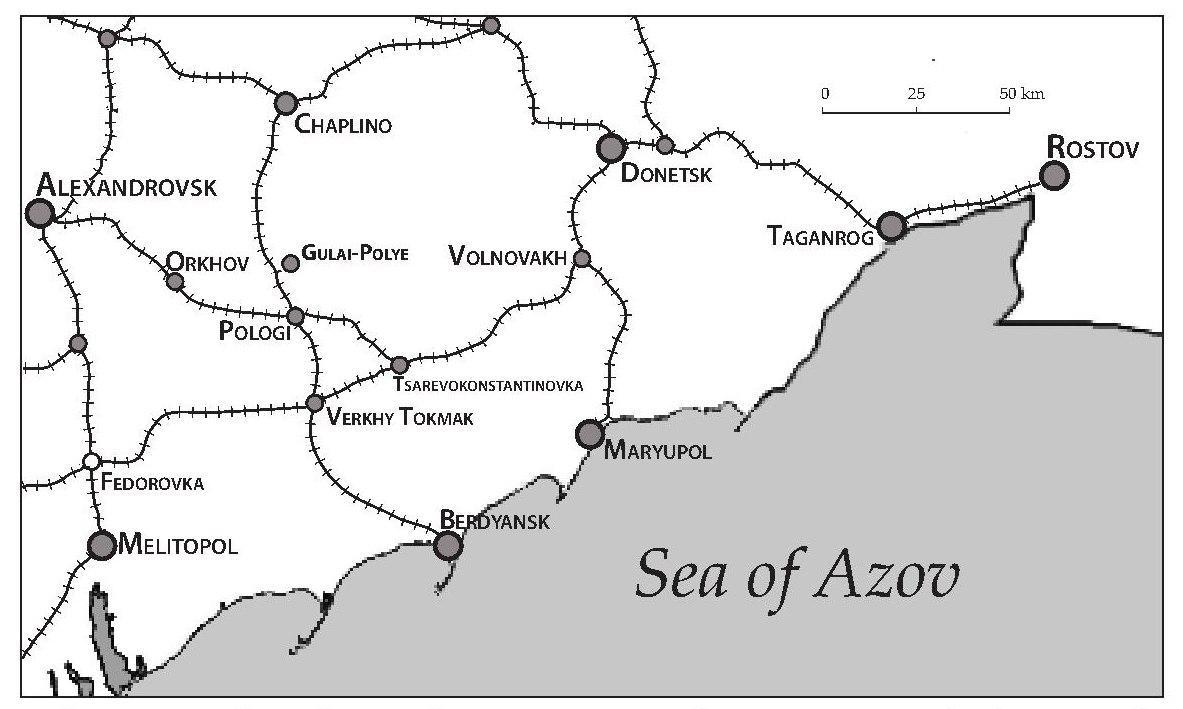
It seems to me I didn’t sleep but only felt extreme anxiety. This feeling was painful but I could still walk and speak. I recall that I couldn’t figure out where I was… Only when I exited from the carriage did I realize I was still at Tsarevokonstantinovka station. I excused myself to the Red Guards surrounding me and headed for the station building.
On the way I ran into several comrades and my brother Savva Makhno,[20] who had escaped from Gulai-Polye. This meeting made me ecstatic. I peppered them with questions about the circumstances under which Gulai-Polye was surrendered, and about what kind of losses had been suffered by the detachment of Anarchists and the other revolutionary organizations.
But the comrades, noticing that I was not in a healthy state, refrained from answering in detail, limiting themselves to brief reports, such as: “Gulai-Polye was surrendered, but not everyone was killed,” etc.
This infuriated me, but there was nothing to be done. I couldn’t force them to tell me the details, since I knew all the troop trains were taking off and we needed to find a place in one of them. I mentioned this to my brother, and he found us a place.
In another five or ten minutes we were seated in one of the Red Guard carriages and discussed in depth the state of the Revolution in Ukraine. Of course this discussion had to include the fate of Gulai-Polye and its vast raion where we had grown up, where we had developed our ideas, and where we had undertaken the colossal task of putting them into practice through revolutionary action.
Yes, we talked about Gulai-Polye. We thought about its occupation by the enemy and the errors we made in organizing free revolutionary battalions to oppose the Counterrevolution which was now borne on the bayonets of the formidable GermanAustrian Army and the militarily weak but vicious detachments of their bootlickers – the Ukrainian Central Rada.
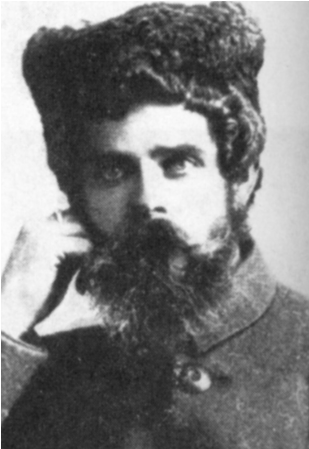
Our errors resulted from the fact that when we formed the free battalions[21] we signed up anyone who wished to join without doing any background checks. This led to the presence in the ranks of the free battalions of supporters of the Ukrainian Central Rada and its criminal, counterrevolutionary alliance with the German and Austrian governments. I have to admit that personally I didn’t find this mistake terribly serious. A greater evil in my mind was the error committed by the Revkom on the one hand and by our Group on the other – the error which permitted five or six scoundrels to act in favour of the German-Austrian-Hungarian command and the Ukrainian Central Rada in the matter of surrendering GulaiPolye without a fight and then carrying out reprisals against many of the toilers. This error was the hasty and strategically unwise dispatch of the Anarcho-communist detachment from Gulai-Polye to the Front. Although this move could be justified morally and tactically in relation to the remaining detachments, the Anarchocommunist detachment should have been retained in Gulai-Polye under the direct control of the Revkom and the Secretariat of the GAK until such time as other armed revolutionary units had arrived. Only when it was time for all the armed forces to advance to the Front was it necessary to release the Anarchist detachment, placing it in the vanguard. In reality, eye-witnesses of the events transpiring in Gulai-Polye in my absence told me the arrests of the members of the Revkom, the Soviet, and the Executive of the GAK were engineered by five people, using phony documents in some cases,[22] as well as the armed strength of the Jewish regiment which was irresolute and inclined to go with the flow. If the Anarchist detachment had been present in Gulai-Polye at that time (even if I wasn’t there myself), the conspirators would never have been able to shuffle the order of garrison duty so they could make use of the Jewish regiment for their scheme. The commander of the Jewish regiment, not himself Jewish, had a tendency when under stress to side with the stronger party.[23] He, along with the conspirators themselves and his submissive regiment, carried out an attack on the Revkom and arrested its members. Then he set the regiment to hunting down individual members of the Soviet, peasant elders, and Anarcho-communist workers...
If the Anarcho-communist detachment had been in GulaiPolye instead of at the Front fighting the Expeditionary Army and the troops of the Central Rada, it would not have allowed enemy agents to organize an armed attack on the Revkom and wreck its efforts to set up a Front against the Counterrevolution. Unfortunately, a worst-case scenario occurred. I recall addressing my comrades as follows:
“In Gulai-Polye and the whole of its raion we can now expect from the peasants and workers something extremely undesirable from a revolutionary perspective – a despicable hatred for Jews in general. Both intentional and unintentional enemies of the Revolution could make use of this hatred. We have gone to great pains to convince the non-Jewish toilers that the Jewish toilers are their brothers and must be involved in the business of social reconstruction on an equal basis. But now we find ourselves facing the possibility of Jewish pogroms. We need to think about this also, and think seriously…”
“You’re right,” my friends replied, “the peasants and workers are feeling a strong hatred for the Jews right now, but it’s not our fault… The Jews in Gulai-Polye were never isolated from the social life of the non-Jewish population. And it was only the actions of the Jewish Regiment on April 15–16 that incited the non-Jewish population to hatred towards the Jews. At the time we left Gulai-Polye we didn’t notice any manifestation of antisemitic sentiment… But what can we do? We are powerless to deal with this now. Our forces have taken to the underground, in significant measure because of the actions of the Jewish Regiment…”
“Here’s the crux of the matter,” I persisted, “with the triumph of the Counterrevolution and thanks to the irresponsible actions of the Jewish youths, the spirit of antisemitism is in the air over Gulai-Polye. And it is our firm obligation not to allow this spirit to settle in Gulai-Polye. Gulai-Polye is the heart of our nascent struggle against the Counterrevolution. We must get back there, no matter what it costs us as a group of revolutionary Anarchists. Once we get back there, it will be our firm obligation to avert that evil which is finding a home in the hearts of the peasants and workers because of the actions of the Jewish Regiment… And we can avert it by explaining to the toilers in a timely fashion who the guilty party was in bringing about the arrests… If we don’t take appropriate measures to deal with this problem, then, mark my words friends, the Jewish working population will be wiped out…”
“You’re quite right,” replied my friends, “but what happened wasn’t our fault… We don’t dispute the fact we need to give this matter serious thought and make it our business to fight against all this… But it will have to wait till we get back to Gulai-Polye. In the meantime we must consider where we should set up a temporary meeting place so we can gather together all of our comrades who will be passing through the Red Front and searching for you…”
We decided to set up shop for a spell in Taganrog, the current location of the Ukrainian Bolshevik — Left SR government. The officials of this government had fled there from the various cities of southern Ukraine. Most of the Red Guard detachments were retreating there as well. In Taganrog some of these fugitive units were issued itineraries for subsequent deployment; others were subject to arrests, forcible disarmament, and court martial.
So we would spend a couple of weeks in Taganrog. During this time the rest of our comrades would show up. We would hold a conference to decide the following question: by what means and in what kind of order would we begin to return to our own raion to undertake underground work against the triumphant Counterrevolution?
In the meantime, while we were discussing this matter, the echelons of Petrenko’s detachment were ordered to depart from the railway junction of Tsarevokonstantinovka and move towards Taganrog, where the Red Guard command was assembling its forces with the intention of offering sustained resistance to the Germans and the Central Rada.
The trains started up… It was painful for us to depart from the region where we had done so much work among the population. However it couldn’t be helped. We would have to separate from our home territory for a time not only physically, but also spiritually. Our absence would give us an opportunity to rethink our convictions but at the same time we entertained the great hope that the triumph of the Counterrevolution was built on sand, that in a few months the Ukrainian revolutionary working population, disoriented at the moment by, on the one hand, the Bolshevik Treaty of Brest-Litovsk; and, on the other hand, by the vile, provocative politics of the Ukrainian Central Rada (lackeys of Germany and Austria-Hungary), would recover its wits and grasp the pernicious role of these destroyers of its destiny and the Revolution. The labouring population needed to organize itself independently this time at the grass roots level and overthrow the executioners without taking orders from provocateurs from the camp of the socialist-nationalists…[24]
I knew the state of mind of the village toilers. I knew how they had prepared for their unsuccessful battle against the onslaught of the German-Austro-Hungarian junkers and the bands of the Ukrainian Central Rada. I knew and I believed this state of mind was intrinsic to the toilers and wouldn’t change just because their organization had sustained heavy blows right off the bat. I deeply nourished the hope this organization could be rebuilt on a more solid basis, more self-assured in its tactics and with a firmer spirit. I and my friends – Savva Makhno, Stepan Shepel, and Vanya Kh. (who were sent to me from Gulai-Polye to warn me not to attempt to return illegally under any circumstances) all took part in a lively review of the recent past.
We decided to gather our comrades together in Taganrog and jointly work out a plan for our return to Gulai-Polye and its raion to carry out underground work. Certainly we recognized the peril which threatened the life of each of us not just in Gulai-Polye but on the way back. But we were aware that in order to overthrow the German-Ukrainian Counterrevolution we couldn’t count on help from the Russian Bolsheviks with their “proletarian revolutionary government” and their organized military force because of their loyalty to the Treaty of Brest-Litovsk. The downfall of the Counterrevolution could be accomplished only by means of plans based on the firm revolutionary consciousness of the toiling masses, in fact plans designed by the toilers themselves. And we wouldn’t let anything stop us from getting back to our own territory, into the ranks of these toilers.
But, I repeat, before us was the preliminary task of assembling all the comrades who were retreating before the Counterrevolution by various routes and jointly working out and approving plans for our return home and for the underground work we intended to carry on there.
With this goal my brother Savva Makhno travelled from Taganrog to the zone of the military-revolutionary Front, 70 versts from the city, to search out comrades and direct them to Taganrog.
In the meantime I made contact with some members of the Federation of Taganrog Anarchists as well as with other friends and also got caught up in an affair which caused a sensation in Taganrog at the time involving the commander of one of the Anarchist detachments, Maria Nikiforova.
Chapter 2: The Disarming of Maria Nikiforova’s Detachment.

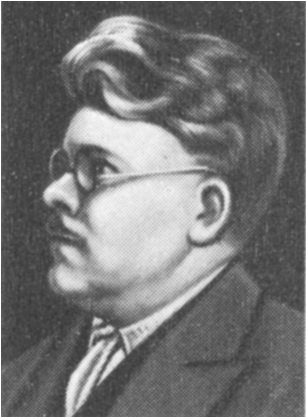
All the Bolshevik Red Guard detachments which survived the blows of the German — Austro-Hungarian expeditionary armies sought more or less prolonged respites in the deep rear, at a respectable distance from Front. Many Anarchist detachments acted the same way. In this was evident that spirit of negligence and irresponsibleness which had quietly infected many – oh, how many! – of the revolutionaries as a result either of the betrayal of the Revolution in the Brest-Litovsk Treaty (a betrayal in which both the Russian Bolsheviks and the Ukrainian socialists were guilty), or on account of other causes which I don’t consider necessary to mention in the present chapter. But there was a noticeable lack of discipline in the ranks of the revolutionaries who were struggling to defend the Revolution against the Counterrevolution. As a result of this situation of low morale, I found myself in the presence of many detachments which were no where near the Front, including the Anarchist or, more accurately, anarchic detachment of Maria Nikiforova.[25] The Bolshevik-Left SR government, like any other government, couldn’t tolerate a detachment of this stripe and proceeded to find fault with its withdrawal to the rear. Of course the Bolshevik-Left SR authorities intended to exploit the revolutionary Anarchists in the struggle against the Counterrevolution so these intransigent revolutionaries would become cannon fodder on the military fronts. But here suddenly the authorities were confronted with a detachment under the command of a woman Anarchist joining the Bolshevik detachments in the rear. The authorities’ plans had been disrupted and they set about restoring order. The timing was propitious for dirty deeds – this was the time when Lenin and Trotsky had gone completely berserk – destroying the Anarchist organizations in Moscow and launching a campaign against the Anarchists in other cities and in the countryside. The Left Socialist-Revolutionaries in power raised no objection to this. That’s why the Ukrainian Bolshevik — Left SR authorities hastened to clamp down on the Anarchist Nikiforova’s detachment which arrived in Taganrog along with Red Guard detachments.
The Ukrainian government ordered a detachment under the command of the Bolshevik Kaskin (which had just fled from the Front) to arrest Maria Nikiforova and disarm her detachment. Kaskin’s soldiers arrested Maria Nikiforova before my very eyes in the building of the UTsIK of Soviets.[26] As they were conducting her out of the building in the presence of the prominent Bolshevik Zatonsky,[27] Maria Nikiforova demanded an explanation from him: why was she being arrested? Zatonsky prevaricated: “I don’t know.” Nikiforova called him a lying hypocrite. So Nikiforova was arrested and her detachment disarmed.
However Nikiforova’s detachment didn’t fold and allow itself to be absorbed into the Bolshevik Kaskin’s detachment. Instead her troops insisted on knowing what the authorities had done with Nikiforova and why they had been disarmed.
Joining them in this demand were all the detachments retreating from Ukraine into Taganrog and the local Taganrog Anarchists. The Taganrog committee of the Party of Left SocialistRevolutionaries also supported the Anarchists and the troops of Nikiforova’s detachment.

In short order I signed a telegram on behalf of myself and Maria Nikiforova to the commander-in-chief of the Ukrainian Red Front, Antonov-Ovseyenko,[28] requesting his opinion about the detachment of the Anarchist Nikiforova and asking him to order her release, the re-arming of her detachment, and the assignment of her detachment to a definite sector of the Front following its outfitting with weapons and equipment.
The commander-in-chief Antonov-Ovseyenko dispatched a response to the authorities installed in Taganrog, with a copy to us in care of the Federation of Anarchists. The telegram bore the practical tone of an experienced commander:
“The detachment of the Anarchist Maria Nikiforova, as well as Comrade Nikiforova herself, are well known to me. Instead of concerning yourselves with disarming such military units, I would advise you to concern yourselves with creating them.” (signature)
At the same time there were many other telegrams protesting the authorities’ action or simply expressing support for Nikiforova and her detachment. These came from the Front from Bolshevik, Left SR, and Anarchist detachments and their commanders which had distinguished themselves in battle.
The Yekaterinoslav (Bryansk) Anarchist armoured train[29] under the command of the Anarchist Garin arrived in Taganrog in order to register its own revolutionary protest against the highhanded, backstabbing authorities.
All this had not been initiated by those who ordered the arrest of Maria Nikiforova and the disarming of her detachment, nor by those who carried out this order. Rather the affair was instigated by the central authorities, safely in the rear, who put together false evidence against Maria Nikiforova and her detachment, evidence which supposedly implicated her in the pillaging of Yelisavetgrad which she had occupied in March 1918, driving out the Ukrainian nationalists. In this way they concocted a criminal case.
Here’s the straight goods: the Bolsheviks are experts at fabricating lies and carrying out mean acts against others. They exaggerated the evidence against Maria Nikiforova and her detachment and made a case out of it.
Maria Nikiforova was tried before a military court during the last week of April. The judges’ bench was occupied by two Left SRs from their Taganrog federation, two Bolshevik-Communists from their local Party branch, and one Bolshevik-Communist from the central Bolshevik-Left SR government of Ukraine.
The proceedings were carried on with open doors and bore the character of a court of revolutionary honour. Here I must note that the Left SRs behaved fairly towards the accused Nikiforova and were hostile towards the agents of the government accusing her.
The central authorities recruited witnesses from the refugees present in the city to testify against Nikiforova, striving with a mixture of truth and lies to pin a criminal conviction on her which would allow them to execute her. But the tribunal was genuinely revolutionary and impartial, and most of its members were politically and juridically independent and not influenced by the provocations of the government’s hired agents.
Testifying before the court were many of the spectators attending the trial, which gave to the investigation of this matter almost the character of a forum at which anyone present could speak freely.
I remember the trial as if it had happened today: Comrade Garin, one of those who had known Nikiforova and her detachment at the Front, spoke up. In a fiery speech he told the judges and all those citizens present that in his opinion “if Comrade Nikiforova now submits to the court, it is only because she sees that most of the judges are real revolutionaries and believes that she will emerge from here with her detachment restored and rearmed so they can go fight against the Counterrevolution. If she did not have faith in the court and predicted that it would follow the exhortations of the government and its provocateurs, I would know about this and I declare here and now in the name of the crew of the armoured train that we would liberate her by force...”

This declaration by Garin ruffled the revolutionary judges. Nevertheless they replied to him that the court had been set up on the basis of complete independence from the government and would carry the matter through to its logical conclusion. If Maria Nikiforova was found guilty, she would receive her just punishment from those who had arrested her. If the evidence against her was proven false, the court would exert itself to make sure Nikiforova recovered her weapons and equipment and she would be free to leave Taganrog for the Front or wherever she wished to go...
As a result of the inquiry, the court decided there were no grounds to convict Nikiforova for the pillaging of Yelisavetgrad. The court decreed she be released immediately and that the weapons and equipment seized by Kaskin’s detachment be returned to her detachment without delay. She was granted the option of putting together an echelon and departing for the Front, which is what she and her detachment wanted to do anyway.
The next day Nikiforova already turned up at the Federation of Taganrog Anarchists. We issued a leaflet, signed by a council of Anarchists, which exposed the falsification of the case against Nikiforova by the central Ukrainian Bolshevik government and Commander Kaskin, and accused them of having an odious and hypocritical attitude towards the Revolution itself. This leaflet was written by me personally and was not endorsed by some of the comrades because of its scathing attack on Kaskin.
Then, while Nikiforova’s detachment was being re-fitted, Nikiforova and I and one other comrade from the Taganrog Federation arranged a serious of mass meetings, sponsored by the Federation. These meetings were held in the Taganrog tanning and metallurgical factories, in the city centre, in the Apollo theatre, and in other parts of the city. The theme of these meetings was: “The defense of the Revolution against the Expeditionary Counterrevolutionaries – the German- Austro-Hungarian armies and the Ukrainian Central Rada; and in the rear – against the reactionary government which is strong in the rear but feeble at the Front.” Everywhere, on our signs and at the meetings, I presented myself as “Skromny” (my prison nickname).[30] Our position at many of the meetings drew support from the Taganrog Left SRs. The meetings were an enormous success.
I recall at one of the meetings (at the tannery) the Bolshevik big shots Bubnov[31] and Kaskin showed up. They ended up stamping their feet in frustration when the thousands of workers present wouldn’t let them finish their speeches, shouting: “We’ve heard enough from you. Now give Comrade Skromny the floor – he will answer you!...” When I responded to Bubnov (Nikiforova answered Kaskin), the masses of workers whistled at Bubnov and Kaskin, yelling:
“Comrade Skromny, run them off the platform.”
After our speeches at the Taganrog meetings, Nikiforova[32] was busy with the preparations of her detachment to advance to the Front.
I was busy preparing for the conference of Gulai-Polye comrades, who were already beginning to arrive, one by one.
Chapter 3: Our Conference.
As soon my brother Savva reached the appointed sector of the Red Front, he met Comrades Aleksei Marchenko,[33] Isidor Luty[34] (also known as Petya), Boris Veretelnik,[35] S. Karetnik,[36] and many others. He directed all of them to a certain address in Taganrog while he remained for some time at the Front. When all the comrades we could find had assembled in Taganrog, we set a date for our conference in the building of the Federation of Taganrog Anarchists. The conference took place at the end of April 1918. I opened the proceedings with an invitation to all the comrades present to express their opinions on where we had gone amiss in organizing the free battalions. I also wanted to know if anyone had noticed advance signs that agents of the Ukrainian Central Rada and the German headquarters were preparing to arrest the Revkom, the members of the Soviet, and members of the GAK in general.
A wholescale exchange of opinions led us to the unanimous conclusion which I had already drawn in discussions with some of the comrades while still in Tsarevokonstantinovka, namely that if the Revkom had not sent the GAK’s detachment to the Front, but held it back until the day of departure of the other military units, then the conspiracy would have had no chance of success, even in my absence from Gulai-Polye. The Jewish Regiment would not have been called up out of order to replace the other regiment which came off duty early. And generally, the Jewish Regiment, despite its habitual tendency to accommodate itself to anyone and everything, would never have decided to take action against the Revkom on behalf of the Germans and the Ukrainian Central Rada if it had known there were other armed units stationed in the centre of Gulai-Polye. But the conspirators convinced it that there were no other units in the centre of Gulai-Polye, and that they could start the process which would then be finished by the German regiments and the detachments of the Central Rada which were advancing triumphantly and were already closing on the village.
“The rank-and-file Jews were really foolish,” said some of my friends, “they were so eager for glory, they sucked up to the high command of the invaders...” The German-Austro-Hungarian command actually thanked them, along with the leaders of this vile counterrevolutionary conspiracy.
Of course this accurate analysis of the role of the Jewish Regiment in the conspiracy caused great mental anguish to those who had fought so hard against antisemitism. They found themselves not only being arrested by the Jews, who were acting hand-in-hand with antisemites in this vile business, but also being “detained” until the arrival in Gulai-Polye of the Germans, Austro-Hungarians, and nationalists – notorious for carrying out pogroms of Ukrainians – in order to hand them over to these executioners. These comrades found it impossible to relieve their mental anguish while they were forced to be inactive. For many at the conference their pain was so great they started weeping. But of course no one dreamed of carrying out pogroms, about taking revenge on Jews for this vile affair of a few of them. Generally speaking, all those who call the Makhnovists pogromists are slanderers. For no one, not even the Jews themselves, ever fought so fiercely and honourably against antisemitism and pogromists in Ukraine, as the Anarcho-Makhnovists. My notes prove this incontrovertible fact.
I noticed the mental anguish and mood of despair which gripped almost all of my friends was causing them to avoid discussing the problems which our conference was supposed to deal with. I myself began to suffer from the same malaise and had to muster all my strength to overcome this overwhelming feeling of depression. Again I put one basic question before the group: should we return to Ukraine, to our own territory? Or should we stay in one of the Russian cities and carry on as we were now, lamenting the past but not going back and trying to rectify matters.
“Let’s go back! Let’s go back! We’ll all go back!...” One after another the suddenly cheerful voices chimed in. A minute earlier these voices had been silent, almost as if the hall were empty.
Then we set ourselves three additional questions, which were decided by us in a positive way. Here are the decisions we arrived at:
-
We would return to our own raion illegally and organize initial groups of from 5 to 10 persons each among the peasants and workers. These would be combat groups, designed to involve the labouring peasantry on a wide scale in the struggle against the German-Austro-Hungarian Expeditionary Army and the Ukrainian Central Rada. In each instance of popular rebellion against these counterrevolutionary conquerors, we would try to be in the thick of things, imparting to them a more focused and resolute character.
-
All of us couldn’t return to our own region at the same time; however, the first comrades to return would have to mark their successful return by organizing merciless individual terror against the commanding officers of the German-Austro-Hungarian armies and detachments of the Ukrainian Central Rada. They would also have to organize collective peasant attacks on all those pomeshchiks who fled from their estates in the days when their lands were divided up and the surplus livestock and machinery removed but had now returned to “their” estates in the wake of the invasion of the Expeditionary Army and its auxiliary Central Rada forces. In planning peasant attacks on the pomeshchiks, priority would be given to eliminating the pomeshchiks themselves as well as the leaders of their punitive detachments which (according to the statements of peasants who have just arrived from that region) had at their disposal a special kind of detachment from the regular German-Austro-Hungarian armies.
The goal of these counterrevolutionary detachments was to oversee the taking back of the land from the peasants, along with livestock and machinery; and the beating, flogging, and shooting of rebels.
The goals of our intended organized peasant attacks on the pomeshchiks and the military units which were based on their estates are as follows: (a) the disarming of the pomeshchiks and their military units; (b) the confiscation of their monetary wealth and the killing of those who had been involved in beating, flogging, and shooting peasants and workers. Their guilt in these evil deeds would have to be established on the basis of the testimony of peasants from those towns and villages where these gentlemen exercised their lynch rule or where they collaborated with the German-Austro-Hungarian command in arbitrary punitive actions.
-
The defense of the Revolution required armaments and equipment. The toilers would have to obtain these from their enemies. We were going home with one thought in mind: to smash the counterrevolutionary Front so we could live in freedom in a new kind of society, or die trying. We, as a group and individually, would strive to organize, in the villages among the toilers, free battalions and auxiliary light combat units to disarm the invading troops and the Rada’s detachments and, in the event of stiff resistance, to simply annihilate them.
These three simple points were drawn up at our Taganrog conference for the struggle with those who arrived uninvited on revolutionary soil, forcibly set up shop, and then punished all those who only dared to stand up for their own right to a free and independent life. It was this program which committed all of us to returning to Gulai-Polye.
As we worked out the details of this program, details which were extraordinarily important in such an unequal struggle, without realizing it I became the motivational force inspiring the comrades around me to move forward towards our intended goal, a goal which would demand self-sacrifice and heavy responsibilities from each of us. Our realization of this caused us to worry. Nevertheless we resolved to exert our maximum effort to reach our goals and in the process to put our toughness to the test.
Thus we would return to Gulai-Polye, to our own raion. We would return in order to raise a revolt of the peasants and to struggle with them and, if necessary, to die in this struggle for the social revolution. We would clear the way for the possible creation of a communist Anarchist society.
But how would we return? In groups or individually?
We left this question to be decided by each individual on their own. The main thing was, that towards the end of June or early in July we would all meet in Gulai-Polye or near there. This would be the time of field work. All the peasants would be in the fields – harvesting crops. In would be easy for us to meet with the peasants and talk to them about what needed to be done. We could learn their opinions, find out their true feelings. Then we could choose the toughest ones, the ones most devoted to the cause of liberty, and form a vanguard from them for the whole of Gulai-Polye and its raion. We knew that Gulai-Polye was the logical place to be the centre of an all-encompassing peasant revolt. We knew that, in spite of the provocational activity of agents of the German command and the Central Rada, the population of Gulai-Polye and its raion had faith in its own revolutionary drive. It was the duty of the Gulai-Polyans to be the first to revolt and to clearly spell out the goals they were striving for in order set in motion the whole toiling population of other raions.
“The three-point program we have worked out,” I said to the comrades, “is to some extent a significant step forward towards setting our goals before the toiling population. These goals can only be achieved through a broad-based insurrection – an insurrection which will require a supreme revolutionary effort demanding the utmost in courage and ruthlessness. But our program is only the first step. In the final analysis we will define these goals together with the toilers of our region as we develop, jointly with them, our direct action against the Counterrevolution...”
Then Comrade Veretelnik raised an issue concerning a member of our group, Lev Schneider, and his vile and treasonous role during the key Gulai-Polye events of April 15–16.
Veretelnik described this role as a betrayal not just in relation to our group, but also in relation to the ideal of Anarchism.
“Lev Schneider,” said Veretelnik, “either lost his mind during those days, or his revolutionary mindset had imperceptibly been replaced by old-fashioned philistinism. Whatever happened, he ended up on what appeared to be the stronger side... But this isn’t the main thing. Lev Schneider joined the enemy not only physically but mentally. He was not only in the ranks of the Jewish bourgeoisie who met the Germans and the Ukrainian Central Rada’s thugs with bread and salt, but he was the first to make a welcoming speech in Ukrainian – a counterrevolutionary speech. Then he led the haidamaks in breaking into the office of our group where he ripped up the portraits of Bakunin, Kropotkin, and Aleksandr Semenyuta[37] and trampled on them. These were people whom, according to his own declarations, he loved... Jointly with the nationalist thugs he destroyed the Group’s library, despite the fact that even in the ranks of the nationalists there were people who gathered up our literature, books, newspapers, and proclamations and took them away to preserve them. Some of these people passed a message to our comrades that this literature would be returned to us at an appropriate time.
“I insist,” declared Veretelnik, becoming quite agitated, “that the members of our Group here at the conference make a definite statement about Schneider’s treason. His role was that of a provocateur, and I believe for that Lev Schneider should die.”
The comrades supported everything Comrade Veretelnik said about Schneider. As to the question about how all of us, or each of us individually, would act upon encountering Schneider, we left that open for the moment. We considered that this question could be decided finally only in Gulai-Polye, and by the group as a whole. But the conference did unanimously agree that the final decision would have to involve the killing of Schneider.
Our conference concluded with the proposal to all the participants to use the next month and a half to familiarize themselves with the peasants and workers of the Don region, to the extent that this was permitted by the military situation and travel conditions. We also decided to visit a number of large cities in central Russia: Moscow, Petrograd, Kronstadt, etc., and make an in-depth survey of what was going on there. We wanted to find out what the Bolshevik — Left SR government was up to and how the toilers were reacting. These were the toilers who had sacrificed themselves and were continuing to sacrifice themselves in the struggle for a new, free society. But to us peasant Anarchists it seemed the foundations of this society were not being put in place by the toilers themselves, but rather they had handed off the job to a new set of rulers…
With this goal, we broke up into groups. Comrade Veretelnik and I decided to visit Moscow, Petrograd, and Kronstadt. My brother Savva with comrades Stepan Shepel and Karetnik decided to go to the Front with the intention of slipping through to Gulai-Polye raion.
Comrades Vanya “Stepanovsky,” P. Krakovsky, Korostelyev, A. Marchenko, Isidor Luty, Kh. Gorelik, and Kolyada[38] also decided to visit Moscow and return from there via Orel and Kursk. They proposed to wait in Kursk until Veretelnik and myself arrived, so we could proceed together to Ukraine across the Front in the direction of Kharkov.
In parting we confirmed our strong desire to return to our Gulai-Polye raion by the end of June or early July for the purpose of liquidating the Counterrevolution which had established itself there.
Chapter 4: The Flight of the Agricultural Communes and My Search for Them.

When Veretelnik and I were leaving Taganrog, I received news that echelons were passing through the city in which there were refugees from the agricultural communes organized in Gulai-Polye raion by our Group. (In Volume I of my memoirs I have already mentioned I was a member of one of these communes and carried on responsible work in it.) Upon receiving this news, I parted with Veretelnik and hastened to find the communard refugees. I wanted to meet my girl friend[39] who, as a member of the commune, was retreating along with everybody else. And I wanted to meet with the communards generally, in order to exchange views with them on our subsequent course of action. I wanted to cheer them up and share with them my candid views of the future based on the plans of our Taganrog conference. I was one of the movers- and-shakers in setting up the communal life style and felt a definite responsibility for its fate. Now my thoughts were only about them. I desperately wanted to overtake them and shower them with hugs and kisses for the brave beginning they had made in solving one of the most basic problems of the revolutionary practice of working people.
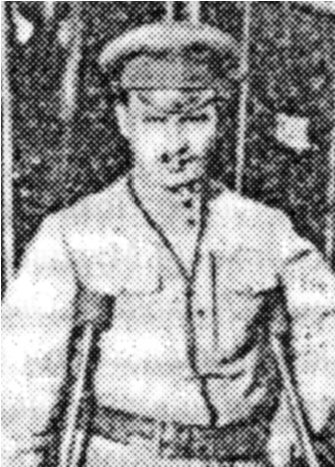
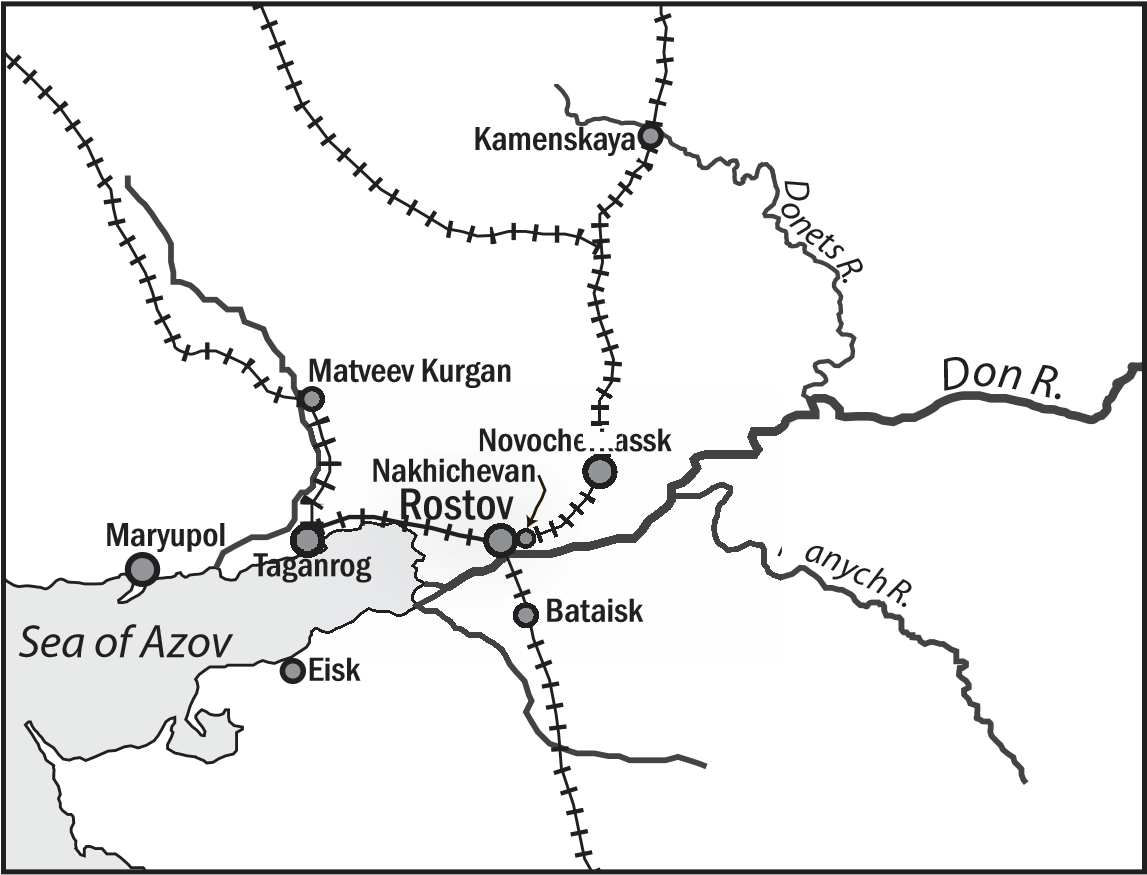
Before my departure from Taganrog for Rostov-on-Don I met with the sailor Polonsky,[40] commander of the Gulai-Polye Free Battalion, and his brother. Now our Polonsky declared to me that he wanted neither to rejoin his old party – the Left SRs – or remain in the ranks of the Anarchists. He was going to try to study Bolshevism. If he didn’t find in it the force which could screw the head off the armed Counterrevolution, then he would revert to passive neutrality, since he valued his health, “without which life is impossible in the existing state of things.”
I had a good laugh at this, gave him the 1,000 rubles he requested from the funds of the Revkom, and left for Rostov-on-Don. In Rostov I wandered along the railway tracks for three days searching for my fellow-communards, but in vain. Here I again encountered the commander of the Red Reserve Forces of South Russia, Belenkovich,[41] who had supplied GulaiPolye with weapons (see Volume I of my memoirs). Without any beating about the bush we spoke candidly about the general causes of the swift retreat of the Red Guard forces and, in particular, about the Gulai-Polye events of April 15–16.
Belenkovich was a very direct and frank person, and gave the impression of being a stalwart soldier of the Revolution. However he was a Bolshevik, who not only thought but also acted according to the program of his Centre which was made up of between three and five “head-priests.” This circumstance provoked me to protest, since in my limited experience as a soldier of the Revolution I had already experienced several moments when it was necessary to act not according to central orders, but according to what was demanded by the concrete circumstances. Of course, these actions were not in conflict with the ruling ideas of the Revolution.
Belenkovich told me he had personally ordered that a separate echelon be made available to our communards, so they could make their withdrawal more comfortably. According to him, they had already passed through. “Obviously they have now moved on further, into the heart of the country, but where they have gone it’s hard to say. They might have taken the railway line to the North Caucasus or they may headed towards Lisk and Voronezh.” Belenkovich advised me not to rush after them in the Lisk-Voronezh direction since, according to his words, there were often counterrevolutionary Cossack detachments operating along this line who stopped trains and shot any of the passengers who seemed the least bit suspicious...[42]
Chapter 5: My Meeting With the Rostov-nakhichevan Anarchists and the Refugee Anarchists Arriving in Rostov.
I didn’t know what our Rostov-Nakhichevan[43] comrades were up to in those anxious days. During 1917 and so far in 1918, these comrades had published a serious weekly newspaper – The Anarchist. From this newspaper it was evident that these comrades were exerting an influence on the working people of the city and its environs and were carrying on educational work among the workers and organizing them for military action. At the same time they were trying to mould the Anarchist movement into a tightly-run organization. Now, in the first days of my sojourn in Rostov, I couldn’t find their newspaper and didn’t run into any of the comrades of the Rostov-Nakhichevan group.
Then on the very first day when I abandoned any hope of finding members of the agricultural communes of Gulai-Polye raion and remained in Rostov only with the goal of looking up Anarchists, I came across the evening newspaper Black Banner, a broadsheet with printing on both sides, containing news articles about the situation at the Front of the Revolution versus the Counterrevolution. The articles were incomplete, mostly inaccurate, and in some cases just plain wrong.
The editors of this much talked-about Anarchist rag kept moving their operation from one hotel to another which made it difficult for me personally, as well as many other Anarchists arriving in Rostov from Odessa and other cities of South Ukraine, to track them down and find out what kind of people they were.[44]
I recall that I circulated about the bazaar – flea market with the intention of buying some underwear I could change into after wearing the same underwear for three weeks. At this bazaar I ran into Comrade Grigori Borzenko[45] – a serious comrade who had worked at one time or another in both Odessa and Kharkov. Actually we didn’t know each other before this encounter. But we were introduced by Comrade Riva, one of the members of the Maryupol group of Anarcho-communists. My first question was: “Comrade Borzenko, do you know who is publishing the street paper Black Banner?”
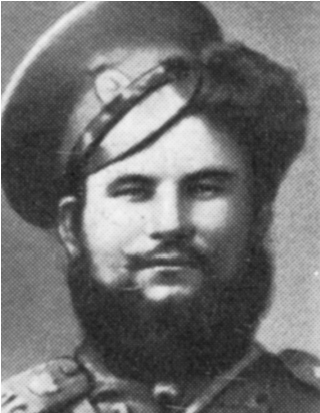
Comrade Borzenko’s reply was curious: “They say this newspaper is being published by three Anarchists of some kind. But to me it seems it is being published by people who want to align themselves with the powers that be: that means they are our enemies.”
I never succeeded in meeting the publishers of this enterprising evening “anarchistic” newspaper. Apparently many of our other comrades had the same experience. They talked about this newspaper and its publishers among themselves; they said that it was published by people who had money in their pockets and wanted to make more money. After reading two or three numbers it was obvious to me that it was published by people who were used to engaging in commerce with goods and with their own consciences. These were the kind of people who travelled through the Front without stopping, who had probably encountered peasants and workers only because in a revolutionary situation it was impossible to avoid them: for the toilers were in the forefront when the Revolution was victorious – and also when it was in its death throes.
But to undertake anything against these pseudo-Anarchists at the time was impossible for two reasons. In the first place, our movement was split into a whole bunch of groups and grouplets which did not even share a common goal, never mind the capability of unified action at the moment of revolution. They accommodated in their ranks anyone who fled from other tendencies in order to avoid responsibility at the revolutionary moment. Under the cover of the Anarchist principle “freedom and equality of opinions are the inalienable right of each person,” they got away with all sorts of stuff, including acting as paid spies for the Bolshevik-Left SR government. Secondly, this was the time when the campaign of Lenin and Trotsky against Anarchism was still going on, and any action on our part against people calling themselves Anarchists was liable to be misconstrued and would play into the hands of the persecuting authorities.
The sad part of this was that the Russian Anarchists, being fragmented and not having behind them a broad-based, organized mass of working people, began to be drawn into the orbit of the Bolshevik-Left SR government without hardly admitting it. The government noted this development with approval and intended to draw certain advantages from the situation, since its most dangerous opponents were the revolutionary Anarchists.
The government gradually began to allow the Anarchist press to start up again; the authorities wanted to find out which Anarchists had to be reckoned with, and which could be safely ignored. It was then noticeable that the idea of collaboration began to appear in our ranks: ugly, jesuitical collaboration. The most sophisticated practitioners in the field of mercenary collaboration ceased to worry about organizing the forces of their own movement; they defected to the Bolsheviks while continuing to call themselves Anarchists. And they often confounded their defection with the principle of “freedom of opinion,” a principle which they had no intention of abandoning – on the contrary, they exerted themselves to entrench it in the Anarchist ranks.
This was a very serious moment both for the Revolution and for Anarchism – a moment which demanded a tremendous effort from the collective intelligence and energy of the Anarchists – from Anarchists who had been educated at the expense of the toilers before they entered the movement. They had learned how to teach and how to speak and write well. And now, alongside the Front where the toiling masses were fighting with weapons in hand, they enlisted in the Bolshevik cultural-educational sections in droves as “consultants”… And the impression was created that for this kind of Anarchist-revolutionary the life of the Anarchist movement was alien, because working in the movement required great sacrifices and involved exposure to great danger. And they were recruited of course not to work, but to advise others how to work. With their grossly incorrect understanding of the tasks of revolutionary Anarchism at the moment of Revolution, they didn’t realize that vipers can appear at the very heart of the Revolution and not just at the fronts against the Counterrevolution. This led to the horrors of political, and sometimes also physical, annihilation of the bearers of the revolutionary ideal. These comrades, sharing our designation and our beliefs (in most cases misapplied), inflicted blow after blow not only on their own fellow-Anarchists, but also on the broad revolutionary toiling masses. It is often the case in revolutions that the toiling masses are more perceptive than those who choose only to act as advisors, without carrying any responsibility and even not spending much time among those whom they are advising. It’s true, some of our proletarian comrades did not understand the tasks of revolutionary Anarchism any better. I’m thinking about those workers who, due to some set of clearly accidental circumstances, also got it into their heads they were so much wiser than their fellow-workers that they should act as advisors without taking on any responsibility for the consequences of their advice. These comrades were oh so proud of their own professionalism. But can we really blame them for all this? No, we shouldn’t. Their conduct resulted from the lack of discipline and disorganization in our movement, which spawned all kinds of negative forces having a ruinous effect on its growth and development.
My sojourn in Rostov-on-Don, my encounters with Anarchists – especially refugees like myself, and also my daily browsing of the speculative newspaper Black Banner, more and more focussed my attention on the negative features which, due to the force of circumstances, were becoming entrenched in our movement and gnawed away at its vital revolutionary organism. Furthermore, I was told that just before Rostov was attacked by the Germans and the White Don Cossacks, the house of the Rostov-Nakhichevan Group was completely trashed by refugees, including those who called themselves Anarchists and had received shelter in it for some weeks. These people had been treated as honoured guests who were political activists deserving of a well-earned rest and they responded by lolling about on the plush furniture and spitting on the floor. In spite of all this, I was full of faith and hope that in the future I would encounter far better situations among nearest and dearest comrades. My faith and hope were strengthened by attending a meeting organized by the local Rostov-Nakhichevan Anarchists in the Rotunda.[46] The ideas expressed by them at this meeting showed me that here we had robust forces. This moment of general recoil of the Revolution forced them to concentrate on planning for underground work. It wasn’t their fault if refugee activists of our movement, searching for a place of rest and finding it in a house of Anarchists, failed to protect it in a moment of panic and in fact collaborated in plundering the furniture and decorations.
With faith and hope in a better future, I, along with between 30 to 35 other comrades from various cities of Ukraine, in the days when the revolutionary city of Rostov-on-Don was being evacuated, made arrangement to travel with a Red artillery base under the command of Comrade Pashechnikov, who was sympathetic to the Anarchists. We awaited departure from Rostov to Tikhoretskaya, from where the artillery base would proceed along the North Caucasus railway line, through Tsaritsyn and Balashov to the Voronezh military zone of the Front.
We were all enrolled as the crew of an echelon, and many of the comrades were assigned guard duties. Being already enrolled, I was still had the opportunity to address the workers of the Rostov plants and factories on three occasions in the name of the GAK. My goal was to counteract the point of view expressed by the speculative “Anarchistic” newspaper Black Banner, and also to explain the role of revolutionary Anarchists in relation both to the Front against the Counterrevolution, and to all those phenomena which were ruining the movement. However the moment for such speeches was inauspicious. Revolutionary Rostov was in the throes of a hurried evacuation. The commander of Rostov okrug, Podtyolkin,[47] had already moved out of his home into a railway car hooked to two engines at full steam. His example was followed by other revolutionary institutions. It goes without saying that the apprehension of the powers that be was transmitted to that portion of the population which supported the Revolution. The people and various organizations which had fled to Rostov now began to flee even further. After them trailed the military and civil authorities of Rostov and its okrug, as well as that sector of the population which actively supported the Revolution.
The evacuation took place in two directions: to the north towards Liski — Voronezh, and to the south on the other side of the Don River at Bataisk where the Red command threw up a front and hoped to hang on as long as possible. A truly nightmarish scenario developed. When the evacuation started, among the population, especially the Cossack part of it (which was wavering between supporting the left-wing Reds or the right-wing Whites), sprang up gangs of robbers which were led by professional thieves who roamed about the country in those days, fishing in troubled waters. Pillaging grew with extraordinary rapidity and on a fantastic scale and it grew under the influence exclusively of the basest passions of thievery and revenge: revenge on those who welcomed the victory of the Counterrevolution and on those who habitually occupied a neutral position...
While observing this phenomenon, so alien to the Revolution, I frequently asked myself: isn’t it possible to put an end to this?
And the answer I found was that at such a moment as the hasty evacuation of the vanguard of the Revolution, it is almost impossible to direct one’s attention to those who, taking advantage of the unlimited right to freedom and not bearing any responsibility for its realization in our practical social life, need to be restrained and shamed. For our social life, in order to concretize real freedom, requires direct and genuine co-operation from all the people who only through their own efforts can develop and defend such freedom for themselves and for their society.
Other questions came to mind as I observed the goings-on in revolutionary Rostov during the evacuation. For example: could these phenomena not be the product of underground organizations of counterrevolutionaries? Surely this was possible and would serve to compromise the Revolution in the eyes of the masses – very useful in consolidating the counterrevolutionary forces. But the sight of railway wagons crowded with all sorts of rascals mixed in with the evacuating population and moving to the rear of the revolutionary Front, did not allow me to draw this conclusion. And with a heavy heart, ready to unleash all my energies as a militant Anarchist revolutionary, I said farewell to Rostov. I felt a strong spiritual connection with the city because of the newspaper The Anarchist which had always been read with special interest in Gulai-Polye both by the peasants and the workers...
Chapter 6: En Route With the Echelon of the Red Artillery Base.
Because of the traffic jam on the railway line caused by the movement of refugees, we took about 48 hours to travel from Rostov to Tikhoretskaya. Since we hadn’t stocked up on bread and other foodstuffs, in Tikhoretskaya the commander of the echelon sent our comrades to the bazaar to buy food, counting on the recently promulgated law according to which each Red Guard detachment was entitled to acquire food from vendors either without paying anything or paying only one-third of the regular price.
The comrades went, dragging me along with them. They had a list of food to buy which would be sufficient to get us to the city of Tsaritsyn, which we expected to reach in about a week.
The vendors loaded the goods on wagons, but when it came time to settle up and they saw their goods were being requisitioned, they complained bitterly. Their protest relied on the insecurity of the Bolshevik-Left SR government in this region. At the time there were hundreds of White Guard units operating in the area and the population silently supported them. Reacting to this protest of the vendors, the Red authorities panicked. They ordered the Tikhoretskaya garrison to cordon off the echelon of the artillery base and not allow it to continue on its way without special authorization.
When the echelon had been cordoned off by loyal troops (who, it was evident, were not eating their own rations, or even requisitioning food, but simply grabbing stuff from various vendors), the Tikihoretskaya “revolutionary” government ordered the commander of the echelon of the artillery base to send two people to explain the attempt to requisition essential goods.
Commander Pashechnikov prevailed upon me and Comrade Vasilyev (of the Yuzovsk Anarchist organization) to answer the summons of the Tikhoretskaya authorities and try to reason with them.
We went, and the authorities arrested us and politely informed us we were subject to being shot under martial law.
At first I thought the representative of the government was joking, and replied:
“It’s nice we’re being shot under martial law, instead of the normal way...”
But then I saw they weren’t joking. They assigned two armed Cossacks to guard us, and these dunderheads, without standing on ceremony, began to discuss out loud how well dressed we were and that their only regret was that my clothes would be too small for them.[48]
Comrade Vasilyev said to me:
“We must demand to see the chairman of the Revkom. For quite possibly it was reported to him that two robbers from some kind of echelon were being held, and he responded: ‘Shoot them.’ Then protests wouldn’t be of any use. They would finish us off right away...”
So we demanded to see the chairman of the Revkom. But their response was to accuse us of being counterrevolutionaries. The ruckus we raised with our arguing with the guards drew the attention of a “revolutionary” petty official, who yelled at us and at the guards. The latter, in order to vindicate themselves, beat on us with their rifle butts. This riled me so much I smacked one of the guards and began yelling in a loud voice: “Get the comrade chairman of the Revkom. I want to tell him he’s got a bunch of thugs here who are using the banner of the Revolution as a cover to carry on their own rotten, counterrevolutionary activities...”
My yelling and cursing was heard in all the rooms of the Revkom, and many representatives of the government came running. However, none of them helped us. We kept raising a row for about an hour and were so obnoxious our guards finally left the room and closed the door.
The authorities made a formal report about our row. After some time we were brought to the chairman of the Revkom. This top dog interrogated us and also threatened us with shooting, until Comrade Vasilyev declared to him:
“You may shoot us, but first tell us, who gave you the authority to do this? Who elected you chief of an organ of revolutionary unity?”
As a follow-up to Comrade Vasilyev’s comments, I seized the initiative:
“Just two weeks ago, I had to give up a responsible position in the defense of the Revolution. I have personally had the opportunity to meet many revolutionaries. But I have never seen such thuggery as I find in your establishment.” I explained to him why we had been summoned to the Revkom, what we had been told, and how we had been treated by the representatives of the government and their Cossack lackeys. It seemed as if the government, like tsardom, was maintaining itself with whips and rifle butts...
The chairman nervously chewed on his fingernails. Sometimes he interrupted me. Then apologetically he asked for my documents.
I gave him first my old papers which showed I was a representative of the Committee for the Defense of the Revolution of Gulai-Polye raion; then I presented the document showing I was commander of free revolutionary battalions fighting against the German-Austro-Hungarian militarists and the Ukrainian Central Rada.
Our top dog held my documents in his hands for a long time, and then suddenly, getting up from his chair, said:
“What the hell, I’m surrounded by idiots. Pardon me, comrades, this is some kind of misunderstanding. Everything is clear to me now. You are free to go to your echelon. I’ve got news for it: it must advance on its itinerary without delay.”
And so, stressed out, bruised in body and spirit from spending over four hours senselessly under arrest and being whacked with rifle butts, we were released and returned to our echelon, which was still being guarded by local troops.
When we told the comrades what had happened, the guard surrounding the echelon was removed. The echelon was shunted from its siding onto the main line so it could advance further on its journey.
An hour later we were already travelling along the North Caucasus railway line. Before us stretched the plains of the Cossack lands, covered partly with the verdure of winter and spring crops, partly with fodder grasses, in particular with couch-grass and virgin-grass, interspersed with small, but numerous, high clusters of silvery feather-grass. The fecundity of these lands was well known to me from descriptions I had previously come across. Originally these lands had been settled by the descendants of Mongol invaders. Later, they were occupied by Cossack hosts with special privileges from the tsar, who pursued their own development independently of backward autocratic regimes. Now, when I viewed these plains, covered with succulent fodder grasses, with winter and spring wheat which promised a bumper crop, I was convinced of the extraordinary fertility of this region, and my spirit rejoiced in the fact that these lush, green crops represented an asset of inestimable value to the Revolution. It was only necessary for the revolutionary authorities to grow wiser and renounce a lot of their own actions. Otherwise the population would turn for sure against the Revolution; otherwise the labouring population, dissatisfied with the conquests of the Revolution would, by its refusal to render voluntary material support in the form of food, deliver a blow incomparably more severe than any coming from the armed formations of Kaledin, Kornilov, or other counterrevolutionaries...
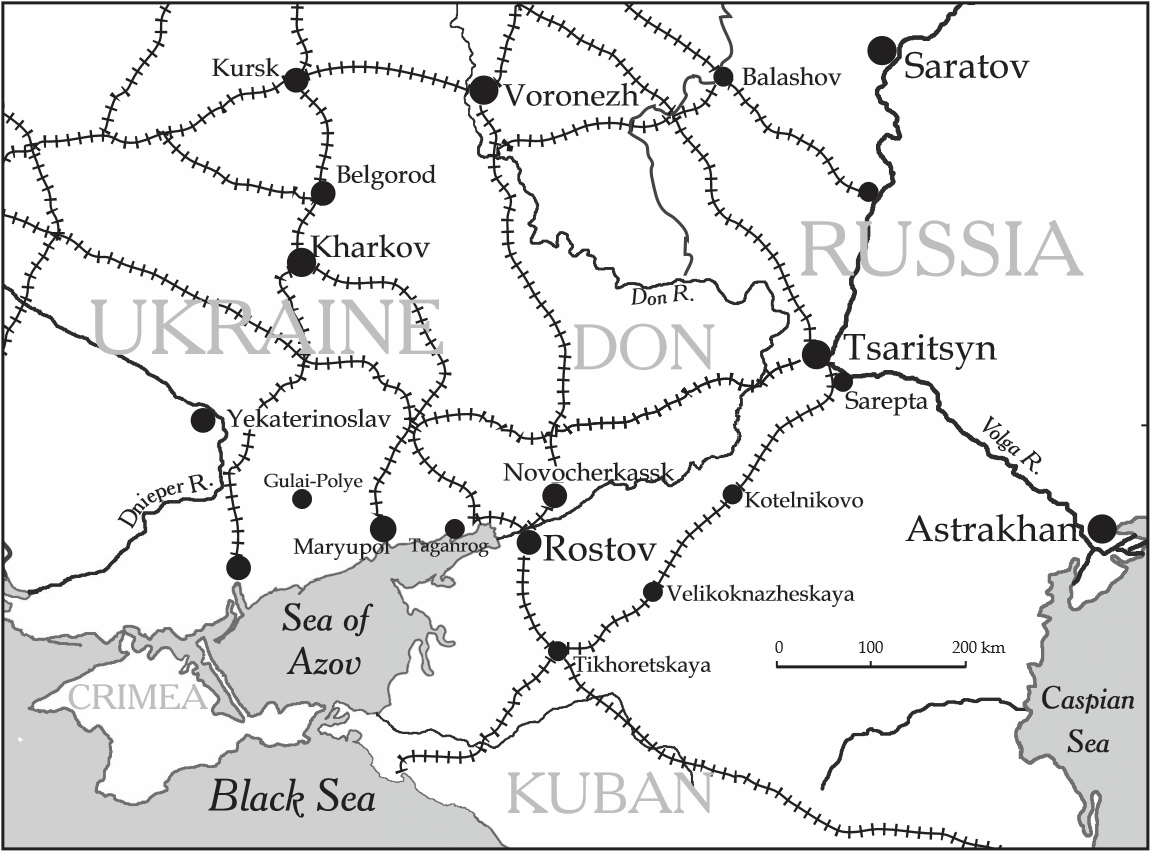
But en route I got my hands on some newspapers. They told about how the revolutionary government had destroyed Anarchist groups in one place, dispersed a socialist meeting in another place, and in a third place, having suspected the peasants of having a counterrevolutionary attitude, were preparing to break up their work organizations into smaller units with the goal of weakening them and subordinating them to the arbitrary rule of the city... This information told me the revolutionary government, instead of growing wiser, was losing its wits, despite the great “wisdom” of Lenin. For this wisdom of Lenin, which allowed the revolutionary power of the Bolsheviks and Left SRs to dominate the Revolution and distort its genuine, anti-statist purpose, had shown itself powerless to understand that, by curtailing the right of Anarchist thought to be expressed and by the related suppression of creative revolutionary activity among the peasants, the government had embarked on the road of counterrevolution. In this way the revolutionary government, forced to conceal its real essence, could no longer recognize its own errors, leading to the downfall both of the Revolution and of the government itself. Mind you, all these newspaper articles about the foolish, in my opinion, activity of the revolutionary government seemed somewhat exaggerated. The fact that the activities of the revolutionary government did not find grassroots support in the depths of the broad, labouring, revolutionary masses in Ukraine seemed to me to offer a valuable lesson to the central authorities. It seemed possible I could still encounter stuff going on in Russia which would cause me joy and to which I could devote the full energy of my revolutionary strength. Yes, yes, I said to myself, it must be so... And I became hopeful that both the Bolsheviks and the Left SRs, as revolutionaries, would not refuse to make a serious appraisal of the bind the Revolution was in. I hoped they would think about those forces of destruction and creation which are the life of the Revolution and that they would take steps to correct today’s distortions and straighten out their own line, thereby justifying the great expectations of the toilers...
Inspired by such thoughts, when we made a stop at Velikoknyazheskaya Station, I spoke at a meeting of the local Cossacks, urging them to sever any connections with the past, to condemn the rebellion of the White Cossacks, and to take an active part in defense of the Revolution.
“Cossacks of the Don,” I said, “you must once and for all renounce the past, which made the Cossacks the butchers of any kind of freedom, of any kind of libertarian tendencies in the life of the Russian people. Instead of being content with the miserable ruling class privileges which the Cossacks received for their wild exploits in shameful, bloody struggle with working people, the Cossacks should take up their weapons against those who rewarded them with these privileges, against those who duped them into using their military strength against the people and their striving for freedom, for a new free society...” The Cossacks replied:
“We all support the Revolution.”
But some of the crowd cried out:
“We still don’t understand what our position should be: for the Revolution or for those lands which the Revolution took from us, or for those kosyaks [herds of horses — N.M.] which we raised and which were seized from us…”
“They didn’t seize the horses from us, but from our bourgeoisie,” interrupted three voices from the Cossack crowd…
The discussion continued on this topic for a long time, which was understandable. The Cossacks of that period of the Revolution in general still clung to the idea of a senior all-powerful ataman with a military council (krug). Their traditional leaders had faith in the Russian counterrevolutionary forces and, in support of them, raised a large part of the Cossacks against the Revolution for the program of a constitutional monarchy under the tsarist crown of the Romanovs.
On our subsequent journey along the North Caucasus railway line, our echelon was held up for several hours at one of the halts before Kotelnikovo Station because of the danger of an attack by a White Guard Cossack detachment based at a khutor not far from the station. Many Cossacks gathered around our echelon. They fussed about, offering their ideas about how, with a general effort, it might be possible to repulse an attempted attack by this detachment either on the station or on the echelon of the artillery base. Our crew armed themselves. We set up light field guns on their platforms trained in various directions. It didn’t occur to us to retreat because of a numerically insignificant cavalry detachment. Besides, the local population was on our side. We were quickly and accurately informed about when and where this detachment had halted and from which side it was advancing. However, the nervousness of the crowd seemed to increase and a thought involuntarily occurred to me: could this be some kind of deception?
I suggested to the commander of the artillery base that we move forward, disclosing to him my suspicion as a result of the all too accurate information we were receiving about the White Guard Cossack detachment from the local Cossack population. It was also suspicious that the throng of Cossacks, without dispersing from our echelon, were feverishly discussing something among themselves. My suspicions reduced to the following: that these Cossacks were supporters of the White rebellion and would try to disarm us.
After listening to me, the commander broke down and candidly admitted he was at a loss as to what to do; the people grouped at the halt who were in front of and alongside the echelon needed to be moved farther away but if they intended to disarm us, at the first sign of our departure they would throw themselves upon us. And there would be unnecessary bloodshed, unnecessary victims – victims chiefly from our side if our initial fire wasn’t timely and accurate.
“Help me,” said the commander. “I will be grateful. Your help will encourage me and I will be more decisive.”
I proposed to the commander that, in the first place, he should immediately order the artillerists to stand at their guns (for the purpose of adjusting their line of fire to the horizon from which the White Guard detachment might appear). In the second place, I advised him to warn the locomotive engineers that once we started up, we wouldn’t stop until we got to the next station; I also advised him to warn the duty officer at the station that we were only going to shift our position forward two or three versts in order to adjust our guns for fire in all directions and would then return. (Only in this case could we expect the duty officer at the station to give us accurate information about whether the right-of-way was free.)
The commander did everything I proposed, and he did it in the blink of an eye.
Then we asked the Cossacks, who were crowded alongside the stop in front of and to the side of our echelon, to move away for a while to the side opposite which our shells would be flying. And we started forward with sporadic firing of our machine guns off into empty space. As we cleared the stop with its numerous Cossack hangers-on clustered around (who, quite possibly, weren’t even thinking about disarming us), our locomotives put on more steam and we sped at full throttle in the direction of Kotelnikovo Station, convincing one another that if we remained at the halt until nightfall, then we would be disarmed and half, if not all, of us, would be shot.
The commander insisted that myself and Comrade Vasilyev join him in his compartment where he showed me great respect, pouring out his feelings of gratitude for the fact that I had pushed him into decisive action. His expressions of gratitude may have boosted my ego. But at the same time it pained me to think about revolutionaries who were unprepared for the practical, diverse, and independent actions required in a revolutionary situation, despite the fact that their own lives had been full of hardship.
Arriving at Kotelnikovo Station, we learned that from there very few detachments were able to travel on further. All detachments, by order of the central authorities, were detained, disarmed, and then subject to a careful examination to determine what their make-up was, what was the state of their morale, etc.
Detachments which successfully resisted disarmament here were still unable to advance beyond Tsaritsyn. They were disarmed in Tsartitsyn. And detachments which were not proven to be “counterrevolutionary” from the point of view of the authorities, were re-armed and absorbed into some Red Army unit. A detachment in which was detected “a counterrevolution tendency” (and for this it was sufficient that its commander be an Anarchist or a non-party person with their own opinion about the actions of the new revolutionary authorities) was broken up and might even be shot, as happened, for example, to Petrenko and part of his detachment in Tsaritsyn.
The Revolution was menaced on all sides by the armed Counterrevolution. But the new socialist government failed to involve the broad toiling masses in the voluntary defense of the Revolution because of its clumsy and sterile actions. The detachments which paid most heavily for this ineptitude were those with a complement of Ukrainians. The Bolshevik-Left SR authorities didn’t bother to stand on ceremony with these detachments. Thanks to their own “farsightedness,” the authorities saw something in these detachments which wasn’t there. They were afraid to allow them to proceed to Kursk and Voronezh, from where these worker-peasant detachments, refugees from Ukraine, hoped with the help of the forces of the Russian Revolution to re-insert themselves back into the centre of Ukraine. Drawing on their already extensive experience, they hoped to engage in the struggle with the counterrevolutionary German-Austro-Hungarian militarists and the Ukrainian Central Rada. My heart was bleeding when I happened to observe the evil doings of the government in suppressing people in which the revolutionary spirit was so strong. These toilers just needed a chance for their revolutionary spirit to expand into real economic, political, and spiritual liberation, rather than being constricted and hampered in its free creative development.
But here, at Kotelnikovo Station, zealous agents of the central authorities hastened to encourage even the artillery base to lay down its arms. For us Anarchists, travelling with this base, this was an especially revealing example of how dumb these lackeys were with stars on their foreheads and orders of the Red Banner on their chests. They didn’t even think to ask what our echelon represented, who it answered to, and to where it had been sent; they simply sent someone to tell the commander to surrender his weapons.
Being told to surrender weapons (in the event of refusal, the alternative, apparently, was to be disarmed by force), the commander of the echelon, knowing his own obligations and having orders from Red Army headquarters to appear in Voronezh on schedule, went totally nuts and in desperation was prepared to turn back in the direction of Tikhoretskaya.
We, the Anarchists, came to his aid. We convinced him of the arbitrary, criminal nature of the actions of the agents of the central authorities in relation to the Revolution. And on this basis we suggested he open fire with his artillery and machine guns on the Station, destroy it, and shoot the authorities who by their vile deeds were harming the defense of the Revolution.
The crew of the echelon took their places at the artillery pieces and machine guns and the authorities were presented with an ultimatum: allow the echelon to proceed further or find yourselves under our fire, for we intended to send these mean, counterrevolutionary bosses packing along with their disarmament scheme (and we didn’t care how many stars they had on their foreheads). The way was now clear for us to proceed towards Tsaritsyn. And we left Kotelnikovo Station “intact,” advancing further.
En route the commander of the echelon felt uneasy about resorting to such extreme measures at Kotelnikovo Station (in relation to the, in my opinion, counterrevolutionary authorities). But really there was no other way out. He acknowledged this. And this realization prepared him for a possible court martial where he intended to appear in the dignified role of a revolutionary soldier who had answered the summons, as he put it, to consciously serve the Revolution.
En route from Kotelnikovo to Sarepta (a station located 24 versts from Tsaritsyn), I also began to feel depressed. In my head strange thoughts began to appear. It seemed as if the Revolution was condemned to fail because of the revolutionaries themselves; blocking the path of revolutionary development stood an executioner from the ranks of the revolutionaries whose name was – government. This was the government of two revolutionary parties which, despite their colossal efforts and their at times well-deserved esteem, were unable to accommodate the breadth and depth of working class life within the framework of their party doctrines. In connection with the growth and development of the Revolution, it occurred to me that the toilers were more and more clearly displaying their own interests in relation to this government. In the Revolution they were finding the scope and the freedom which would allow them to re-organize their own lives on a completely new basis, independently of any government whatsoever. For these governments were out of touch with the lives of the toilers and consequently were unable to understand these lives and give them the appropriate direction…
At first I thought these reflections about the situation of the Revolution and the consequences flowing from that situation were chance thoughts, resulting from the counterrevolutionary phenomena I had encountered on my journey with the echelon of the artillery base. But I soon convinced myself that these thoughts were not accidental. The Counterrevolution was liable to turn up almost anywhere: among the masses themselves, and certainly among those who were ensconced in the centre and who by their orders were forcing the Revolution in the hinterland to turn back the historical clock. I saw this clearly. And my hopes of finding something better on my journey began to unravel. My heart became heavy and painful. Sometimes I became bitter at everyone and everything, and especially at myself for all those errors when we were organizing free battalions against the Counterrevolution in Ukraine. These errors caused me more and more anguish…
But now we arrived at Sarepta Station. It was surrounded by great stacks of lumber and sawmills. There were thousands of workers there. I burned with a passion to go to their meetings and, in the heat of this passion, forget about everything that was hurting my heart.
And then the commander of the echelon told me the Station had received an order from Tsaritsyn to the effect that access to Tsaritsyn was closed for any military echelons and that we would be detained here, apparently, for several days. I was immediately seized with a burning desire to be among the workers at their meetings, to listen to them, and find out what they were thinking about the Revolution and how they were reacting to the strange goings on among the Revolution’s leaders and defenders, etc., etc.
Our comrades spread out through the workers’ settlements… They learned where and when the workers got together. And on the next day (this was the Day of Rest) several of us spoke at a meeting of the Sarepta sawmill workers. Here we found out that these workers were devoted to the Revolution; that they stood for Soviets in which the leading positions belonged to the workers themselves; and that any party representatives could participate in these Soviets only after the workers had examined their beliefs and felt comfortable with them…
We learned from the workers at this meeting that a certain percentage of their comrades had already been dispatched to the Front for armed struggle against the White Don (as the Cossack counterrevolutionary movement was called).
“There’s one thing we can’t understand,” the workers said to us at this meeting. “Here we all work together to organize ourselves for the furthering and defending of the Revolution and the ideas which animate it. But in Moscow and other large cities there is no such unity. Here we have Bolsheviks, Left SRs, and Anarchists, but organizationally they are all pulling together to defeat the counterrevolutionary movement of the Cossacks. It was even on the initiative of the Anarchists that we began to allot a certain part of our workforce for the Front, against this barbarian Cossack movement, while ensuring that our mills would not stand idle. But there in Moscow and other cities of Central Russia, the Anarchist organizations have been broken up and the defiant Anarchists shot…”
And then one of the workers pulled out an old, faded number of a Bolshevik newspaper and asked one of my friends to read out loud an article about the liquidation of the Anarchists on Malaya Dmitrovka (in Moscow).
“What’s the explanation for all these actions by our Soviet government?” cried some voices from the crowd.
We were very conscious of the fact that we stood before revolutionary workers, among whom there were not a few Bolsheviks, Left SRs, and Anarchists – nameless militants fighting for their own ideals. In the heat of a discussion, these militants were quite capable of calling each other names, yelling at each other, stamping their feet, and menacing each other with fisticuffs. But at the same time they understood one another and recognized the right of each person to advocate their “own” point of view, to struggle for their “own” ideal…
These nameless militants, sons of the revolutionary family of labour, had a better understanding of the significance for the Revolution of being able to advocate their own ideas than the revolutionary leadership installed in the Kremlin at the expense of their labour and sacrifices… These workers recognized the equal right of each revolutionary to advocate his or her own ideas. They valued each other’s lives… And that’s why they could not help but be distressed by the vile actions of the central authorities. Their consciences were troubled, for they had always kept open minds in relation to the Revolution, a Revolution the motivating force of which was its powerful ideas. And the Anarchist idea in this sense was pretty much the most powerful idea of all. Conscious worker-revolutionaries recognized that. That’s why, when they heard of the vile actions of their leaders against the revolutionaries, they felt shame.
Comrades Vasilyev and Tar spoke with bitterness about the destruction of the Anarchist organizations in Moscow and the persecution of active Anarchists everywhere (as the Bolshevik press informed us). The worker Bolsheviks and Left SRs with pain in their hearts recognized the right of the Anarchists to make such attacks against their all too zealous favourites – Lenin and Trotsky. For me, a refugee from Ukraine who had had the experience of working under difficult conditions to bring about the triumph of the Revolution, a Revolution which was now controlled by statists who were trying to stifle it, it was even more hard to bear. As I contemplated the consequences of the destruction of the Anarchist organizations, it seemed to me that now any unreliable elements would begin to desert the Anarchist ranks for the side of the strong, renouncing and maligning Anarchism at the dictate of their new masters. This would give rise to great disorganization. Anarchism’s best workers would find themselves at the mercy of the Cheka and, for their bold affirmation of social justice and the sanctity of the individual, they would die an agonizing death in the Cheka’s torture chambers.
But all these thoughts, which occurred to me while my comrades were speaking, were not uttered by me at the meeting. At that time I was burning with enthusiasm. The Revolution for me embodied Anarchist rebelliousness and the creative foundations of practical social reconstruction – these were my chief guides for action. I had high hopes of meeting, perhaps not all, but the overwhelming majority of my ideological comrades in central Russia. It seemed to me the task of saving the Revolution would be facilitated by the Anarchists firmly posing those creative problems which were so alien to the bourgeois-republican liberal strain of the Russian Revolution. I believed the majority of Anarchists lived with the hope that even if these problems couldn’t be solved completely, at least the toilers would understand them to the point they wouldn’t be swayed by the Bolsheviks’ distortions. And then, hopefully, the toilers would exert themselves to struggle for their own genuine liberation, and to solve these pressing problems together with the Anarchists. For on the timely and correct solution of these problems depended the whole subsequent process of revolutionary advancement on the road to the creative achievements of the liberation movement of the toilers. That’s why, addressing the workers of the Sarepta sawmills, I sought to find a common revolutionary language which would resonate with the broad mass of revolutionary workers. I criticized the zealots Lenin and Trotsky and appealed for the salvation of the Revolution through an all-out general effort. For from the one side the Revolution was being worn down by the blows of the organized Counterrevolution, while from the other side it was being strangled in the noose of the new statism.
The workers were all on my side. Not one of the Bolsheviks protested, except some provocateurs who reported about our speeches to the Tsaritsyn Revkom…

After this meeting the workers promised to arrange a series of gatherings and invited us to come and speak further about the issues we had just been raising. But we weren’t able to visit with these workers any more. On the very next day a Hungarian Bolshevik cavalry detachment arrived at Sarepta Station, surrounded the echelon of the artillery base, and ordered Commander Pashechnikov “to hand over all the Anarchists who, according to our information, are travelling on this echelon to Tsaritsyn.” The warrant for the arrest of the Anarchists was signed by the commander of the Tsaritsyn Front Gulak and, if I’m not mistaken, by the chair of the Revkom Minin[49].
The commander of our echelon announced to the newly minted Hungarian communists (they were all prisoners-of-war from the Austro-Hungarian monarchist army):
“There is no Anarchist organization under my command. This artillery base is manned by a crew whose political convictions I have no detailed knowledge of. I only know that the members of this crew deserve to be called revolutionaries and together with them I intend to make my way to the Voronezh Front.”
The Hungarian communists immediately formed a column, counted off, and headed back to Tsaritsyn.
We were puzzled: why had they left so quickly? Were they really satisfied with the commander’s response? Or could it have something to do with the fact that while they were present at Sarepta Station, echelons of Czechoslovaks began to arrive which were on their way to Siberia? The Red Command was allowing them free passage, not suspecting they would be joining up with the counterrevolutionary Kolchak and helping him in the struggle against the Revolution.[50]
The Hungarians and Czechoslovaks had quarreled while they were still prisoners-of-war; now that they were both armed there was obviously the potential for a real scrap.
In my personal opinion, the Hungarian communists were in a hurry to leave our echelon in peace because of the arrival of the Czechoslovaks, for the answer of our commander, which was by no means calm in tone, could not have been satisfactory to those who had a warrant in hand for the arrest of Anarchists. They only found this answer satisfactory when the arriving Czechs, spotting the Magyar shapochkas [caps], began to whoop and whistle at them.
A day after the visit of the Hungarian Communists we also left friendly Sarepta and arrived in Tsaritsyn. Here we parted ways with the echelon of the artillery base, for we hoped to meet up with other Anarchists and find out about the real situation of revolutionary affairs in the country.
The commander and the crew of the echelon were sad to see us go. Many of the crew and the commander himself would have liked us to continue along with them to Voronezh, and from there to the Front. But many of us decided in Tsaritsyn to break up into groups of two or three and seek out our own organizations in the cities, if in fact any had escaped destruction. We parted with the crew of the echelon but arranged permission to sleep on board the train for the first few days, at least while the train was still standing at the station and until we could find quarters in the city. Then we hit the streets of Tsaritsyn.
Tsaritsyn was evidently in a state of alarm: alongside the Soviet there was a military post with an armoured car; it was difficult to approach the Revkom because there was a strong guard unit on duty. Red police spies, at that time not very experienced but already numerous, scurried about sniffing at everything as if they were searching for someone.
It seemed as if menacing black clouds hung over the city. Many of my travelling companions, whom I didn’t know well but who called themselves Anarchists, were bewildered. What could this mean, why was the Tsaritsyn revolutionary government so concerned with its security that it was difficult to gain access to it?
Everywhere – in the parks, in the cafeterias, at the railway station, and in other public places – we heard talk about a hero who would not allow himself to be disarmed by these wimps who had installed themselves in the city as if they had been appointed by God.
But what was it all about? We were curious. I began to listen more closely and pay attention. I began to ask – who is this hero?
“Why the Siberian Petrenko!” I was told. “Our rulers, not one of them elected, want to show they are the bosses and can do whatever they like. They went out to meet some kind of Red Guard detachment under the command of the Siberian Petrenko. And he gave it to them hot!... Well, our rulers are totally inflexible and they have been running around stirring up the city. They speak, they write, they shout at meetings – that this Siberian Petrenko is going to declare war on Tsaritsyn. That he must be disarmed…”
Knowing Petrenko’s detachment, and also knowing how the authorities were treating Red Guard detachments along the North Caucasus railway line, I could easily form a picture in my mind from the story told by the inhabitants of Tsaritsyn. And a day later the citizens of Tsaritsyn and its adjacent settlements were to experience first-hand the clash of Petrenko’s detachment with the Red rulers of the city and their Red Army units.
Chapter 7: The Battle of Petrenko’s Detachment With the Tsaritsyn Government and the Arrest of Petrenko.
As I described in the first volume of my memoirs (The Russian Revolution in Ukraine), the Red Guard detachment under the command of Petrenko[51] was the last to retreat (under pressure from the German-Austro-Hungarian army) from the Red Front facing Melitopol.
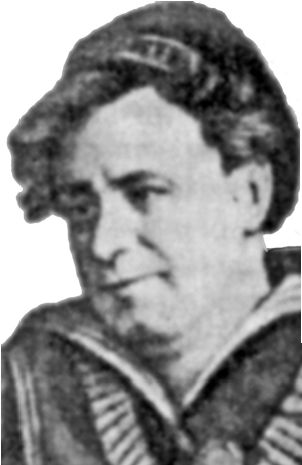
This detachment was also the last to retreat from the environs of Taganrog. It was battle-seasoned as were the Anarchist detachments commanded by Mokrousov, Maria Nikiforova, and Garin and the Bolshevik detachments under Polupanov[52] and Stepanov. Now Petrenko’s detachment, like many other units, was headed for a different front. According to unverified information, Petrenko was from Siberia and had received permission from the central authorities to transfer to the Siberian Red Front to fight the Counterrevolution led by Generals Dutov[53] and Kolchak.
But the authorities of the “Tsaritsyn Soviet Republic”[54] issued orders to disarm him even before he reached Tsaritsyn. Petrenko’s detachment didn’t submit to this order and, after routing the Red units sent to oppose it, approached Tsaritsyn in the hope of clearing up the misunderstanding which was preventing the detachment from advancing and continuing its journey. However the authorities, led by Minin and Gulak (Voroshilov[55] was still only a rising star and didn’t seem to approach the stature of the first two although he was more intelligent and self-confident than they), decided to disarm Petrenko’s detachment no matter what the cost. Rumours circulated that the national war commissar Trotsky was also in favour of disarming this detachment. This provided even more encouragement to the Tsaritsyn rulers in their aggression against Petrenko’s detachment.
But Petrenko and the members of his detachment had a strong sense of their important services to the Revolution at the Ukrainian Front against the Counterrevolution and knew their hands had never been stained with anything anti-revolutionary. So it galled them to no end that people who up to now had never even seen a revolutionary front had the right to disarm them. These people had installed themselves in the cities with a clear conscience and put in a 9 to 5 day in the Revkoms. They signed lots of scraps of paper which weren’t always useful for advancing the Revolution. And in their free time they took a quiet stroll in the park or a boat excursion on the wide expanse of the Volga with one or two “emancipated women-workers of the Revolution,” as the rather crude but straight-forward comrades-in-arms of Petrenko put it.
That’s why Petrenko’s detachment protested at this time against the order of the authorities to surrender their arms. The detachment protested as would any group of revolutionary soldiers who believe in the idea of the solidarity of equals, but are faced with a government with a wretched claim to be in charge of the Revolution, trying to force it into a party strait-jacket, and castrate it in the interests of the ruling party.
The refusal of Petrenko’s detachment to surrender its weapons to the Tsaritsyn Revkom provoked an armed attack against it. Red Army units streamed out of the city. Only a few days earlier these units had been calling themselves Red Guards but that name had been discarded and the troops supposedly went to battle more content with the prestige of being members of an army. Behind them they dragged machine guns and heavy artillery. The inhabitants of the city were uneasy. “Who knows what’s going to happen?” they said to each other.
And counterrevolutionary swine circulated everywhere through the crowds and sniffed the air: if Cossack White Guard detachments were to approach Tsaritsyn, they were ready to begin their dirty counterrevolutionary activities more resolutely and openly. But when these swine learned the White Cossack detachments were too far away from Tsaritsyn to take advantage of the fratricidal battle which was starting, they lost their nerve and had to mask their own true feelings.
We Ukrainian revolutionaries were seized with horror. After retreating from Ukraine we hoped in Russia to encounter our free and independent fellow toilers who were embarked on a project of revolutionary construction. Instead we encountered political adventurers who approached us under the flag of socialism and promised to help us rid ourselves of centuries-old slavery. Everywhere we encountered a lie, and the orders and bullying of the leaders who supported this lie.
The armed attack against Petrenko’s detachment especially emphasized the triumph of a lie over the truth, the truth on the basis of which the toilers from the first days of the Revolution had tried to lay the foundation of their new free society. With this goal they had allocated their own forces – some to build this society and some to defend it. I wanted to throw myself in front of the Red Army columns advancing against Petrenko’s detachment and scream: “Where are you going? They are leading you to kill your own – those who fought honourably at the Front of the Revolution and were forced to retreat through no fault of their own and now have no other thought but to strike another blow against the Counterrevolution from another direction, from another sector…” I also wanted to stop these columns because they outnumbered Petrenko’s detachment by a factor of six or seven to one and were better armed. However the fact these units had already been psyched up and were on the move meant that no one and nothing could stop them at that point. This restrained me from interfering and I hung my head with shame and found myself in the ranks of neutral observers of this black deed of the government – a new government which billed itself as “socialist”…
The Tsaritsyn Red Army troops had already passed the North Caucasus railway station, and were stretched out in the direction of the Olshansk khutor, where the echelon of Petrenko’s detachment had halted. It seemed they would overwhelm him. But … forged in long battles with the forces of the Central Rada and the German-Austro-Hungarian armies, the workers and peasants of Petrenko’s detachment believed in their own righteousness, and this belief inspired in them the spirit of revolutionary fortitude. No one had compelled them to take up weapons. They had all volunteered to fight for the genuine liberation of the toilers.
“With this healthy attitude,” soldiers from Petrenko’s detachment told me later, “we went to the Front against the Counterrevolution of the Ukrainian Rada and its allies – the Germans, Magyars, and Austrians. It was with this same attitude we decided to meet those people who had sold out to the government and were coming to kill us.”
I watched the start of the battle. I saw how both sides fought courageously. I also observed that Petrenko’s detachment enjoyed the support of the whole population of Olshansk khutor and the khutors adjacent to it. They brought water, bread, and salt to Petrenko’s detachment. They collected rifles and ammunition for it, and provided timely information about the movement of the government troops.
I saw, finally, how Petrenko’s detachment, outnumbered by a factor of six or seven to one by their would-be killers, put the latter to flight, forcing them to abandon not only damaged armoured cars, but intact ones which were filled with dead and wounded soldiers.
However Petrenko’s detachment, like Petrenko himself, didn’t seize the opportunity to profit from their advantageous position. As a revolutionary detachment, previously acting in solidarity with the revolutionary government, it wanted from the government only a just resolution of a messy situation. But if the government was too humiliated to straighten out the mess it had made, then the detachment’s only request was that it be allowed free passage through Tsaritsyn so it could travel further on its mission.
But then the government resorted to a jesuitical stratagem: it proposed to negotiate with Petrenko’s detachment. And when the negotiations were close to the end and Petrenko had let his guard down (as was confirmed by soldiers from his detachment), the authorities seized Petrenko and hustled him off to prison.[56] They then demanded the detachment surrender its weapons, claiming to have such an order signed by Petrenko himself. This Jesuitism of the Tsaritsyn government helped it to disarm the detachment and divide it up between different Red Army units. But for the time being these former soldiers of Petrenko’s detachment were not supplied with weapons.
Shortly after Petrenko was seized and locked up in prison, and his detachment disarmed and divided up among the loyal Red Army units based at the North Caucasus railway station in Tsaritsyn, I visited some of these fighters with the goal of finding out what happened at the negotiations which took place after their battle with the government, as well as the fate of their commander. These fighters knew me already from Ukraine: I and my comrades from Gulai-Polye retreated with them to Taganrog. They did not expect any ill intentions from me. They knew I was an Anarchocommunist and spoke frankly to me about what had transpired.
They all told me with special joy how they endured life on the Ukrainian Front where they fought under the high command of Antonov-Ovseyenko against the invasion of the counterrevolutionary German-Austro-Hungarian armies and detachments of the Ukrainian Central Rada which operated against the toilers who were creating the Revolution. This joy was sometimes combined with a feeling of satisfaction in recognizing that they, workers from the towns and villages, had finally grasped that in order to liberate themselves, they needed to take up arms and with steadfast will and bold direct action pursue their own goals.
Alexei Mokrousov
But when the discussion turned to their present situation, and the situation of their revered commander Petrenko, the joy on their faces quickly disappeared. Some of them hung their heads and lapsed into silence. Others told me bitterly that the authorities had begun to harass their detachment starting at Tikhoretskaya Station. This harassment took the form of delaying the forward progress of their echelons, refusing to assist with the purchase of provisions, and timid but persistent demands that detachments coming out of Ukraine not proceed through Russia under arms: that they must surrender their weapons and declare themselves refugees, etc.
“For our detachment,” they said, “which was made up mainly of Ukrainians – peasants and workers – and not Russians, such an attitude on the part of the revolutionary government was extremely offensive. For we are first and foremost revolutionary toilers. With weapons in our hands we fought for the revolutionary goals of the toilers. And to us it seemed we should have the right to travel through revolutionary territory without giving up our weapons. Especially since our commander Petrenko had applied to the highest command level for permission to transfer us to Siberia against Generals Dutov and Kolchak. Supposedly the highest command level was not against this.”
“And is it really true your commander is a native of Siberia?” I asked the soldiers.
“He has relatives, supposedly, who settled in Siberia. But Petrenko himself and his father have their home in Ukraine. Many of us knew him there,” they replied.
“And what sort of danger is he in now?” I asked.
“We’ve been told he will be released. But we don’t believe it. We think if only they would issue us weapons we would all use them to free him by force.”
With these words he turned to his comrades for confirmation, and they back him up in unison:
“Yes, we shall stop at nothing once we are armed. Our Petrenko must be with us. He is our pride and joy. With him we will travel to the most dangerous Front to fight the Counterrevolution.”
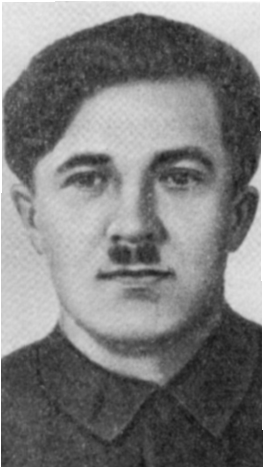
“You were with us in Ukraine,” the soldiers said to me, “you were at Tsarevokonstantinovka. You saw that all the detachments made up exclusively of Bolsheviks were almost always the first to flee from that military sector, afraid of being cut off by the German forces. But we remained at the Front. Our Petrenko told us the Anarchist detachment of the sailor Mokrousov had been cut off by the Germans near Berdyansk. We tried to get all the detachments passing us to give us a hand to help Mokrousov[57] avoid encirclement. And although we had no success in this, we stayed at the Front until the last possible minute. During this time we were able to determine that while Mokrousov couldn’t break out in the same line of retreat all the Red Guard detachments were taking, he was able to load his troops on barges in the port of Berdyansk and withdraw to Taganrog by sea. When our Petrenko received reliable information that Mokrousov had successfully embarked from Berdyansk, only then did we leave the Front where we had been quite alone for several days. We then headed to Taganrog.”
“You, Comrade Commissar,” one of the soldiers addressed me (they knew from a document I had presented while still in Ukraine that I was the chief commissar of a provisional Committee for the Defense of the Revolution), “must be aware of what was going on while we remained at the Front. For example, what were the other detachments up to, mainly Bolshevik but also with a scattering of Anarchists? What about the detachment of the Bolshevik sailor Polupanov? Wasn’t he far from the Front, in Maryupol, where he harassed war invalids whose only offense was they expressed their dissatisfaction with the revolutionary government which refused to render them any assistance – despite their status as victims of the previous criminal tsarist regime? And this Red Guard detachment, doubtless because of its ideological purity, was treated honourably by the revolutionary authorities. These authorities didn’t treat them badly the way they treated the revolutionary, but non-party, hero Petrenko and his detachment!”
This outburst from a rank-and-file soldier of Petrenko’s detachment was a cry of despair for the whole detachment. It was painful to speak further with these nameless bearers of the idea of spontaneous activity, an idea which had begun to create a stir among the broad masses of the villages and cities which were beginning to awake from their centuries-long bondage. This cry of despair was a symptom of the great anger of the masses against all those who didn’t understand their plight or who just didn’t care.
Then the soldiers, hearing the signal for supper, began to say goodbye and hurry away for their meal. But one of them put his hand on my shoulder and in a dispirited, agitated voice, said to me:
“Don’t say a word to anyone about what you heard from us. It’s a dangerous time for us, they could decide to shoot us like chickens…”
“Of course I wouldn’t breathe a word about this to anyone,” I answered the naïve Red Guard. “But I advise you to be very careful. And if you are thinking of springing your commander from prison by force, you must first find out what kind of threat he is facing. And if you learn that this panic-stricken government intends to shoot him, which I consider likely, then you must find out how your commander is being held and what the chances are that you might be able to get him out of Tsaritsyn. For your actions in this matter could cause too much harm both to Petrenko himself and to yourselves, especially if you don’t act in a timely and decisive fashion.
“Thanks for your advice,” replied the Red Guard B., “but I must tell you that if we free Petrenko we have no intention of taking him out of Tsaritsyn. We don’t intend to stop until we control the whole city; and we shall do this if only we can free our military commander Petrenko. We now know the mood of the Tsaritsyn garrison, and the mood of these Red Army units amongst which we have been dispersed. We are convinced that these Red Army units among which we find ourselves can be disarmed at the very moment when our hand-picked commando group goes to fetch Petrenko. All this has already been discussed and planned.”
“I don’t believe in the success of your enterprise,” I told the Red Guard. “I’m convinced you will fail simply because you have set yourselves the task of seizing the city. Instead you should concentrate on making a bold raid on the prison where Petrenko is being held (about this you will need precise information) and, freeing Petrenko, spirit him away with five or ten of the most reliable Red Guard comrades across the Volga or some other place distant from Tsaritsyn… You owe this to Petrenko whom you all supported in his refusal to the Tsaritsyn authorities to disarm, and you owe it to the Revolution, the banner of which you have not discarded but which you intend to carry once more into the fray…”
The Red Guard was somewhat taken aback by my remarks, and after a moment of consternation he grabbed me by the shoulder and said:
“I’ve been very frank with you, comrade, because I have faith in you... Do you remember me? At Tsarevokonstantinovka Station (still in Ukraine), I held your head on my knees while you rested. Mind you this wasn’t my idea – I had been ordered to look after you by our platoon commander who had seen your documents (as did Petrenko himself). The platoon commander knew who you were and he ordered all the Red Guards in our wagon to make room for you and treat you with the respect owing a revolutionary soldier. As I said, comrade, I have faith in you and I’ve been frank with you. So be frank with me: can you justify the actions of the Tsaritsyn government? They negotiated with us and this resulted in our detachment issuing a statement to all the other detachments as well as the population of Tsaritsyn and surrounding districts with an explanation that the clash between us and the revolutionary government was due to a misunderstanding and that counterrevolutionaries needn’t be encouraged by this in the hope of using this event to pursue their own black designs against the Revolution. But then these self-appointed rulers created a provocation by arresting Petrenko and, with the help of his forged signature, prevailed on the detachment to surrender and lay down its arms… Is there any excuse for the actions of this evil government?... Tell me frankly… My comrades asked me to find out your opinion.”
To all this I replied:
“I’m not only against the dirty deeds committed by the Tsaritsyn government against Petrenko and your detachment, I’m against government itself… But this business being planned by your detachment comes at a critical moment. The White Guards are routing the Red troops of the Kuban-Black Sea Soviet Republic[58] along the whole Front. The Red forces are retreating also from the area of Rostov-on-Don. It may also be true (the government is mum about this) that the Tsaritsyn sector of the revolutionary Front is in a precarious state. And if your detachment carries out an attack on the Tsaritsyn Revkom – the staff headquarters of that Front – will it really be able to take control and hold the city? What will be the effect on the Front facing the Cossacks which is already shaky? Revolutionaries must consider all these things. Otherwise any failures at the Front against the Cossacks will be blamed on your action against the Tsaritsyn Revkom. All the toilers will accuse you of counterrevolutionary intentions and they will judge you severely… This will give the authorities the right, in the event of your failure, to have you all shot without any trial or enquiry into what compelled you to take bold, repeated actions against the government at such a dangerous moment for the Front of the Revolution against the Counterrevolution… That’s why I can only view this situation in one way: if there are sensible comrades in your detachment who have the courage and strength to break Petrenko out of prison or die with him in the attempt (for in the event of failure the revolutionary government will not hesitate, given the conditions at the Front, to rid itself once and for all of Petrenko and anyone attempting to free him…), then I would advise that your efforts be limited to an attempt by these comrades to free Petrenko and get him out of Tsaritsyn. If your action is resolute and timely, you will have a good chance of success…”
“Hm… hm… And yet it seemed to us that freeing Petrenko, seizing Tsaritsyn, getting rid of the authorities which have caused us so much trouble and who are unpopular with almost the whole population of the city and the surrounding districts – that this was a very easy matter,” slowly, with a tired voice, remarked my naïve Red Guard comrade. And then he added, “I’m going to talk to my friends, either today or tomorrow, about everything we’ve discussed. Then we’ll come to a firm decision about this affair… Come tomorrow at three o’clock to the train station. I will wait for you with a couple of my best comrades. We need to get some more of your advice. But please don’t say anything about this to anyone…”
This was his last word about the “affair.” He squeezed my hand with his strong, peasant, toil-hardened hand and, sighing heavily, with a sad smile he turned and left.
For a long time I watched him walk away, expecting he would look back. But then I remembered that Ukrainian peasants are always and everywhere identical in their straightforwardness and I took off in my own direction, also not glancing back.
Along the way I pondered everything I had heard from the mouth of the Red Guard and felt a strong ache in my heart for everything, everything!... And causing me the greatest distress was the irresponsibility of us, the Anarchists, in the matter of organization… Without organization we were helpless in the sense of influencing the course of revolutionary events in the country – it was an humiliating situation. It was humiliating to be so helpless before the broad toiling revolutionary masses which in the present Revolution could get a glimpse of their genuine liberation from economic and political slavery. And it was also humiliating to me personally. I clearly understood that in the present Revolution it was necessary to create the appropriate means for the liberation of the toilers. And it was necessary to convince myself that the Anarchists would be able to collect themselves and act in this field in the manner which the times demanded. Only then would the pain in my heart subside.
If we were able to render reliable organizational help to the toilers in their direct actions, both in the rear and at the revolutionary fronts, would the Bolshevik-Left SR government be lording it over these struggling masses? Would the government be able to occupy itself with impunity in such dirty deeds as giving itself the right to suppress certain revolutionaries, forbidding the holding of personal opinions about the government, and disarming and shooting on any sort of pretext? No way! Even with all the bayonets of its befuddled Latvian, Chinese, and Hungarian troops, the government wouldn’t dare mess with the Revolution, a Revolution which would be nourished by a wide stream of revolutionary ideas, cultivating its own creative forces…
As I was thinking about this, I suddenly felt a sharp longing for Gulai-Polye and its hard-working revolutionary raion, now occupied by the real butchers of the Revolution in Ukraine: the German-Austro-Hungarian junkers and the bands of the Ukrainian Central Rada. In my mind, according to the scraps of news I received while in Taganrog, I imagined the orgy of violence engaged in by these butchers. All this caused me to feel even more strongly a righteous indignation at the actions of the Tsaritsyn revolutionary government against Petrenko and his valiant revolutionary detachment.
However the plans of this detachment to free Petrenko, seize control of the city, purge it of all representatives of the government (this could only be accomplished by a general annihilation of all opponents, in my opinion) – these plans of Petrenko’s detachment caused me great concern. Knowing the soldiers of this detachment, seeing them in person and talking with them, I entertained no doubts that if they made up their minds to act, they would act with the hearts of lions, willing to sacrifice their own lives to achieve their goal. But the achievement of this goal, in my opinion, would place them in a predicament from which they would not be able to extricate themselves and they would all perish ignominiously, belatedly realizing their own error.
That’s why, considering all the dangers which might befall me for associating with Petrenko’s men, I nevertheless resolved at all costs to see them on the next day at the appointed time and once more emphasize to them that they should concentrated on getting Petrenko out of prison and out of Tsaritsyn and forget about the mad scheme to seize the city and settle accounts with its rulers...
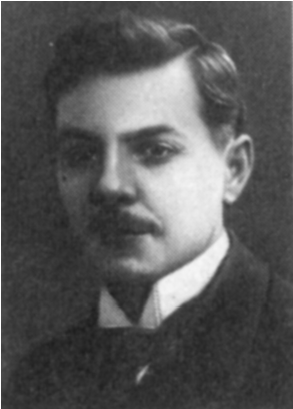
I was determined to talk Petrenko’s men out of their plans to seize the city and get even with its rulers – and not just because I saw in these plans an uncontrolled thirst for revenge which could in no way be justified. I was also motivated by the circumstance that on that same day I ran into Voroshilov, who was in the process of organizing the 10th Army. He addressed a mass meeting of dock workers, describing the situation of the Tsaritsyn Front of the Revolution against the Counterrevolution. According to his speech – business-like but forceful – I learned that the revolutionary Front had sustained defeats and that it was necessary to bolster it with fresh forces. I myself spoke after Voroshilov and informed these workers about what the revolutionary Ukrainian workers were enduring at the hands of the German junkers and the detachments of the Ukrainian Central Rada. I also appealed to workers to render assistance to the armed Front of the Revolution against the Cossacks, whose immediate goal was to seize Tsaritsyn, a centre of concentration of the revolutionary forces.
As I recall, Voroshilov got what he wanted. The workers passed a resolution that they would go to the Front...
Thus, the serious situation at the Tsaritsyn Front described by Voroshilov at the meeting of dock workers stiffened my resolve to convince Petrenko’s Red Guards to give up the thought of attacking the Revkom and the Tsaritsyn Soviet with the aim of taking over the city and getting rid of, as the Petrenkoists put it, the rulers who had installed themselves there. So I showed up on time the next day. And when the Petrenkoist Red Guards met with me (there were five of them this time), I declared to them bluntly that I had thought over their plans seriously and found them inappropriate. I considered the consequences of their being carried out to be harmful to the general revolutionary cause.
I explained to them the situation at the Tsaritsyn Front and also spelled out how their contemplated action would impact on this situation. Stubbornly I insisted they declare their own position on this question.
In the end the Petrenkoists said to me:
“For a long time we mulled over what you said yesterday to Alexei, and we believe you’re right. We have decided it’s impossible for us to take on a task which is beyond our means and promises to inflict irreparable harm both on us and on the fate of the Revolution… We’re all agreed on this… But we haven’t abandoned the idea of freeing our commander, Petrenko. We have people who are prepared to risk everything. The only trouble is, we haven’t been issued any weapons. Here we are, part of the armed forces, and yet we don’t have any weapons.”
When I asked if they had met with Petrenko, I received the answer:
“It’s impossible to do this: they tell us there will be a formal hearing, after which he will be released… We don’t believe it. That’s why we have chosen people to spring him by force.”
“Here’s my view: you need to worry about saving Petrenko from execution – that’s what you need to concentrate on and the sooner you do it the better it will be for Petrenko and for your peace of mind.”
I stubbornly insisted on getting Petrenko out of prison by force. In my opinion this could be done by 8 or 10 guys even without rifles, just with revolvers and hand grenades. And since Petrenko’s men had lots of volunteers – as they assured me, more than 200 – the business was looking even better. From this group it would be possible to choose 10 — 25 of the most reliable and they would take care of everything… That’s what I advised Petrenko’s men. I pressed for this because I considered the resistance by Petrenko and his men to the arrogant revolutionary government to be just, a defense of their own revolutionary honour. On the other hand, the government mendaciously carried out negotiations with Petrenko, assuring him the conflict between them was completely liquidated and that in two or three days he would be allowed to leave freely for the Front. By this they set a trap, arresting him, locking him in prison, and preparing for him a death sentence. I considered this behaviour abhorrent, more appropriate to unprincipled Jesuits. And could the Tsaritsyn authorities at the time really be considered to be revolutionaries? I was filled with indignation and that’s why I advised Petrenko’s men to rescue their commander by force of arms from the clutches of these authorities, even though it might cost the lives of some of the prison butchers.
I regarded this action as the best way to express contempt for the authorities, who seemed to think prison bars could deter a sense of honour and justice. The freeing of Petrenko by his men would convince the Tsaritsyn revolutionary authorities once and for all that, while they could get away with a lot of stuff thanks to their hired mercenaries, the forces of honour and justice which they were plotting against could always prevent their evil schemes.
Now there were certain “revolutionary” types who had retreated from Ukraine to Tsaritsyn along with the central Ukrainian Soviet government and enjoyed the protection of that government. These characters were taking it easy in Tsaritsyn, and in the afternoons they would dress up (including make-up) and mingle with the public in a Tsaritsyn park, strolling around the flower beds. From listening to these people I learned that Petrenko had already been shot or, if not, that he would be shot either that day or the next day…
On several occasions I had gone to visit Minin, the chairman of the Revkom. I tried to speak with him and his associates about Petrenko. But the information I got at the Revkom wasn’t as accurate as what I could pick up in the Tsaritsyn park from the “revolutionary” types. At the Revkom I was always told the same monotonous answer: “Petrenko has been handed over to a tribunal. What the decision of the tribunal will be, it is difficult to say at the moment”…
In the park, from the “revolutionary” types exhausted from the “heavy struggle” in Ukraine (more likely they were worn out from ladies they had picked up, also in parks) and taking it easy now in hospitable Tsaritsyn, I heard news about Petrenko – at first vague, but later more precise. It was clear to me that these “revolutionary” types were well-informed about Petrenko. This circumstance had the effect of boosting their prestige and encouraged these jerks to be bolder in their stories about Petrenko and about what was going to happen to him, today or tomorrow, if it hadn’t already happened.
All this, of course, vexed me considerably, but I didn’t learn anything definite which I could pass on to Petrenko’s men and force them to hurry up their attempt to snatch Petrenko from his confinement.
Nevertheless I did advise them to hurry on with the affair, and they took my advice seriously. They rushed ahead with their plans. But … the authorities outstripped them. Split up into small groups and dispersed among Red Army units with quite a different mind-set, they were sent to the Front … and Petrenko was killed in the cellar of the Cheka!... And, typically, he was killed not as a Red commander refusing to submit to Red satraps who stupidly demanded he lay down his weapons, but as a sinister counterrevolutionary.
For me this shameful act by the revolutionary authorities was detrimental both to the Revolution itself and to the bearers of its ideals. I could find no justification for it and began to doubt whether this government was pursuing any revolutionary goals whatsoever…
This shameful act of the Tsaritsyn revolutionary government, an act which branded Petrenko as a sinister counterrevolutionary, was imprinted in my memory with the same force as the actions of the German junkers and Ukrainian Central Rada in Gulai-Polye in April (see the first volume of my memoirs), although the two events were not strictly comparable. But they both tormented my soul and, when I recalled them, I also thought about what might constitute the basis for their re-occurrence.[59]
Chapter 8: Meeting With People From “Revolutionary” Circles.
A group of the communards with whom I hoped to meet and because of whom I separated from B. Veretelnik (we were planning to visit Moscow, Petrograd, and Kronstadt together) arrived a week and a half later in Tsaritsyn. Without disembarking from their carriages, they moved from one railway station to another: they spent a day or two on one siding and then they were transferred to another. They, my closest, dearest friends, in search of whom I had left Taganrog in a hurry only to lose their trail in Rostov-on-Don, were now in Tsaritsyn.
A person from the “revolutionary” circles who were enjoying their rest in Tsaritsyn, saw someone who said that there were communards from Gulai-Polye in town.
I rushed as if possessed to find this “someone”…
With difficulty I came across the trail – not of my communards, no! – but the trail of this “someone.” In the park among the “revolutionary” types strolling about, taking it easy in Tsaritsyn, I found some well-informed people. I questioned them at length about whether they knew which of their crowd had seen the Gulai-Polye communards and knew where to find them.
They told me: the Gulai-Polye communards had been seen by the “revolutionary” types but I could only learn the details by going to the second-hand bazaar on the next day. And they told me where I could find this bazaar.
Thanking these friendly representatives of “revolutionary” circles, I headed back to my hotel. Along the road I thought: it might be better to have a look for this bazaar now, so that in the morning I can go there directly, without having to make things difficult for myself by asking the Militia for directions.
I found the bazaar...
In the hotel I ran into people from Alexandrovsk. They also belonged to the “revolutionary” circles. The women in their group sold their own bodies, and the men received free lodging in the hotel for themselves and for these women from the Tsaritsyn Soviet. The men had their own profession – what it was I couldn’t figure out at first. Among these representatives of “revolutionary” circles, there were many who recognized me. They had seen me in January in Alexandrovsk when, as a member of the Revkom, I had attended the funeral of another member of the Revkom who had been killed by a machine gun. These people even recalled some details, for example, of my speech at the grave (we, the Anarchists, as members of the Revkom took part in the funeral of this young, but distinguished Bolshevik worker, our colleague on the Revkom). Although I didn’t remember them, the fact that they knew these details about me made me start to think they really were revolutionaries who had sunk into degrading circumstances owing to hard times. Without worrying about this, I began to pester them with questions about whether they had seen the communards. Indeed they had – they had even eaten some of their vareniks.
And these people told me that along the bank of the Volga, on one of the railroad sidings, stood echelons with refugees.
“We ran into the Gulai-Polye communards there, and they were cooking cheese vareniks in big iron pots on tripods. We were attracted by these vareniks, so we crowded around the fires where they were cooking and then asked to try them, so they gave us some.”
“Oh, they were wonderful vareniks!” cried one of them.
“I wanted to buy all of them for our people, but they said: ‘we don’t sell them,’” cried another.
They were talking about people I had grown up with, people with whom I had suffered for long years under the autocracy, people I had been separated from by prison and katorga, people whom I had met again in the days of the Revolution when we organized agricultural communes. I begged one of my informants to get in a cab with me and go to the place where he had eaten vareniks with the Gulai-Polye communards. I had a hard time persuading him. He claimed he wasn’t free to go until midnight. The rest of them seemed to have something especially important to do.
Finally we left the hostel, walked about 30 steps, hired a cab, and drove to the steamship docks. There we pulled up to one echelons, jumped out, and woke up the sleeping refugees in one of the wagons. We asked where they were from. It turned out they weren’t the bunch we were looking for. And then a second, a third, and a fourth echelon. Everywhere they were cursing us, but my guide knew how to mimic the Tsaritsyn forces of law and order: he shouted in an official-sounding way at the awakened refugees who were cursing us, and they quieted down. At the fourth echelon we were told the Gulai-Polye communards had been shunted yesterday to another railway line. We couldn’t get anywhere in our search for them. My companion warned me he had to rush back to the hotel so he could get ready for the bazaar. So we returned to the hotel.
On the way back I arranged with my guide to go together to the bazaar. Back at the hotel I didn’t bother to drop in on the people from “revolutionary” circles, who liked to stay up all night and make a lot of noise, etc. Instead I went to my room, locked the door, and went to sleep.
The next morning I got up, hurried to the dining room to have some breakfast, and brought my diary up to date. Then I went up to see the “revolutionary” types, found out when my guide would be going to the bazaar, and went out into the courtyard to sit on a bench and wait for him. And when he came out, with some sort of packages in his arms, we went to the bazaar.
At the bazaar half the vendors were already set up. My guide quickly sat down next to one vendor, apparently a fellow “revolutionary” type but one who had been able to buy himself a permanent counter at the bazaar. Spread out on the counter were goods of the most varied kind: men’s and women’s hats, watches, boots, purses, spectacles and pince-nez; and all sorts of perfumes, admittedly in small quantities.
My guide quickly unwrapped his packages and retrieved his own goods. These consisted of men’s and women’s leather and canvas belts; suspenders; and necklaces and bracelets of varied size and quality. He decked himself out with all this stuff and said to me:
“Good-bye for the time being. I need to do some selling. And you should have a look around for people who might know where your Gulai-Polyans are.
I couldn’t refrain from asking him: “So did you sell this kind of stuff in Alexandrovsk?”
“No way! In Alexandrovsk we worked in an agricultural office… We acquired these goods in Rostov during the retreat. We knew there would be a big demand for them here, so now we’re unloading them,” he replied, in all seriousness, without any sense of shame.
I was troubled. My guide had turned out to be a vendor of goods acquired by theft, albeit possibly from predatory bourgeoisie. He noticed my discomfiture and tried to cheer me up with the following words:
“Comrade Makhno, you are embarassed to see me as a pedlar… But the times are like this. All of us who had to flee from the Counterrevolution are doing the same kind of stuff…” “All the more shameful for them,” I said.
“Oh, what’s the matter with you, Comrade Makhno?” he said, “You don’t want to think about how to make a living. But do you really believe it’s easy for us? It’s not like at home. If we didn’t find some kind of occupation here we would be starving and dressed in rags. Never mind, we’ll talk about this later… I’ve got no time now, I’ve got to try to make a little cash. See you later! Try to find some people here who know where to find your communards.
My former guide disappeared into the crowd.
“So this is what happens to revolutionary people,” I thought at that moment. But my thoughts were quickly replaced by new impressions. I began to notice literally dozens of people from “revolutionary” circles carrying all sorts of goods in their hands and on their shoulders. I had seen all of them previously in the Tsaritsyn park carrying on a daily discussion about the problems of the Revolution, about its successes and failures on the numerous fronts of the struggle against the armed Counterrevolution…
Among these newly-minted pedlars at the bazaar I recognized many whom I had met before arriving in Tsaritsyn among the ranks of the Bolsheviks, Socialists, and Anarchists. This caused me a great deal of heartache, believing as I did in the Revolution as the sole means of liberating the toilers from the power of Capital and State. I had a fanatical belief that at the moment of Revolution all the oppressed should exert themselves to the utmost in whatever field of endeavour was appropriate to them, acting creatively without political factionalism, without fratricidal strife… And as this kind of fanatical revolutionary Anarchist I felt anguish… But at the same time I felt a certain happiness as a result of my encounter with these comrades from “revolutionary” circles, retreating from Ukraine and finding their vocation as petty traders, the whole lot of them, in hospitable Tsaritsyn. I was happy because among their ranks I didn’t see a single member of my own class: the peasantry.
For the most part these people were artisans, shop-keepers, Jewish pedlars – in other words, various kinds of petty bourgeoisie. A minority of them were workers, or former workers, who had lost touch with the workplace as a result of the Revolution. There wasn’t one peasant among these people from “revolutionary” circles. And this really boosted my morale. And, believing as I did in the peasants, it made me happy to look forward to helping them to rise up again, restore the Revolution, and ward off its enemies.
Among all these people at the bazaar I finally found someone who had seen my “communists” (as he called them) buying stuff at this very bazaar. And he was the same person who had led me to the bazaar an hour ago and then took off. Now, somewhat ashamed, with a different face, he rolled up his goods and led me down one of the streets until finally we came across the railway tracks which followed the Volga. Here were the wagons in which the Gulai-Polye communards were living. And right away I ran into one of the communards, Vasilevsky,[60] who led me to the right place.
Chapter 9: Meeting With the Communards, Moving Them to Olshansk Khutor, and Saying Farewell
None of the communards had expected to run into me in Russia. They all knew I wasn’t one to sit and twiddle my thumbs. So they assumed I had already returned to Ukraine, to my own raion, where, if I had not succumbed to the Germans, I was preparing a terrible revenge for the butchers of the Revolution. Only my girl friend, lovely Nastyenka – she was in the advanced stages of pregnancy – refused to listen to this and insisted I would try to catch up with her before she gave birth. She expected me to show up every day. Sometimes, according to the communards, she grew sad with the thought that her waiting would be in vain. Now her waiting was at an end. Leaving Vasilevsky far behind, and pulling down my cap and lowering my head, I approached the wagons in which the communards lived, unnoticed by anyone. And then I deliberately approached the wagon which was home to my dear, lovely girl friend, and spoke to the communards: “How are you, my friends, how is life treating you?” Then all my friends, both men and women, and their kids, threw themselves on me, hugging and kissing me in the spontaneous fashion of peasants. At the same time, from the second wagon my girl friend jumped down and after her all the other communards and there was no limit to the joy of all of us…
We began to exchange news about Gulai-Polye, about the other communes, and about our adventures during the retreat.
The first thing I heard from my closest and dearest was the news (for me, at least) about their departure from Commune No. 1 (Klasenska estate). This commune was located eight versts from Gulai-Polye. At the time of the coup in Gulai-Polye, the conspirators, with the help of the Jewish regiment, captured long-range guns. Just when the communards were loading their wagons in order to escape from the commune, they were subjected to artillery fire. Everyone thought the Germans were coming. Everybody dropped the stuff they were loading, mainly clothes, and, under the exploding shells, they dragged their small children to safety. The insane cannonade was so loud the kids couldn’t even hear their own mothers screaming and moaning...
Now everybody – both mothers and children – were laughing as they told me about this. But of course at the time they had no idea who was attacking them...
Next my closest friends told me about their retreat, about which Red Guard detachments they travelled with, how they abandoned Rostov in a panic (apparently they left the same day as I did), and where and how they had wandered after Rostov. All their stories were quite astonishing.
“On the way we left behind many of our friends,” said one woman, “They couldn’t bear the terror we had to endure in each city as the Germans approached. But those of us here, several families, decided to keep together until we learned your whereabouts, Nestor Ivanovich. Then we intended to join forces with you so together we could return to our homeland – to win back the broad steppe and the rich green fields of grain.”
These words of a young communard, surrounded by three small children, touched me deeply. But I tried not to show it and limited myself at this time to assuring them that none of us was going to be wasting any time. We would all go to the armed Front of the Revolution in order to save it, for only through the Revolution could we win back the broad Ukrainian steppe and rich green fields of grain, about which Melasha had just spoken. For now these lands were ruled by drunken German-AustroHungarian junkers and their rotten lackeys – the detachments of the Central Rada.
Next I learned the communards had enjoyed some of the spoils from Rostov. It seems that Red Guards of the Bolshevik detachment under the command of Stepanov had supplied them with straw hats.
Telling me about this, the communards were well aware how much distress this would cause me. They knew I would give them what-for, that I would lecture them about non-revolutionary behaviour, about how harmful it is for the sensitivity of a revolutionary to engage in something immoral. By accepting for themselves a hat acquired in the looting of a shop, each of them showed the looters that they would have done the same thing, that they were in solidarity with the looters.
But my friends didn’t want to hide anything from me. They were honest with themselves and they wanted to be honest with me, whom they regarded in every instance as the first among equals. They valued me and my opinions because they regarded me as one of them. And they preferred to listen to my sharp attacks on anyone who consciously acted in a manner unworthy of a revolutionary; they preferred to share my gloomy thoughts about their behaviour... So they told me everything... And afterwards there were some of among them who broke up these straw hats and flung them out of the wagons.
Now the communards brightened up a little. I proposed that they abandon their railway wagons and move into living quarters somewhere near the city. They agreed. We – Comrades Aleksandr Lepetchenko, Grigory Vasilevsky, and myself – spent the whole day looking for a place for them to live. My brother, Grigory Makhno, made inquiries among the city’s draymen to see what transportation might be available for resettling people from the railway wagons to a village...
The rest of the communards were busily engaged in getting their households in order and packing things…
At the khutor of Olshansk, four versts from Tsaritsyn, we found some living quarters at a very cheap price. In the space of 24 hours everybody was moved there…
As soon as we were settled in Olshansk, I brought my friends up to speed about what had been discussed by the comrades at the Taganrog conference at the end of April and what conclusion we had arrived at. My friends were informed of the obligation I had undertaken in relation to Gulai-Polye raion. They realized I would shortly – in the next day or so – be leaving them. First they were dejected, but then they declared that they – men women, and children – would go with me. I protested sharply against their travelling with me, noting almost all of them had families, and since they were all committed to a communal life-style, it made sense for them to remain here, at least for the time being.
My girl friend had maintained her self-control up to this point, not wishing to give in to her terrible feeling of loneliness in the presence of her kin, but now she broke down and began crying...
All these conversations led to us sitting down to some serious meetings at which we came to the unanimous conclusion that we couldn’t sit still at such a critical time but that we should all go to the Front. That’s why it was necessary for the comradecommunards to arrange their families as follows: one or two men would be left to help the women manage things and also to carry messages to and from the Front; the rest would go as volunteers to the Front here, in the Tsaritsyn sector. We didn’t want to wait until the Front could no longer sustain the attacks of the Cossack Counterrevolution and then begin an endless retreat.
I made a strong pitch for this plan of action because it was my deep belief that if we Gulai-Polyans succeeded in organizing an insurrection in Ukraine against the Counterrevolution and if it spread, then it would be easy to transfer our own people to GulaiPolye with the co-operation of the Red Command.
The communards, both men and women, agreed with this. The men began to prepare to volunteer for the Tsaritsyn sector of the Front of the Revolution. And I tried to prepare my girl friend so she would be brave about being separated from me for a while and go on living with the communards as she had done up to this time. I told her to always remember I was only leaving her because of the great cause of the Ukrainian toilers, strangling in the noose of the German-Austro-Hungarian reaction.
My girl friend agreed with all my arguments about how I couldn’t sit around idle with her, that I had to be in Gulai-Polye in July no matter what. But her emotions got the better of her reason, and she wept like a child. This put me into a very depressed state of mind. It led me to think seriously about taking her with me, for it would be easier to face death with her close by... But such a course of action she herself considered folly. Her condition was such that she could scarcely walk any more, and spent most of her time lying down...
Finally, with my girl friend moaning and sobbing, several other women and all the children crying, and the men singing bravely, I said farewell to the communards and set out to leave the city of Tsaritsyn. But as I was walking along the road, accompanied by comrades, I came across one of the Tsaritsyn news stands where one newspaper with the masthead Anarchy stood out (this was the daily newspaper of our Moscow Anarchist organizations). I bought it and read that in Moscow a “Union for the Propagation of Anarchist Ideas” had been started. The mission statement of this Union was included.
This news was greeted by myself and my comrades with indescribable joy. Mind you, as far as ideological content was concerned, this newspaper, in our opinion, was far inferior to the newspaper The Anarchist of the Rostov-Nakhichevan group of our comrades. But we were very happy about the fact that the newspaper continued to be published, despite the dreadful crushing of its publishers – the Anarchist organizations on Malaya Dmitrovka in Moscow. And intoxicated by this happiness, so characteristic of peasants, we turned around and headed back to the Olshansk khutor.
We called the other communards together and read the newspaper once more out loud and thought long and hard about the position of the Anarchist movement as a whole in relation to the catastrophic situation of the Revolution. And we had a long discussion and debate about the fact that the Anarchist movement, because it wasn’t organized, was powerless to arouse the masses against the high-handed rulers in the Kremlin. Now Anarchism could only make itself known through the publication of cheap, primitive literature which seemed pathetic and feeble to us. In order for Anarchism to be strong in reality, it was necessary to engage in social action to organize and arm ourselves. Our weapons needed to be appropriate for the times and the level of technical progress, for the enemies of the Revolution used the latest weapons in their struggle against it.
“The Anarchists, one must admit,” I said then to my comrades, “have behaved negligently during the first year of Revolution. We can’t expect we will be able to see our movement organized and powerful in the sense of exerting an influence on the development of the Revolution unless we ourselves have the strength of will to work towards this. And you know how weak we are now...”
It was depressing to realize how powerless we were and to see how those who had resources were, in my opinion, squandering them…
My communard friends and comrades noted my frustration during this discussion and dared to suggest that I stay and relax with them. I didn’t really grasp their suggestion but I felt a great weariness and lay down to rest.
The comrades thought I was postponing my departure and this cheered them up. But three hours later their cheerfulness came to an end. I woke up and saw it was getting late and that I had already missed a second steamship. Without saying goodbyes a second time, except to my girl friend, I left the Olshansk khutor.[61]
At the Tsaritsyn steamship docks I met my Anarchist comrades from other towns of Ukraine. While waiting for me, they had missed two steamship sailings and I had to put up with a lot of verbal abuse.
Now we bought tickets to Saratov and boarded a steamship.
An hour later, we were on our way to the Saratov, at that time the administrative capital of the Lower Volga region.
Chapter 10: Saratov: Local and Refugee Anarchists and My Avoidance of Certain Comrades.
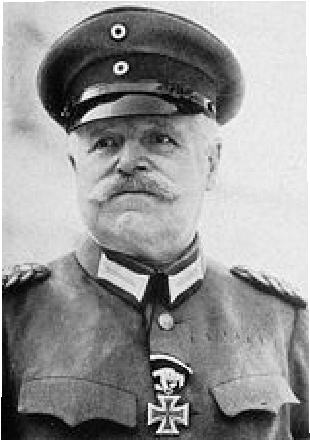
Upon arriving in Saratov, I received definite information that the Ukrainian Socialist Central Rada, having invited into Ukraine the six hundred thousand-strong German-Austro-Hungarian counterrevolutionary army under Baron von Eichhorn,[62] had now been overthrown on April 29 1918, by the Ukrainian and Russian bourgeoisie, acting together as allies in the struggle against the Revolution.
From newspaper articles (admittedly already out of date), I learned that this inglorious Rada had been overthrown at the very time when it was in session, dealing with land reform by which it intended to confirm the right (for kulaks and pomeshchiks, of course) to own land up to 30 or 40 dessatins in extent. From April 29 the Central Rada generally ceased to exist in Ukraine. Now there was an “elected tsar” – Hetman Pavel Skoropadsky.[63]
All this news once more confirmed the correctness of my position regarding the Central Rada and its politics. But both the Bolsheviks and the Left SRs were, in my opinion, guilty of unleashing the tyranny of the Hetmanate. The former were guilty because of the politics associated with the Brest treaty and the German counterrevolution. The latter were guilty because they didn’t immediately break their alliance with Lenin’s government, withdraw from the VTsIK of Soviets, and engage in struggle together with masses at the grassroots level against the occupation of Ukraine by the German counterrevolutionaries. This was the moment when the Ukrainian revolutionary toiling masses were making every possible sacrifice to bar their land – their villages and cities – to the German and Austro-Hungarian counterrevolutionary armies, as well as to the intelligence units, cops, and provocateurs of the Central Rada. The Central Rada’s agents guided these armies to the shortest and most reliable routes for their advance, and then dealt with refractory revolutionary Ukrainian peasants and workers by informing on them, helping to flog them with champols, hanging them from telegraph poles, herding them into prisons, and carrying out nightly shootings.

Avidly reading all the newspapers I could get my hands on and finding out from them what was happening in Ukraine, I was inclined to blame the events on all the political parties: in the first instance the Ukrainian parties, and then the Kremlin parties, i.e. the Bolsheviks and Left SRs. Taking all these events to heart, my understanding of things as a revolutionary was that the Revolution is not carried out for the benefit of political parties, but for the economic equality and social and spiritual emancipation of the toilers from capitalist oppression and its servant, the State. The role of the State manifested itself in organized pillaging and violence by a minority directed against the majority. Thinking about these things, I felt a strong sense of anger, but also compassion, in relation to my fellow revolutionaries of all tendencies. Then I set to work to write letters to my communard friends left behind in Olshansk khutor. In these letters I described in detail the overthrow of the Ukrainian Central Rada and the establishment in its place of the Hetman, surrounded and supported on one side by Ukrainian and Russian counterrevolutionary slime, and on the other side by German-Austro-Hungarian junkers.
“The hangman mounted the Ukrainian throne,” I wrote to the communards, “and set about finishing off the Revolution in Ukraine, a task the Central Rada had been unable to complete. This is a fateful time for the Revolution. I shall hurry to Ukraine. And you, my friends, should hasten to leave your wives and children and join units of the 10th Red Army as volunteers. Then when the Counterrevolution is liquidated – by you from outside, by us, the Underground, from inside – then we will meet again and celebrate the genuine, national Ukrainian Revolution as brothers…”
When I managed to tear myself away from reading newspapers about events in Ukraine, I looked up the Saratov hostel. This was a flop-house for all arriving revolutionaries. In this hostel I met Anarchists from Yekaterinoslav: Lev Ozersky and Tarasuk. The former was enjoying some well-deserved rest in the hostel. From being a revolutionary Anarchist he had, it seemed during the period of retreat, transformed himself into an extreme pacifist who eschewed any form of violence even for the purpose of self-defense against an attack. The latter, however, had remained a revolutionary Anarcho-syndicalist. I used to make fun of him to the point that we almost got into a brawl. For sure this wasn’t entirely fair of me. But it did seem odd to see people staying in bed in the hostel till 4 o’clock in the afternoon at a time when the Revolution was engaged in a life-and-death struggle with the Counterrevolution. And furthermore, this was the time when the treacherous Lenin and Trotsky, using the Bolshevik- and Left SR-dominated Cheka, were persecuting us. My own view of things was that a revolutionary should always be active among the people. Seeing comrades loafing in hostels for weeks on end caused me much distress. But in my distress, I nevertheless realized it wasn’t fair to blame individual Anarchists for creating this situation. It wasn’t their fault that, like startled crows, they flew aimlessly from one place to another, often with the flimsiest of excuses, simply on the basis that “in such-and-such a city our people are doing something, so I’m going there”… Such individuals would travel around for weeks and months and it would never occur to them to stay in one place and try to strike a blow on behalf of our movement… But no, such individuals were not to blame! The blame lies in the form and internal structure of our Anarchist organizations. These organizations are unhealthy in a fundamental way. They condone, and in fact encourage, a wrong conception of the goal, not only of our movement as a whole, but even of its smallest organization. “No, we must avoid Anarchist organizations of that form and content,” I convinced myself. The moment demands the ideological and, especially, the tactical unity of the Anarchist forces, for only tactical unity helps us to make an impression on those who have an interest in the success of the revolutionary toiling masses. We need to show there is a practical basis for Anarchism from which naturally flows the growth, development, and defense of the Revolution, a Revolution which reflects the conceptions of its direct creators – the toiling masses taking direct action on their own home turf.”
During those days in Saratov I came across some members of our Gulai-Polye Anarcho-communist Group: Pavel Sokruta, Vladimir Antonov, and Petrovsky. They had come to the hostel hoping to get some information.
I told them about the conference we had held in Taganrog and who had attended it. They were all in full agreement with the resolution of the conference and decided to return as soon as possible to Ukraine, to the environs of Gulai-Polye in particular, for like me they were well aware of the revolutionary spirit of the population of that region.
A conference was arranged which included these friends and comrades from the GAK, other Anarchists who had arrived in Saratov, and local comrades. The purpose of this conference was, firstly, to render support to the Saratov Anarchist newspaper Voice of Anarchy which was in its death throes. Secondly, we wanted to thrash out our relationship to the despicable acts of Lenin and Trotsky against our movement, which had been duplicated by the Soviet government at the local level everywhere. Thirdly, we hope to use Voice of Anarchy to launch a collective appeal to all Anarchists who were being forced out of Ukraine into Russia because of the pressure of the Counterrevolution. This appeal would call for unity of tactics in Anarchist activities and a speedy return to Ukraine where we would begin the organization of fresh forces for the revolutionary struggle, a struggle for defined goals which would be both concrete and practical.
The arriving Anarchists, like myself, wanted to hear the report of the Saratov Anarchists; we wanted to find out about their situation, what work they were doing, and whether we would be getting in the way of their activities.
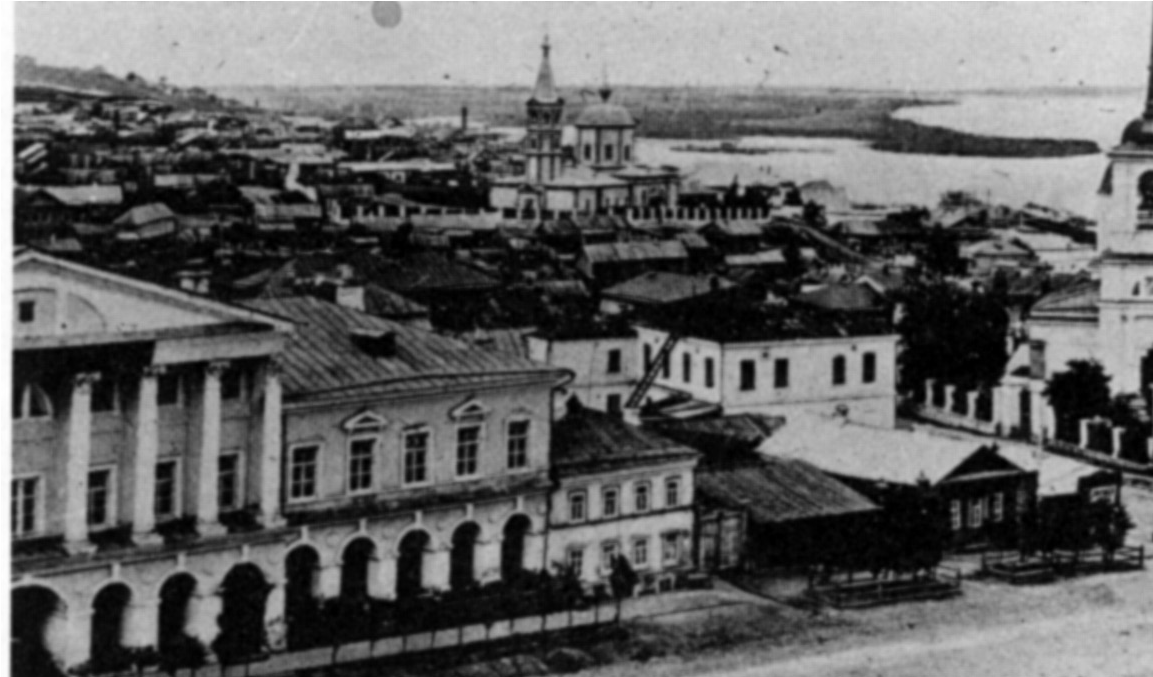
The report about this was delivered by Max Altenberg (a.k.a. Avenarius). In his speech, he first explained that “Voice of Anarchy” was not likely to continuing publishing due to a lack of money. To this my comrades and I responded that we were donating enough money to put out another issue.
Next the spokesman described the situation of Anarchist work among the workers and among the peasants in the villages. It was pathetic. The work of the Saratov Anarchists in the city and in the nearby villages was very weak and for the moment inadequate. Their activity was confined to expounding the theory of Anarchism. But they had scarcely made a start on the practical side of Anarchism: building a mass movement which revolutionary governments would have to reckon with, a movement which would inspire trust and hope in the toilers; and beginning to organize – under the militant banners of Anarchism – consumption, production, and the defense of freedoms, the three essential problems which must be formulated, developed, and solved or else a new social system is inconceivable. And because of the lack of preparation of the Anarchists, their feeble efforts did nothing to bolster their own confidence, nor inspire the toilers who had a vital interest in the triumph of freedom over tyranny, of equality over subjugation, and in the transfer to the toilers of the social capital bequeathed them by history: the land, the factories, the railroads, etc., etc.
The spokesman Max Altenberg was powerless to satisfy the out-of-town Anarchists either with his understanding of the current state of the Revolution, or with his analysis of the role of our movement. He couldn’t satisfy us either with his knowledge about the Front against the Counterrevolution and how this was going to affect Saratov. On this matter he tried to gloss over and conceal from the audience his own ignorance. He frequently repeated that he was very close to the “Saratov Smolny”[64] (the territorial Revkom), and blatantly lied to us that the city of Saratov, it seemed, was on the verge of evacuation. According to him the Czechoslovaks were advancing from the nearby cities of Balashov and Kalach, so “you should leave Saratov” he advised.
To the majority of the audience at our conference it was clear that the spokesman of the Saratov Anarchists, in proposing that we get out of Saratov, was carrying out the instructions of his buddies, the enemies of the Anarchist movement from the “Saratov Smolny.” Because of this many of the comrades, including myself, quarreled with Altenberg. We knew perfectly well that the Czechoslovak military units in this region were not launching any armed actions against the Bolshevik-Left SR bloc. That’s why it was patently clear to us that Altenberg and his comrades had accommodated themselves to the orientation of the “Saratov Smolny” after the crushing by the Bolsheviks of the Anarchist groups in Moscow and other cities. Altenberg, like the “Saratov Smolny,” didn’t want the Anarchists from Ukraine who were assembling in the city to get involved in local politics. Sensing the undeniable correctness of this explanation, a number of comrades lashed out at Altenberg and with this the conference came to an end. On that very day many of the comrades left for other regions of Russia.
Here, in Saratov, I met the Anarchist Anya Levin[65] for the first time. As I recall, some comrades told me she was a former katorzhnik. The regime of the tsarist katorga had left its mark on her. She lay in a hospital. I hastened to visit her. In the group of comrades who were refugees from Ukraine, there was a close friend of hers – Riva (a member of the Maryupol Group of Anarcho-communists). I went with her to the hospital to visit Anya.
Anya received us and spoke to us sweetly at length about the past and present. I remember, as if it were today, how I asked about the state of her health and how she answered by asking me to tell her what our Anarchist groups and organizations were doing. That was gratifying for me. I realized her concern about what our groups and organizations were doing everywhere in the country was the sign of an experienced and sincere comrade. That’s how she struck me and I wished for her with all my heart a speedy recovery of her strength and an early discharge from the hospital.
“Our movement,” I told her, “is powerful but disorganized; it must be organized and armed by new means, with the help of fresh and healthy forces.”
I said goodbye to Anya and we left her in the hospital. And it made me sick that at such a time comrades had to lie in hospitals because of wounds they had suffered under the previous regime.
My comrades from the GAK – Pavel Sokruta, V. Antonov, and Petrovsky – left in the direction of Ukraine at that time.
As for myself, still intending to head for Moscow, I remained in Saratov for the time being along with some other comrades. Among them were Lubimov (a sailor) and Riva from the Maryupol Group; Vasilyev from the Yuzovsk Group; and Garin from the Yekaterinoslav Group. I have forgotten the last names and places of origin of many other comrades who stayed with our group.
Meanwhile my friends had made connections with an organization of sailors from Kronstadt and the Black Sea fleet. This organization was at the time the only force in Saratov capable of thwarting the petty tyranny being developed by the Saratov territorial government. It was prepared to move against the Revkom and stick up for freedom of speech. But to me personally this organization of sailors seemed counterrevolutionary. I spoke about this to my comrades. But its demands, in the name of which it was prepared to engage in armed struggle against the Revkom, were so clearly justified I was ashamed to speak out against it publicly. For the Revkom was clearly even more counterrevolutionary than the sailors.
Just at that time a detachment of terrorists from Odessa arrived in Saratov, 250 strong. All of them were armed from head to foot. All the fighters from this detachment whom I ran into in the city (the detachment with its echelon remained in a suburb of Saratov) declared themselves to be “Odessan Anarcho-terrorists.” This detachment, like many others retreating from Ukraine, didn’t stop at the Front and didn’t give up its weapons at Tsaritsyn. It was now making its way through central Russia towards the antiGerman and anti-Hetmanate Front along the border with Ukraine and considered the best way to approach this border was in the direction of Kursk.
When this detachment arrived in Saratov, it remained in the suburb. But individual fighters began to roam the city. The vigilant regional “Soviet” government, which already had its hands full with the organization of Baltic and Black Sea sailors, turned its attention to this detachment of terrorists… I recall some sailors saying: “Our organization is close to being suppressed. The result will be that many of us will have to get out of Saratov, at least for the time being…” The terrorists from the Odessa detachment declared: “We’re not afraid of the government. If they try to lay a hand on us, we’ll run them out of Saratov…”
All these circumstances forced me to resort to extreme caution. Along with Vasilyev and Riva, I checked out of the Hotel Rossiya and moved into a private apartment, some distance from the city centre. The rest of our comrades (who had been travelling together with us since Rostov) remained at the Rossiya. They had friends among the Odessan terrorists. The latter invited our comrades to visit their detachment and, although criticizing the name and behaviour of this outfit, our comrades continued to meet with the “terrorists”…
One time when a bunch of the Odessa terrorists were visiting our comrades in the Hotel Rossiya in the early morning hours, the building was surrounded by Chekists. The terrorists were disarmed, including their commander, as well as all of our comrades.
The Saratov Chekists were pleased as punch that among the disarmed terrorists was their commander, the so-called “Misha” himself. The Chekists left all the disarmed suspects in the Hotel Rossiya, guarded by a dozen Red Army soldiers armed with carbines. Meanwhile Misha was bundled into a cab full of Chekists which, escorted by Chekists on horseback, headed for the suburb to disarm the whole detachment of Odessa terrorists.
Along the way the Chekists ran into three of the leaders of the detachment of terrorists, who were heading into the city, apparently also intending to visit the Hotel Rossiya. The Chekists decided to arrest them. But these people, noticing the Chekists were holding their commander prisoner, began tossing grenades among the Chekists. As a result, the Chekists, both those on foot and those on horseback, scattered, leaving the commander of the terrorists alone in the cab, bound but unharmed. So it happened that three people, by throwing grenades at the Chekist squad trying to arrest them, succeeded in saving their commander.
The action of these three people from the detachment became known in the centre of the city in no time at all – in particular, the news reached the Hotel Rossiya. When the disarmed terrorists and our comrades became aware of the situation, they overpowered their twelve guards, tied them up, left the hotel, and went into hiding.
Half an hour later two of these comrades came running to one of our apartments and thus I found out about what had happened at the Rossiya and about the actions of the three guys from the terrorist detachment. And during the next hour or two, 15 or 20 of us, singly or in pairs, made our way to the “Rus” pier where we got seats on one of the departing steamships (also named “Rus,” it seems). Just after noon we began our trip downstream to the city of Astrakhan. Of course we had no guarantee the Chekists wouldn’t arrest us right there on the steamship and shoot us without any investigation. Mind you, we were equipped with revolvers, grenades, and our own will power so we could have seized the steamship and forced it to let us ashore wherever we wanted. But apparently none of the Chekist informers noticed us boarding the steamship and so we reached Astrakhan safely.
Chapter 11: Astrakhan: I Separate From My Companions and Search for Work. I Meet With Astrakhan Anarchists and Leave Astrakhan.
As soon as we arrived in Astrakhan, the City of Bridges, we applied to the Astrakhan Soviet for lodgings. At the Soviet they gave us a form allowing us to occupy rooms in a hotel, where I stayed for one night. And then Comrades Lubimov and Riva and myself went looking for work so we would have something to live on for a week or two without attracting any suspicion. I also wanted to familiarize myself with the population of Astrakhan, and how it regarded the Revolution and the new government.
Comrade Lubimov found work as a sailor on a commercial steamship. I made the acquaintance of one of the local Maximalists, who filled me in on the situation at the Astrakhan Front and advised me to apply to the Regional Astrakhan Soviet, which was located at the time inside the citadel, in the bishop’s palace. There I would hopefully receive assistance to find suitable work. As for Comrade Riva, she wasn’t interested in being a typist and so she stopped looking for work and went back to the comrades in the hotel.
I obtained a pass to the regional Astrakhan Soviet. At the Soviet I was received by the comrade chairperson – the Maximalist Avdeyev. He spoke to me at length. He asked about who I was – whether I was a Bolshevik, SR (right, left), Maximalist, or Anarchist. He also wanted to know about the situation at the anti-German Front, about how the Ukrainian toilers confronted the German armies, etc.
I talked with him quite freely and openly, only I didn’t tell him what revolutionary grouping I belonged to. When the Maximalist insisted on eliciting this information, I replied as follows:
“Why are you prying into my soul? My documents tell you I’m a revolutionary and that I have played a role in a certain region of Ukraine. I don’t belong to the counterrevolutionaries and will never belong to them.”
Comrade Avdeyev was somewhat taken aback by this answer; however, he was both pleasant and frank in the remainder of our conversation. He asked if I would like to put in some time in the agitprop department of the Regional Soviet.
I replied, “I want to work and I’ll work wherever it’s convenient, except in the Cheka of the Militia.”
He summoned the chairperson of the agitprop department, who arrived about ten minutes later. This person turned out to be a Georgian. Avdeyev introduced me to this Georgian, a “left” Bolshevik by persuasion, and I was enrolled as a member of the agitprop department, entitled to a bread ration and a free apartment. I declined the apartment as I was already renting a place with Lubimov.
On the same day I checked out of the hotel where my comrades were staying and settled in with Lubimov. I recall my companions were not very happy about my leaving them. But I wanted to get away from the noisy arguments that went on there, especially at night. I was trying to write up some notes about my departure from Ukraine and the trip I was taking. So I didn’t pay much attention to the comrades’ griping, especially since they were planning to find some cheap rooms and stay in Astrakhan for several months. I, on the other hand, was determined to be in Ukraine by July 1st come hell or high water – if not in Gulai-Polye itself, then without fail somewhere in its raion. At first the comrades were astonished at my need for peace and quiet plus my indifference to their grumbling; but when they realized what mission I was on, they began to visit me to ask for advice about various things right up to the time of my departure.
During those days when I was part of the agitprop department, I sought out the Astrakhan group of Anarcho-communists. It had published a newspaper called Thoughts of the Free. The comrades of this group seemed like fine workers to me; but they were unable to pursue their own work: they were inhibited by the Cheka. It was already impossible for them to speak freely with an ideological critique of all the terrors created by the Cheka. In their bureau there always seemed to be Chekists – mind you, not the official kind, but in the form of workers or intellectuals who had become disillusioned with some or other idea and were now seeking spiritual satisfaction in Anarchism. Most of the days of my stay in Astrakhan were spent with one or other of the comrades from the group. Here in Astrakhan, in their newspaper Thoughts of the Free, I had my first poem, “The Call,” published. It was written in the Moscow katorga and was published over the name “Skromny” (my prison nickname).[66]
During these days I had the opportunity to travel around the city and freely observe the ruins of its buildings.
“Why is there so much destruction? Were there terrible street battles here or what?” I asked both my comrades and the Maximalist and Bolshevik officials. And everybody told me the same thing.
During the Revolution there were uprisings here against both the Tsarist Government and the Provisional Government by Caucasians.[67] In their conception of revolution there is a practical side which is closely connected with pillaging. They burned down bourgeois homes and they burned down stores. A tremendous organizational effort on the part of the revolutionaries was required in order to purge the movement of these excesses and preserve the purity of revolutionary principles.
But really, if you took a look at what the city was like before the Revolution, who could blame the oppressed masses for their destruction of part of the city? The masses who rose against the government had been insulted and humiliated by the bourgeoisie of all kinds who, under the protection of the government, had carried out reverse pillaging directed against these masses.
However, let me return to my work in the agitprop department. After working for a week in that department and attending its meetings, I noticed my colleagues were treating me with some suspicion. But I didn’t allow this to bother me or cramp my style in any way. Just like other prominent members of the agitprop department, I argued vigorously about economic and political aspects of the life of the country. And I got away with doing this. But every day, for three days in a row, I spoke to Red Guards who were leaving for the Petrovsky military sector of the Front. In a low key but concise manner I told them all toilers have the same goal – complete economic and political liberation. A revolutionary soldier must think about this goal in a serious manner and proclaim it as his slogan of the day. This goal inspires the toilers in all corners of the country, and our victory over the Counterrevolution will be completed by a festival of peace, equality, and freedom – the bases on which we will begin to build a new communist society…
Because I had dared to deviate from the program of the agitprop department in talking to revolutionary soldiers, I received a special reprimand and was issued with travelling money with the query: “You’re leaving for Moscow, right?”
“Yes, yes, I must make my way to Moscow,” I answered my colleagues of the Astrakhan agitprop department. And then I went to visit the group of Astrakhan Anarchists and, after saying farewell to them, I dropped in on Comrade Lubimov at work. I asked him to go down to the docks and buy me a steamship ticket to Saratov. As for myself, I began to get my things together in a suitcase to make my exit that very day from the half-ruined city of Astrakhan, superficially social-democratic but in reality quite alien to socialism and democracy.
Comrade Lubimov went to buy the ticket, but he never bought it. He came back and declared I had made a mistake when I gave him money to buy a ticket to Saratov.
“You need a ticket to Tsaritsyn,” he said, “because that’s where your wife and your communard friends are...”
Comrade Lubimov was quite irritated and scolded me for making a mistake about where I wanted to go.
I was out of my mind with vexation, all the more so since it was too late to catch one of the steamships. I would have to stay another day in Astrakhan.
So I had to stay. Lubimov didn’t conceal the fact that he was happy.
But when I explained to him I couldn’t delay my timely return to Ukraine and had no time now for the communards and my wife, settled in peasant quarters and living in peaceful circumstances, he was embarrassed. In my anger I lost my temper and thrust under his nose a bunch of newspapers, crying:
“Look and read what’s happening in Ukraine: everywhere they are flogging, shooting, and hanging revolutionary peasants and workers and here you are telling me I made a mistake in naming the place to which you were supposed to buy me a ticket. You thought I meant “Tsaritsyn” when I said “Saratov.” You’re nuts, old buddy!”
But when we had both quieted down and sat at the table to have supper, I read the news from Ukraine again. I read about how the pomeshchiks had returned to their “own” estates after fleeing from them during the Revolution. I read about how, with the help of the German-Austrian army, livestock and equipment were taken away from the peasants, and how the peasants were punished… This brought back memories of punishments which had been inflicted on me personally in katorga for rebelling against the prison regimen. I was reminded of the promise I had made while sitting in a foul dungeon. I swore to become free again and devote myself, body and soul, to the struggle of the toilers against injustice, using whatever means were available.
In my mind I went over the causes of our retreat from Ukraine and all those practical considerations which compelled me and my comrades, after the Taganrog conference, to move on into the heart of Russia for a certain interval, leading to my now being bogged down in half-ruined Astrakhan. I thought over all this and reproached myself severely for ever leaving Ukraine. Time was rushing on. It seemed to me I was missing out on events in Ukraine, where the revolutionaries were engaged in a life-anddeath struggle with their executioners…
All this troubled me and intensified my anger against myself, against Comrade Lubimov, and against everyone connected with my trip to Moscow… But most of all I was mad at the BolshevikLeft SR government which was chiefly at fault, it seemed to me, for the fact that the toilers of the country were split up into different political factions, as a result of which the people were powerless to concentrate all their own forces in the struggle against the armed Counterrevolution and prevent it from occupying Ukraine. Now the nationalists in the pursuit of their adventuristic goals had established their government over the Ukrainian working people and were destroying all that was best in the Revolution. The nationalists had torn from the ranks of the Revolution its most devoted sons, and in killing them had killed the hopes for the victory of the Revolution of the many millions of Ukrainian toilers of the villages and cities. It’s true that the despicable Central Rada had already given way to the power of the Hetman. All these counterrevolutionary swine had apparently not noticed up till now what their allies were up to and now these allies – the German and Austro-Hungarian satraps – were running the show and the nationalists were their servants. The nationalist swine could not have committed such vile acts against the Revolution without the help of their allies. And these “dear, wonderful” allies, on whom the Central Rada had relied in its struggle with the Bolsheviks, Left SRs, and Anarchists – in fact with the whole Revolution, had now overthrown the Central Rada and allowed the Ukrainian bourgeoisie to hoist the Hetman in its place. Now this newly minted bandit-tsar was acting as a front for the German and AustroHungarian bandits so they could carry on their vile deeds against Ukrainian working people. The bandit-Hetman was obligated to the German Wilhelm II and the Austro-Hungarian Karl to respect the agreement they had made with the Central Rada, only to carry it out more vigorously and with more substantial guarantees than could have been expected from the Central Rada. In setting up a Ukrainian monarchy, the German and Austrian rulers and their bourgeoisies hoped to gain the Ukrainian grain and meat which they were so hard up for. But at the same time they were also looking for cannon fodder to be used, if not against republican France, at least against the Russian Revolution, that hotbed of fire and storm which heralded the downfall of the bourgeois class, not to mention emperors and their crowns!...
In this matter the bandits found a common language. The Ukrainian bandit, judging by the newspapers, adopted all the plans of the German-Austro-Hungarian military command both in relation to Ukrainian working people, and in relation to their wealth. What was envisaged was the complete despoiling of the toilers, a despoiling already begun by the Germans and Austrians in concert with the Rada. Now there was an opportunity to expand this pillaging. But wouldn’t the Ukrainian revolutionary toilers find a way to prevent this? … Surely they would rouse themselves to put an end to all this villainy. I had to get to them, I had to be among them…
And so I spent almost the whole night tuning up Comrade Lubimov about the situation in Ukraine, based on the latest news available to me.
Comrade Lubimov announced he would accompany me, but I advised against it since I still didn’t know how I would get across the frontier which, according to reports, was being carefully guarded throughout its full extent by the Germans.
We made an arrangement that I would write to him, either from Moscow or at the very latest from Kursk, with details about the frontier. Then he would immediately leave Astrakhan.
Bright and early I was at the steamship docks with Lubimov and Vasilyev, watching for the last time the amazing spectacle of the literally thousands of boats in motion – steamers, schooners, yachts, and skiffs – arriving and departing with comrades in all directions. This lively activity was combined with the natural beauty of the Volga delta, fringed with sandy banks below the dark walls of ancient fortifications. And at ten o’clock in the morning the three of us shook hands and kissed each other, promising to meet again in Ukraine. I boarded the steamship “Caucasus & Mercury” which was leaving immediately and hailed my comrades from my cabin. While the ship cast off, we called to one another two or three times, threw two or three kisses just like children, and waved handkerchiefs. I got quite emotional… And then I ran up on deck and gazed at the receding docks and at the broad Volga, here approaching the Caspian Sea. And I didn’t release my gaze until the progress of the steamship had hidden the view from me.
Chapter 12: En Route From Astrakhan to Moscow.
Going up stream the steamship didn’t travel as quickly as I had imagined. The trip to Saratov was long and this allowed me the time and solitude to concentrate my thoughts on where I was going and why.
Where was I going? – that was clear enough. I was travelling to Saratov by steamship and then I would get on a train and go to Moscow. In this centre of the “Paper Revolution” I would see anyone I wished to see, say what I wanted to say, and then head for Ukraine. That’s what we decided at the Taganrog conference!... Everything seemed so simple and straight-forward. However, something worried me. I felt a nagging fear when I thought of the task facing me and my comrades when we returned to Ukraine to begin a life-and-death struggle with the forces, both naked and hidden, of the Counterrevolution. And now I went over the newspapers once more looking for information about the actions of the Germans and the Hetmanites in Ukraine; once more I thought about the goal in the name of which I and many of my closest, dearest friends and comrades from our group were to rendezvous in early July in Ukraine. In my thoughts, I imagined the outlines of a great project which we would hopefully be able to launch, develop, and preserve from distortions – distortions which could be avoided by immersing ourselves in the mass of toilers, by getting our hands dirty, and by eschewing nauseating idealizations. Hopefully we would be able to lead the broad masses into battle against the Counterrevolution. Our actions would be met with harsh resistance on the part of our enemies – enemies of the real Revolution, and this circumstance would impart to our struggle an all-destroying, all-annihilating character. Inevitably in this cruel struggle the goals we were pursuing would be distorted. This distortion would be inevitable until our intended goals were recognized and embraced by the whole population and then everyone would be directly involved in furthering and defending our cause… Yes, yes, that’s the way it would be...
“But is it right to launch a campaign in this manner?” I asked myself. “Is it possible by the actions of independent groups to arouse the broad toiling masses to struggle against the pomeshchiks, and against the German-Austro-Hungarian and Hetmanate authorities and the institutions they have established under martial law?”
Already more than a month had gone by since the butchers had established their despotism over the Ukrainian toilers of the villages and cities. It was unknown what psychological changes had occurred in the toilers’ milieu during that time. It might have happened that they had been pacified by these butchers (or intimidated by the executions) to the point where they ceased to think about their humiliating predicament… It might have happened that the rebellious Ukrainian toilers had lost heart under the pressure of cruel punishments; that they had become dejected and, adopting the mind-set of slaves, had given up audacious notions aimed at improving their lot… I puzzled over all these possibilities as I sat alone in my quiet cabin...
But, setting aside these possibilities for the moment, I asked myself the following question: as someone who came from the peasant milieu, could I reconcile myself to the regime now enthroned in Ukraine? I knew first-hand how the peasants had lived like slaves, how they had managed to partly cast off the yoke of their economic and political slavery, how they had striven to seize for themselves a life based on new ideas, and how they had embarked on experiments in building new forms of communal living. They had prepared themselves for new ways of doing things and new rights which guaranteed freedom and social justice for each person on an equal basis.
When I put myself this question, then my initial assumption that possibly the psychology of the Ukrainian toilers had changed as a result of repression and they had lost their revolutionary spirit along with their readiness for a renewed, more all-out struggle for their liberation – this assumption quickly lost any significance for my evaluation of the situation in Ukraine. Implacably opposed to the notion of the Hetman and the German junkers ruling over Ukraine for any length of time, I also recognized the implacability of the Ukrainian revolutionary peasantry. Their only hope was that they would be able to survive the despotism of the Hetmanate, without becoming reconciled to it. On the contrary, at the first favourable opportunity they would rise up against it, not sparing themselves, and try to annihilate it along with those dark forces which had promoted its arrival in power over the country.
My deep faith in the Ukrainian revolutionary peasantry did not allow me to be influenced by current events in Ukraine which were developing at that time very much in favour of the Hetmanate. Without that faith I might have wavered in my plans for the return of our Anarchist group to Ukraine and the organization of a peasant revolt. Without that faith I might not have taken the right critical stance in relation to the events I observed in Ukraine a few weeks earlier, the events I was observing during my trip through Russia, and the events I intended to observe in the not too distant future in Ukraine. That not too distant future would unfold in about one month’s time. In preparing for my return, I rejoiced in the thought that the Ukrainian revolutionary peasants would win their freedom by means of the revolt we were set to unleash.
The steamship approached the dock at Tsaritsyn. Knowing that it would stop here, I thought: perhaps I should visit a day or two with my communards and my girl friend, who probably has already given birth to my son or daughter?... Spend a little time with all of them? … Hold and kiss my child? … And then I remembered that I must spend two weeks in Moscow, the centre of the “Paper Revolution,” for I cherished the thought of meeting many revolutionaries of various tendencies… I was compelled to refuse myself the pleasure of seeing my nearest and dearest. I limited myself to writing them some warm words of welcome on a postcard and dropping it in a mail box.
At the Tsaritsyn dock I bought up-to-date newspapers. They were full of news about Ukraine – about the plundering of its cities and villages by punitive detachments of the German-Austrian occupational counterrevolutionary armies and the Hetman’s Varta. All this news about Ukraine was mixed in with news about the battles of the Red Army with the Czechoslovaks, who were forcing their way through Central Russia to Siberia, where at that time the counterrevolutionary Admiral Kolchak was marshalling his forces. Kolchak had attracted swarms of “constitutional socialists” who placed high hopes in him.
All this news, taken together, caused me grief, which was immediately replaced by fear: fear for the final downfall of the Revolution and all its conquests, fear that I wouldn’t succeed in getting to Ukraine at the appointed time, and fear that if I did arrive in time, I would be unable to achieve my goal of organizing a new, more powerful (both in hardware and in social structure) movement of the revolutionary peasantry. This fear about one thing or the other on occasion seized me with such force, that there were times when I found myself unable to speak with the other passengers even about necessary things and was unable to answer when one of them asked me something.
And so I became withdrawn, with an overwhelming feeling of indignation at the course of events, at myself, and at the people in one way or another responsible for the zigzags in the way events were transpiring. I was oblivious to the whole series of stops between Tsaritsyn and Saratov although on the voyage down river I had gone ashore at each one to make necessary purchases. Gazing heedlessly at the enchanting prospect of the Volga river banks, I arrived in Saratov, which I had fled from just a week and a half earlier…
But now Saratov and its territorial “Soviet” government seemed to me quite different. In this comparatively short period of time, the government had achieved great “victories”: it had disarmed the detachment of Odessa terrorists and locked them up in prison; then it had fought in the streets of the city with the organization of sailors from the Baltic, Black Sea, and Volga. The government had lost its luxurious building – the “Smolny,” in which it sat and decided the fate of “its” region (this building was destroyed by the rebels’ guns). But the sailors were routed. And now although the government had to re-locate to a puny little one-story house, it still felt itself the undisputed master of the city.
In Saratov I rushed to look for the Anarchists, but they were already few and far between. Most had taken off in the direction of Samara. “There’s only Max with two young ladies who are mixed up with the Revkom. You can always find him hanging about there,” I was told by one of the comrades who knew me from the conference of refugee Anarchists.
I went looking for Max near the Revkom, and in the Revkom itself, but I didn’t find him. This was the period when many Anarchists became time-serving toadies of the Bolsheviks. It was difficult for a travelling Anarchist like myself to find someone like that, especially when I had to seek help from the kind of people he hung around with. And the fact that I couldn’t find Max at the Revkom, where the comrade had indicated he was spending his time, only increased my contempt for him. I stopped making inquiries and searches and applied at the Revkom for a permit that would allow me to get a priority reserved ticket for Moscow. As chairperson of the Gulai-Polye Raion Committee for the Defense of the Revolution (according to my documents), I was entitled to such a permit and I received it without any hassles.
Three or four hours later I was already on a train bound for Moscow.
En route the train was delayed frequently at stations and other halts, due to some kind of railway screw-ups which I wasn’t quite able to figure out. The passengers grumbled, and the conductor would try to pacify them with his version of the causes for such frequent delays. According to him the delays had to do with the Czechoslovaks who were revolting against Soviet power, and Dutov’s Cossacks… But I suspect the real cause of such frequent delays had its origin in the disruption of railway transport due to the shortage of coal, wood, etc.
In Tambov I was delayed for whole days. I slept in a room at a hotel. During the day I roamed the city, looking for an Anarchist bureau. Alas, there was none to be found. I did run into some Left SRs. Among them were quite a few former katorzhniks who knew me from Butyrki Prison in Moscow. From them I learned there was no Anarchist activity at all in Tambov at that time. Either the Anarchists had disappeared into the underground or, not finding any resonance among the Tambov toilers, they had simply pulled up stakes and left town…
It was painful for me to hear such stories about the Anarchists from the SRs, but there was certainly an element of truth in what they said. That’s why, once I was back on the train to Moscow, I set myself to thinking about what means the Anarchists should be using for social actions. For without the right social tools, the Anarchists would be powerless to organize the broad masses of toilers under their own banners and spell out to them the tasks necessary for the coming decisive struggle.
Absorbed in these thoughts, I involuntarily took a long, hard look at the activities of the Socialist-Revolutionaries, both Left and Right; and the Social Democrats, both Bolsheviks and Mensheviks. In this camp of Socialism I saw tireless work going on among the toiling masses. Mind you, the work carried on by the Socialists pretty much reduced to promoting the interests of their own parties, but their work had organizational value – it was an expression of their strength of purpose, and it really represented a colossal effort. So I put the question to myself: why shouldn’t we, the Anarcho-communists, be occupied with organizing our own movement and manifesting among the broad masses of toilers of the villages and the cities the organizational basis of the social system envisaged by us? And the answer was: we just weren’t able to. We didn’t have the forces and we just weren’t accustomed to maintaining unity of action in pursuit of the goals of our movement. Up till now we didn’t want to understand that our groups and grouplets, which engaged in various actions that weren’t always even Anarchist actions, were not capable of coping with the demands of the present. We weren’t able to make our movement comprehensible to the toilers to the point where they would grasp that it was the only genuinely revolutionary movement… Would things be the same in Ukraine when we had all safely returned and occupied ourselves with building our movement, with building the Revolution? I posed myself this questions, and though I wasn’t able to answer it nevertheless I felt things would never be that way with us…
The sun was just rising when Moscow appeared on the horizon with its multitude of churches and factory smoke-stacks. The passengers in the wagon bundled up. Everyone who had a suitcase wiped it to get rid of the white dust; for each suitcase contained a pood or maybe half a pood of flour and the jolting of the train had caused flour dust to fall out of its bags and work its way out through the keyholes of the suitcases… These people weren’t working types. They offered the first person who came along fantastic sums to help them carry their things out of the wagon and through the cordon of blocking guards at the exit of the station. Many took up the offer, but most refused, stating: “I’m afraid I’ll end up in the hands of the Extraordinary Commission for Struggle with Speculation and Counterrevolution.”[68]
A minute or two later the train arrived at the station. And another minute or two and the passengers with flour in their suitcases were opening their suitcases in front of agents of the blocking detachment. They were immediately arrested and dispatched to the appropriate headquarters along with their flour.
Chapter 13: Moscow: My Meetings With Anarchists, Left Srs and Bolsheviks.
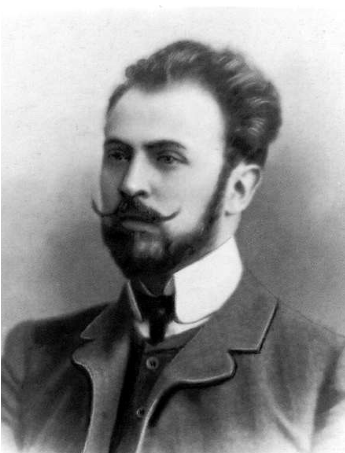
Upon arrival in Moscow, as soon as I left the railway station I caught a cab and went to #6 Vvedenka, where I would find A. A. Borovoi.[69] I didn’t know Borovoi personally, but had learned from newspapers that at his place it would be possible to meet the secretary of the Moscow Union of the Ideological Propaganda of Anarchism, Comrade Arshinov. I had known of the latter since 1907 and met him in person in prison. When I was still in prison I believed in the possibility of working together with Arshinov in Ukraine. But shortly after our release, we each went our own way. Like the majority of Anarchists, he preferred the city to the country and remained in Moscow. I, of course, went to the country and, while not losing contact with the city, worked among the broad masses of toilers who lived in the villages.
Now, finding myself temporarily, through no fault of my own, outside the borders of Ukraine, I had decided to visit Moscow. In this centre of the “Paper Revolution” (as I liked to put it), prominent revolutionaries of all tendencies were firmly ensconced. Having had some practical experience of revolutionary struggle in Ukraine, I intended to meet, talk to, and seek advice from all these revolutionaries, at least so far as my time allowed. But first of all I wanted to meet with Arshinov and find out what the situation was with our movement in Moscow after its crushing by the Bolshevik-Left SR “Soviet” government on April 12.
Comrade Arshinov was the former secretary of the Federation of Moscow Anarchist groups and was currently the secretary of the Union for Ideological Propaganda of Anarchism. So I figured he would be well informed about the state of our movement in Moscow.
I found Vvedenka. I went up to the apartment of Aleksei Alekseyevich Borovoi and rang the bell. The door opened, and I was met by a handsome intellectual type of medium height, who spoke Russian in a very precise manner. He lead me into a corridor and pointed to the door of an office with shelves of books. As I entered this office, Aleksei Alekseyevich asked me whom I wished to see.
I answered: “Comrade Arshinov.” The reply was:
“He’s here twice a week: on Tuesdays [if I’m not mistaken. – N. M.] and Fridays.”
Then I asked Aleksei Alekseyevich to allow me to leave my suitcase with him. This suitcase was full of bulka which I had brought from Tambov. I’d heard that Moscow was short of bread. Upon hearing I could leave the suitcase, I said goodbye to Aleksei Alekseyevich and went out into the city.
It was getting close to supper time. I found a restaurant not far from Pushkin Boulevard and had a meal. The food was poor and quite expensive and there was hardly any bread. Here I learned that you could get all the bread you wanted, but only in back alleys and for large sums of money. This made me so angry I was prepared to make some kind of complaint. However, I couldn’t be sure that the sale of bread for a special price in back alleys wasn’t being arranged by the proprietor of the restaurant together with Bolshevik and Left SR Chekists. Also I was carrying a revolver, and for that the Chekists at that time could have hauled me before Dzerzhinsky – to be shot. So I kept my mouth shut.
And that turned out to be the right thing to do. Only five minutes after leaving the restaurant, I ran into a former comrade from prison, a Polish Socialist named Kozlovsky. At that time he was already a Bolshevik-Communist and had a job as the commissar of a Militia precinct. He was overjoyed to see me and took me to his commissariat, introduced me to his co-workers, and talked to me about all kinds of stuff. By way of an apology, he assured me that if it were not for the demands of the Revolution, he would never have taken on the job of a Militia commissar. The Revolution, you see, demanded this of him.
I had a good laugh over his justifications for becoming one of the butchers of the Revolution. He told me what trolley line to take to Anastasyevsky Lane, site of the Commissariat of Internal Affairs. Beside it was a sort of glorified shed used by the Moscow Anarchists for their secretariat and editorial office. This building had graciously been assigned to the Anarchists by the BolshevikLeft SR government after the crushing of the Anarchists on Malaya Dmitrovka. Until the arrival of the Anarchists, the building had been “used by Futurists to practice their Futuristic activities,” the commissar told me.
My former comrade Commissar Kozlovsky took me to the trolley stop, I said goodbye, and we promised to meet again. Then I got on a trolley and travelled to the Federation of Anarchists, hoping to find Arshinov there.
Access to the Federation seemed rather dangerous at first sight, at least for a newcomer like me. On the one hand there were Chekist agents hanging around outside, watching everybody who passed by and ready to pounce on them. On the other hand, the building of the Federation itself did not inspire confidence; it didn’t look like a Federation of Anarchists, but rather a home for the Chekists who were guarding the sumptious building next door, which housed the Commissariat of Internal Affairs.
For a long time I stood at the entrance to this lane from the Tversky side, observing the pedestrian traffic. Then I walked along the lane, past the door of the Federation, and kept going till I got to the Commissariat of Internal Affairs where I went up the front steps. At the door I turned to the Chekist there and asked when the Commissariat would open. “In three hours,” he said. Then I turned around and went directly back to the Federation, entering the building.
At the Federation I found many comrades: some of them sat at a low, broad table and were making entries in ledgers; others were engaged in editing; and a third group were handling bundles of, apparently, unsold copies of the daily newspaper Anarchy.
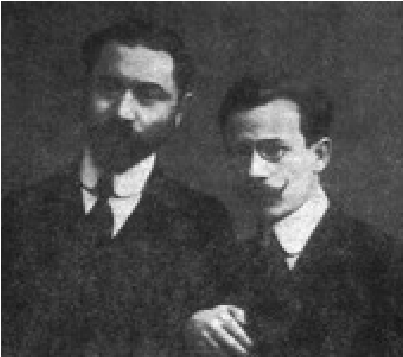
When I approached the table and asked where I could find Comrade Arshinov, I was directed to another corner where three or four comrades were standing, engaged in an animated discussion. I spoke first with Comrade Barmash,[70] whom I had met previously in March 1917. He told me Arshinov didn’t come there very often. Then Comrade Gordin[71] (the younger) declared to me:
“Arshinov doesn’t want to work with workers, he prefers the intelligentsia.”
And he listed the names of these intellectuals: Borovoi, Grossman-Roshchin, Sandomirsky,[72] and others.
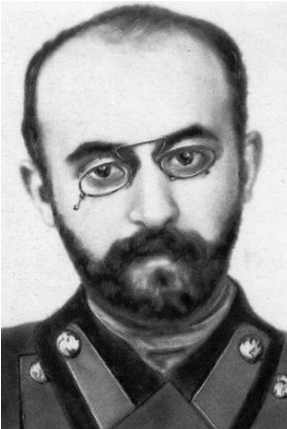
My first inclination was to get mad at Gordin, but then I thought: maybe he’s right. Of course there are people who don’t seem to be conscious of the fact that without workers and peasants there wouldn’t be any question of having a Revolution and such people often feel superior to workers and peasants. Only through honestly observing the difficult lives and struggles of workers and peasants can intellectuals become genuine revolutionaries. Maybe Arshinov, a former worker,[73] hadn’t made an effort to immerse himself in the ranks of the workers during the days of Revolution. Maybe he preferred a group of intellectuals to organizations of workers…
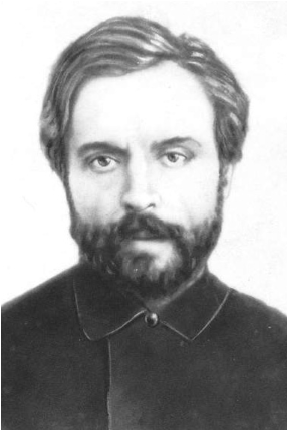
But these were abstract thoughts. As soon as I had left the Federation, I felt an even stronger desire to meet with Arshinov and find out for myself if there was any truth in what Gordin had said.
It was getting late… I didn’t want to go to a hotel. So I went back again to the Federation of Anarchists and asked the comrades if there was anywhere I could spend the night. Comrade Sereda consulted with his girl friend and invited me to stay at his place. He warned me, though, that I would have to share their tiny room and sleep on the floor for there was neither a bed nor a cot.
I accepted Sereda’s invitation and left with him and his girl friend, along with some other comrades who lived in the same building… There in the building where Sereda lived I met for the first time the well known founder of “Associational Anarchism” Lev Chorny.[74] I spoke to him at length about our Anarchist movement in Ukraine (which he insisted in referring to as South Russia), and about its organizational weakness. Everything I said to Lev Chorny caused him anguish. But he objected to my opinion that it was high time Anarchism stopped splitting into hundreds[[ and thousands of groups and grouplets – that because of its lack of organization, Anarchism was incapable of being embraced by the masses of toilers, incapable of leading them into battle against Capital and the State and on to victory…
This was the chief point of my discussion with Chorny. And we didn’t agree. However I met with him many more times at that building. From my observations of him I soon became convinced that he was a spineless individual, lacking in character both in relation to his friends, and to his enemies. I recall one time he was going around the rooms with a little books making a list of the furniture. I asked him: “What are you up to, Comrade Chorny, don’t tell me you’re the owner?” He replied: “It’s even worse than that...”
I made a point of questioning him, and some of the others, about this. It turned out that some Bolshevik-Left SR officials had come to our building and announced to Comrade Chorny that from now on he was the building superintendent and must keep an eye on everything because he was now responsible for it… “And what did you tell them?” I asked Chorny.
“What could I tell them?” he said. “They were so arrogant, and they insisted I couldn’t refuse. And so now I’m in charge here… The comrades don’t understand my situation – they show up here in the middle of the night. If the gate is locked, they climb in through the second story and wake up the residents who get mad and complain to me. But I can’t speak about this either to the comrades or to the block committee… I thought about leaving but then I was ashamed of even having such a thought.”
It was painful to watch and listen to this sensitive person, but it was even more painful to behold such a spineless wimp who allowed himself to be used by others and didn’t even have the guts to refuse to take part in such nonsense.
And really, what good are such people in the whirlwind of the revolutionary storm? For a person without any will or any character will not have sufficient toughness or nerves to overcome all the unusual situations which are sure to crop up in the course of practical struggle. By this I mean the struggle through which the broad mass of toilers strive to attain freedom and the right to be independent of Capital and the State. Are such spineless people really capable of joining the ranks of the toilers and rendering useful services to the cause? No way!... Such people are only good for illuminating the past, providing they can get their hands on reliable material and providing government authorities don’t appoint them as building supervisors. Writing about the past – that’s the only way they can help; but they’re useless when it comes to taking action in the here and now.
I felt sorry for Lev Chorny with all my heart but at the same time I was exasperated by his lack of will and character. Here was a person who possessed talent as a speaker and writer which he was capable of using to good effect. But he was lacking in selfesteem and wasn’t able to preserve his personal dignity from the dirt which stuck to him, judging from my observations and his answers to my questions. This defect of personality prevented him, in the same way as many other well known Anarchists were prevented by personality defects, from engaging in the broad movement for Anarchism and occupying an appropriate position in that movement, a position far removed from being a building supervisor in a Moscow apartment building…[75]
I parted ways with the apartment building and with comrades Sereda and Lev Chorny only when I finally located Petr Arshinov. He was living in one of the hotels on the Market Square (near the Theatre Square). He wasn’t a building supervisor, of course, but he living with the building supervisor, who was running the building for the Peasant Section of the VTsIK of Soviets.
Meeting with Arshinov, and also with the supervisor of this hotel, Burtsev,[76] was a delight for me. We knew each other from the Moscow katorga prison and we had a lot of mutual respect for each other. This brought us close together, even without the fact that we all considered ourselves Anarcho-communists.
From Arshinov I learned the real reason he had stopped working for the Federation of Moscow Anarchist Groups was because found a lot of the comrades there weren’t serious about building our movement.
Mind you I didn’t try to figure out who was right and who was wrong. Instead I tried to understand how Arshinov was living now and what was keeping him busy.
In the course of conversations with Arshinov, and with Aleksei Alekseyevich Borovoi when we visited him together, I ascertained that Arshinov was working as secretary and organizer of lectures for members of the Union for the Ideological Propaganda of Anarchism.
Soon after our visit to A. A. Borovoi, Arshinov organized a lecture on “Tolstoy and his creative work” which was read by Yuda Grossman-Roshchin,[77] with an introduction by Comrade Borovoi.
As a peasant-Anarchist, I found this lecture, as well as Borovoi’s introduction enchanting; in particular, I must admit I was charmed by Borovoi’s speech. It was so profound, and delivered with such clarity and precision, that I was carried away and could hardly sit still from joy. For I thought that our movement was not so badly off in its spiritual forces as I had imagined. I recall, as if it just happened today, how after Aleksei Alekseyevich’s introductory speech I rushed from the hall and ran into the foyer in order to shake hands with him and express my feelings of comradely gratitude. In the foyer I ran into Aleksei Alekseyevich who was pacing up and down. I was full of happiness for him and for his success before the audience, for they had applauded him with enthusiasm and a feeling of appreciation – at least that was my impression and I think he agreed with me. In speaking to him I offered my hand and gave expression to all that I thought… He fully deserved my gratitude.
But Aleksei Alekseyevich was modest and, firmly holding my hand in his own, half smiling and glancing at me and Arshinov who was standing beside me, he said:
“Thank you, but I’m afraid I have somewhat inconvenienced Comrade Grossman-Roshchin; he was forced to wait a long time for the end of the introduction.” I rejoined: “No, Aleksei Alekseyevich, they didn’t give you enough time!...”
We exchanged some more remarks and parted. Aleksei Alekseyevich went to the rostrum and sat beside Grossman-Roshchin who was beginning his lecture, while Arshinov and myself entered the hall and sat on the benches with the listeners.
Comrade Grossman-Roshchin spoke. The audience was quiet and looked at him and listened with rapt attention.
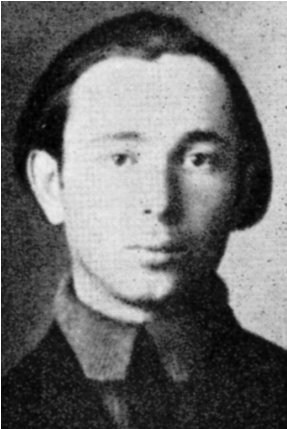
The lecture was serious went off quite successfully. In fact its success was collosal. I remember talking about it both with Grossman-Roshchin and with Arshinov, who at that time considered Roshchin to be the star among the young theoreticians of Anarchism. It was noteworthy that Arshinov was quite humble in the presence of Roshchin, although he admitted that Roshchin was terribly irresponsible. (I believe that’s why Roshchin was a whole hour late for his own lecture; comrades had to be sent for him and it turned out he had forgotten he was giving a lecture that day.) I said to him (and to Arshinov) that his lecture wasexcellent, but that the language in which it was couched was not at all appropriate for the audience. Roshchin laughed, but Arshinov wasn’t happy with my observation.
Soon after this lecture I was present in the same hall for a lecture by Comrade Gordin. He also impressed me with his fund of knowledge about Anarchism, but also with his ignorance of what the bearers of his ideas must do during a revolutionary period when it is necessary for them to concentrate their forces. In general I liked Gordin’s lecture and even said so, but Comrade Arshinov called it “garbage compared to real Anarchism.” I have to say I didn’t care for this remark.
And so the June days passed of my life in Moscow. Somehow Arshinov dragged me to see Aleksandr Shapiro, who was at that time – if I’m not mistaken – managing the printing office of Golos Truda.[78] In this printing office Arshinov was publishing a series of books by P. A. Kropotkin. At that time the The Conquest of Bread had just been printed. Arshinov was distributing bundles of it to the stores.
Comrade Shapiro impressed me as an experienced and efficient comrade. However even before meeting him I was well aware he was an fanatical syndicalist. I had never looked into this tendency of Anarchism very much and was accustomed to considering it the “Menshevist” tendency in Anarchism. That’s why I listened indifferently as he discussed some questions with Arshinov. And I also answered without any special interest when he asked me to what extent the toilers in Ukraine (Shapiro called it “South Russia”)[79] were infused with the idea of Revolution. He wanted to know what sort of resistance was offered to the occupying German and Austrian counterrevolutionary armies, etc. On three occasions I visited Shapiro at the warehouse of Golos Truda with Arshinov. Twice I found him alone at work except for a little girl who seemed to be his daughter. Both times, as soon as he saw Arshinov and me, he stopped working and talked with us at length. And I have to admit he left a good impression on me. But he was a syndicalist and a right-leaning one at that who, with a bunch of similar-minded comrades, had pulled up stakes and followed the Bolsheviks and Left SRs when they moved their central government from Petrograd to Moscow. Supposedly they aspired to represent some kind of “Centre” (an alien concept to me). My knowledge of his move and the reason behind it more than negated the excellent impression I received from meeting him in person.
Subsequently I met a number of Anarchists who were students. The most brilliant of this bunch it seemed to me was Comrade Sablin. I met with him quite a few times and we talked a lot. He was a very sensitive person and took very much to heart the weaknesses of our movement which were retarding its growth and development. But he really believed that all the active Anarchist groups would soon take note of this and resolve to create a well-defined organization. Then our movement would be vitally strengthened.
However I must note that my conversations with him and all the other comrades seemed rather pointless. In actual fact there was a dearth of people who were getting down to the business of building our movement and carrying it through to the end. Or if there were such people, then they must have been appalled at the catastrophic state of our movement. It was impossible not to noticed this paralysis, ever since the ruling gang of Bolsheviks had crushed our movement, reserving the right first to purge its ranks, and then to liquidate those militants who didn’t bow their heads before the might of this gang. I don’t know if all the comrades were conscious of the fact that the majority of them were wasting their time without accomplishing anything. Most often or not comrades would settle in Moscow for a more or less extended length of time and spend their time in idleness. Or maybe they would busy themselves with some project which could only be accomplished by an organization, but they would take it up anyway so they could show they were doing an organization’s work without actually being in one. This was frustrating for me as someone who had been cut off by the Counterrevolution from revolutionary mass work in the Ukrainian cauldron and was only temporarily in Moscow. I was convinced that I was right to regard Moscow as the centre of the “Paper Revolution” which drew in all the Socialists and Anarchists who would do anything for the Revolution – especially talking and writing – so long as they didn’t have to get too close to the masses. No, they wanted to be longdistance revolutionaries…
Mind you, Arshinov often told me how the comrades of the Moscow Federation and the renowned Dvintsy (soldiers of the Dvinsk regiment under the command of our Comrade Grachov) fought in the streets of Moscow. His stories never failed to fill me with pride in the Moscow Anarchists as well as Grachov and all the Dvintsy.[80] However at the same time I frequently asked myself: how come so many friends and comrades are wasting their time now, at least so far as I can see?
I wasn’t even satisfied with Arshinov’s work in the Union for the Ideological Propaganda of Anarchism, with which I was quite familiar. This work, which was described as being important and necessary, seemed superfluous to me – at least at the time when I was in Moscow. It kept Arshinov busy. But many, very many, of those who considered themselves activists of our movement, loafed about all the time without doing anything. And so I had to ask myself: am I going to become like this? No, I answered myself, never – no way! Well, maybe I would if I didn’t have the strength, if I became physically unable to move around and talk to those people who can and want to act for the Revolution. I suppose I could be in a state where I wasn’t fit enough to help our movement grow and develop its strength and raise its profile in the lives and struggles of the oppressed for their own liberation, for the liberation of their own class, for their own people, and for humankind in general. In that case I couldn’t guarantee that I wouldn’t stoop to taking it easy… But as long as I had the strength, I was going to throw in my lot with the people, and not let myself go. Our movement had set its sights high in the Revolution! There’s a job for each of us. But people who were disheartened by the victory of the doctrinaire parties hostile to our movement – the Bolsheviks and the Left SRs – weren’t able to find their vocation. These people, because of their poor morale, spinelessness, and lack of organizational discipline, couldn’t see where in the real world the healthy forces of our movement were springing up. In thinking about this I hastened to reassure myself with the hope that I would soon be arriving safely back in Ukraine where I would try to set an example for all the friends of the “Paper Revolution,” and show them where to look for energetic and wholesome forces for our Anarchist movement. And the more deeply I became absorbed in these thoughts, the more clearly I realized that the old methods of the Anarchists, still in vogue, were useless. I condemned them out of hand and resolved not to use them in my own future work in Ukraine.
Here in Moscow I became keenly aware that I and my friends and comrades from the GAK had a very different concept of the constructive problems of our movement in the Revolution from the majority of Anarchists I had met up to now on my journey through Russia. This realization was troubling but I didn’t let it discourage me. I was strongly convinced the disorder in our ranks would get straightened out somehow and we would equip ourselves with new, more substantial strategies and means of struggle. Then the situation of our movement would improve. My firm belief in this was bolstered by news of an upcoming conference being organized by comrades from Odessa, Kharkov, and Yekaterinoslav. I was invited to it a week in advance and was expecting a lot from it.
Chapter 14: Conference of Anarchists in Moscow at the Hotel Florencia.
Present at the conference were a number of comrades from
Odessa led by comrades Molchansky and Krasny, Yuda Grossman-Roshchin, Arshinov, Grigori Borzenko, and a certain lady who bragged about being a Cheka agent for the Bolshevik-Left SR High Command who often infiltrated the counterrevolutionary high command and expertly extracted valuable information which she then delivered to the staff of the revolutionary high command. There were also a large bunch of comrades only slightly less notable when it came to babbling nonsense.
All the comrades at this conference especially revered Yuda Grossman-Roshchin. They believed in him, especially the comrades from Odessa: Krasny, Mekel, and the lady mentioned above. They anticipated something quite extraordinary from him.
But Grossman-Roshchin remained just as irresponsible as he had always been. He bombarded the comrades with fine words, promising help right away for anyone wishing to make their way to Ukraine and infiltrate the Hetmanate regime. Of course not everyone of those present were planning a trip to Ukraine and not everyone believed in his promises. This was quite evident. But those who believed the Bolshevik government would provide them with documents and travelling money were happy to listen to his tall tales. But then Krasny asked him point blank if he would approach the Bolshevik satraps to set up a bureau for dispatching Anarchists to Ukraine for underground work against the Hetmanate (which was what the Odessans were dreaming about). Grossman-Roshchin declined to do so on the grounds he didn’t see the point of such a bureau. Only then did the distinguished Odessans lose some of their faith in him – at least for the duration of the conference.[81]
At that time the Bolshevik rulers were getting jittery about opposition from the Left SRs and it was risky to approach them about anything. So after the failure of Grossman-Roshchin’s followers to use Grossman-Roshchin himself to solicit help from the government, the conference, and especially Krasny and the Odessa Anarchists, had to look at other means to pursue the Ukrainian campaign. At this point a number of comrades posed the following question: supposing they made their way to Ukraine independently without any material assistance from the Bolsheviks, what methods of struggle would be most appropriate in their activity against the Hetmanate reaction, in order to lead to its downfall? These comrades wanted the conference to take a definite stand on this question.
Almost all the comrades offered their opinions. However, there was no consensus on details, only a general desire for an uncompromising activism which would involved going to the masses to train them in the same spirit…
I recall that when we left the Hotel Florencia, I walked along the sidewalk on Tversky with Arshinov and we exchanged a few words about the conference. He saw my dismay at the ideological confusion and irresponsible behaviour of the Odessans which amounted, in my opinion, to servility in relation to the Bolsheviks.
Arshinsov, by nature more reserved than I, was not as harsh in his opinion about the role of the Odessans Krasny and Mekel at this conference. But on the whole he shared my opinion about their behaviour.
After our conference I was more than ever conscious of the fact that our movement, which had easily attracted the toilers in the first days of the Revolution, had subsequently begun to weaken and scare away the toilers. As far as I was concerned, all this was happening because, as I recorded at the time, our movement had not broadcast its position on community building. Our movement didn’t have at its disposal the means of convincing the masses that they could have faith in us, and that with our help in their struggle they could move forward towards an open, free, and independent way of life. Our movement was still feeding itself on purely philosophical principles in its overtures to the masses and their everyday struggles. And that’s why, despite the superiority of its ideas compared to the ideas of state socialism, our movement was powerless to convince the toiling masses that by supporting our movement they could attain the highest, freest, and happiest form of organized social life, both for communities and for individuals.
But does this mean that one must admit our movement is incapable of executing its historical mission in the life and struggle of the oppressed toilers of the world? Absolutely not, such an admission would make no sense. Our movement has already proven to be strong and powerful in this century. If it had disposed of the social means adequate for its social actions, the majority of toilers of the world would have embraced it long ago and perfected its methods of struggle… And Anarchism would have become the dominant ideology in the lives and struggles of the toilers, providing timely and precise answers to all the questions of the day.
Although I tended to get carried away by such thoughts, I was nevertheless aware that to put these thoughts in practice at the present time would not be easy, for the necessary resources were almost totally lacking in Russia. This made me think about P. A. Kropotkin,[82] the venerable sage of Anarchism. What would he do now? What was he thinking about? Surely he could see what was causing the weakness of Anarchism, its inability to demonstrate in action, fully and distinctly, before the toiling masses, all that it hoped to achieve in the great struggle? Surely this great fighter, endowed with a sound and powerful mind, who had preached the idea of Anarchism all his life and fought for justice for the oppressed – surely he must have given this some thought and taken some steps!...
Reasoning in my mind in this way, I more than once said to myself: “I shall go see him right away and he’ll give straightforward answers to all my questions.” And so I asked Arshinov:
“Do you know if Kropotkin is in Moscow now?”
(Although I knew perfectly well he was in Moscow.)
And when I received an affirmative answer from Arshinov, I somehow found it inconvenient to go visit Kropotkin and continued to torment myself with questions which I couldn’t answer by myself in a definitive way.
Once, when I was walking along one of the Moscow streets with Arshinov (I believe we had just finished delivering the new edition of The Conquest of Bread), Comrade Arshinov said to me:
“You wanted to visit Kropotkin. We’re not far from where he lives. I think you should go visit him now…”
“Are we going together?” I asked Arshinov.
“No, I don’t want to visit him right now, but I think you should. Especially since you are leaving for Yekaterinoslav gubernia. It would be worth your while to go talk to the old guy before you leave…”
“I’ll try to drop in on him,” I said to Arshinov and became absorbed in thinking about what questions were important enough to justify disturbing the old man. I had lots of questions, but four of them seemed super-important: about our attitude towards the occupation by the German-Austro-Hungarian armies in alliance with the Ukrainian Central Socialistic Rada of Ukraine; about the role in this occupation of the Ukrainian revolutionaries and social democrats who headed the Rada; about our attitude to the replacement regime of Hetman Skoropadsky; and, finally, about Anarchist methods of struggle against all these forms of the Counterrevolution. I concentrated all my attention and prepared to meet our beloved old man Petr Alekseyevich.
I caught him just before he moved to Dmitrov (near Moscow).[83] He greeted me warmly just as he greeted everyone. I spoke with him at length about the Ukrainian peasantry…
I received satisfying answers to all the questions I put to him…
When I asked him for advice regarding my intention to return to Ukraine for revolutionary activity among the peasants, he categorically refused, declaring:
“There is great risk associated with this question for you, comrade, and only you can answer it correctly.” Just as I was leaving he said to me:
“You must remember, my dear comrade, that our struggle knows no sentimentality. Self-sacrifice, firmness of spirit, and will on the way towards one’s intended goals will overcome everything…”
I always remembered and always will remember these words of Petr Aleksandrovich. And when our comrades become fully informed about my activity in the Russian Revolution in Ukraine, and then in the independent Ukrainian Revolution, in the vanguard of which the revolutionary Makhnovshchina played an especially outstanding role, they will recognize in my activities those characteristics of self-sacrifice, and firmness of spirit and will which Petr Alekseyevich spoke to me about. It is my hope that this example will help others to emulate these characteristics themselves.[84]
Chapter 15: The All-russian Congress of Textile Trade Unions
In June the Congress of Textile Trade Unions convened, chaired by Maxim Gorky.[85]

This was a congress of toilers. The questions which would be decided at it would be important also for me, I thought to myself. And together with comrades Arshinov, Maslov, and a few others, I went to one of its sessions, hoping to see and listen to the most outstanding socialists.
In fact on the speakers’ platform of this congress one could find the flower of the socialists who dominated the “Paper Revolution” at that time. They spoke one after another, waving their arms, each one yelling louder than the one before. Only the disgruntled leader of the moderate social-democrats, Citizen Martov,[86] an implacable enemy of Lenin, was unable to shout louder when he wished to emphasize some part of his speech despite his best efforts. As I recall, the content of his speech seemed insincere although not lacking in common sense. His hoarse voice did not permit him to compete with other orators who were otherwise much less outstanding both in content and oratorical style. He waved his arms, groaned and sighed, but little of his speech was heard or understood, at least by the back rows of delegates and ordinary observers. Besides, whistlers specially mobilized by the Bolsheviks with their noisy demonstrations and whistling prevented the delegates from hearing this venerable orthodox social-democrat Menshevik. Mind you, this specially mobilized gang of demonstrators also prevented the delegates from hearing not only the Menshevik speakers, but also the Left SR, and even the Bolshevik speakers. At any rate I observed how one of the Bolshevik speakers (I don’t recall his name) had almost half of his speech drowned out by one of the whistlers. This whistler might have had his efforts picked up and amplified by other whistlers, but he was called to order and warned (apparently, by the leader of the gang) that “the speech is being given by one of ours – a Bolshevik!”
All the questions discussed at the Congress, and the decisions made about them, made me, a peasant-revolutionary, both encouraged and disheartened.
I was encouraged because I saw the urban proletarians understood their interests as workers, and the goals connected with these interests. It was thereby possible to convince myself that the urban proletariat was growing in militancy, and was capable of defending its social achievements and would not be deflected from its forward progress by attacks from the new statist political authorities. One could nourish the hope that the Revolution, in many ways crushed by the two political parties now ruling the country in the name of building a strong State rather than a free society, could still be saved by the revolutionary proletariat.
I was discouraged by the decisions of the Congress in the sense that I felt they didn’t express the direct will of the representatives of the proletarians present. It seemed to me that although the questions before the Congress were decided apparently by the proletarians in the name of their class, which was vitally affected by these decisions, in actual fact decisions were made under the influence of the interests of the political parties. The goals and responsibilities of the proletarians were interpreted within the framework of building a socialist State, with all its numerous government organs. And this marked a sharp boundary between the urban proletariat and the working peasantry – the peasants who didn’t exploit the labour of others. The working peasantry had in practice always displayed intense opposition to government and its pretensions to think up laws for the peasants to obey.
Without the close collaboration of the peasantry, the government-loving city and its necessarily government-loving proletariat would not be able to build a new, free social life. This basic truth was already confirmed under current conditions, whereby instead of building a genuine socialist society, a quasi-socialist, quasicapitalist state was being constructed. Under the rubric “dictatorship of the proletariat” we had in essence the dictatorship of the Bolshevik-Left SR bloc. This dictatorship had taken over direction of building the social system and required from the proletariat neither initiative nor healthy, sober wisdom in approaching the organizational tasks of the new society. The Bolsheviks and Left SRs were following the same old recipe of the bourgeois state in their approach to building the new society. To the proletariat remained only the job of carrying out whatever the Bolsheviks and Left SRs told them to do.
And even with this reduced function for the proletariat, the cities without the villages were in no position to begin, let alone finish, any broad and fruitful initiative. For real socialist construction the urban proletariat needed direct, fraternal co-operation with the labouring peasantry. But the proletarians had been sucked into the whirlpool of statist doctrine, a doctrine which the peasants didn’t acknowledge. The result are prolonged suffering due to the lack of the necessities of life – raw materials and food. Then the proletarians are compelled either to reject much of the statist doctrine, or take action against the peasantry, thereby perverting the ideas of socialism and giving in to their own traditional enemy – the bourgeoisie. This would be the first result of the “dictatorship of the proletariat.”
The second result would be the submission of the proletariat as a class to whatever political parties were in charge – parties which had no intention of subordinating their own political goals to the economic liberation of the proletarians. By putting themselves at the disposal of these parties, the proletarians would find themselves shamefully humiliated in all aspects of their lives – the economic, the political, and the moral.
Next, the most politically corrupt proletarians would start to entertain thoughts about struggling not for the full economic and political freedom of their class, but for a change of roles by way of the political domination of one class over another.
“We shall carry out the dictatorship of the proletariat!” shouted some of the speakers at the Congress of Textile Unions. “And we are justified in telling our enemies that they better shut up or the will of the proletariat will smash them...”
Evidently these irresponsible babblers, as well as their counterparts in rival parties, were proletarians-with-a-vengeance to whom it didn’t occur that by the creation of this “dictatorship” they were destroying the unity of the toiling classes for the benefit – not of the Revolution – but of its enemies. It didn’t occur to them that in the not too distant future they would have to fight against this splintering of the forces of the toilers. They were egged on by the quintessence of government – “the dictatorship of the proletariat” – which they, in their own ignorance, created and against which, one must expect, they would find themselves powerless to struggle for the foreseeable future. For they would need to replace it by something which corresponds more closely to the ideas of the toilers, the vanguard of humanity, who created all the wealth in the world and ought to enjoy it freely according to their needs, and not have to expend their own forces again to pay for that wealth still more dearly.
It’s true the political parties which came out on top in the Russian Revolution could scarcely care less about this. State power, that imbecilic fraud in which the leaders of State socialism see the means for delivering the oppressed from economic bondage, was in their hands. They formulated programs, according to their statist principles, which would govern the lives and struggles of the toilers. And they indicated to the toilers that only by following their programs would it be possible to comprehend and eliminate the causes of the bondage which had penetrated their lives. The urban proletariat was the first to embrace these programs and to seek to implement them not only in their own lives, but to dominate and rule their own brothers in labour – the peasants.
The result was a clearly evident distrust by the peasants towards the urban proletariat, a distrust which had deep historical roots. And this intensifying distrust represented a direct threat to the Great Russian Revolution and all the direct conquests of the toilers which had allowed them to embark on a better life.
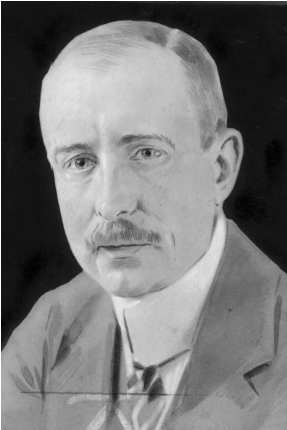
Such was the situation of the Great Russian Revolution in the June days of 1918. Question: were the parties which created this situation aware of it? One can answer with certainty: no, they were not. They weren’t aware of it and continued their own bickering for the sake of the prestige of their parties among the toiling masses. Only the sections of the proletariat and the toiling peasantry which were under the influence of Anarchist ideas perceived what was going on – that the ruling parties were deceiving them and were diverting the Revolution from the path of direct action to the path of government decrees. To benefit themselves, these parties were driving the Revolution into a blind alley. These toilers demanded a broader scope for the Revolution. But their voices were stifled by the orders barked out by Wilhelm II who, acting through his ambassador Mirbach,[87] put obstacles in the way of the development of the Russian Revolution. The German emperor’s intervention threatened both the Revolution and whomever the proletarians of the villages and cities allowed to rule their destinies. But the Bolshevik-Communist Party, led by Lenin and Trotsky, which at that time had gained ascendancy over the Left SR Party for all intents and purposes, preferred to offer concessions to Wilhelm II rather than raise high the banner of the Revolution or, at the very least, allow the proletarians to exert themselves to raise the banner, which had already drooped to the ground.
The treacherous behaviour of the Bolshevik Party in relation to the Revolution had led to a crack in the Bolshevik – Left SR bloc which was sharply defined already on March 3 1918, the day the Brest-Litovsk Treaty was concluded. But thanks to the “genius” and political acumen of Lenin, this crack was squeezed together and papered over and for a time it became almost unnoticeable.
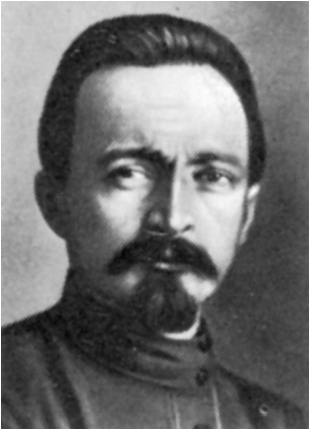
Now this rift was expanding again and Lenin’s “genius” was powerless to influence the leaders of the Left SR Party to patch it up again. The Left SRs were ashamed of their kowtowing before Lenin, whose party had previously never enjoyed as much authority among the Russian workers and intelligentsia as the “mother” of the Left SRs, the old militant-revolutionary Socialist Revolutionary Party which had been destroyed by the provocateur Azef.[88] Now the orphans of this mother – the Left SRs – were ready for anything, anything except following Lenin or perhaps, what was still worse, becoming a non-factor in the history of the Russian Revolution. No, they would try compete with Lenin by developing their own “Leninism.” At least that’s how it seemed to me, listening to the voices of the Bolshevik orators who no longer bothered to conceal the fact that the Left SRs were preparing to offer them battle on all issues of external politics at the up-coming 5th All-Russian Congress of Soviets. I have to admit that the Lefts SRs had no chance of success in this battle, so far as I was concerned. Other than two or three people they didn’t have leaders ready to take over. At least they didn’t have anyone to replace Lenin and Trotsky – not Spiridonova, nor Kamkov, and even less Steinberg or Ustinov, although the latter had mastered Leninist practices to some degree. It’s true the Left SRs during their coalition with the Bolsheviks were able to have a number of their members trained and able to launch careers in the Cheka under the ideological and practical direction of F. Dzerzhinsky.[89] Some of them, like Zaks and Aleksandrov,[90] certainly had good heads. But would they make the kind of serious politicians the Left SRs needed at that time – these people who were dedicated to a police regime which was a throwback to Arakcheyev[91]? Some of the hotheads among the leaders of the SRs couldn’t understand this, I guess. But there were other people in their ranks with calmer nerves and a thoughtful cast of mind. These were the people like M. Spiridonova[92] and B. Kamkov,[93] who were capable of standing up authentically and honourably to the usurpation of the Bolsheviks of the rights of the toilers, and to their oppression of the people. And just like Spiridinov and Kamkov they were willing to sacrifice their own personal well-being for the sake of a better life for the people, only without the emotionalism, almost to the point of hysteria, which those two displayed in their role as leaders of the Left SR in power. For when the Left SRs formed an alliance with the Leninists and took part in ruling the revolutionary country, in many cases they trampled on the rights of the revolutionary toiling masses – in particular, their right to determine their own road to freedom, independent of the State with its police regime.
It’s true the Left SRs didn’t acknowledge their own bad behaviour in relation to the revolutionary masses which adhered to Anarchist ideals in the course of the Russian Revolution. According to some of them, they didn’t recognize the right of the Bolshevik leaders – Lenin and Trotsky – to crush the Federation of Moscow Anarchist Groups on April 12–13 1918. The Left SR Zaks played a significant role in this event as a member of the Cheka and made a report about it to the Central Committee of his party. They say that Spiridonova didn’t want to listen to his report and angrily stalked out of the meeting room. But we well know that getting angry is one thing, but acting on one’s anger against an act of injustice is another thing entirely. The Left SRs failure to take action against this very evil deed of the Chekists and the heads of the Bolshevik Party in relation to the Anarchists can be attributed to one of two causes. Either Spiridonova’s chagrin was weak in comparison to her other anger fits, or the leaders of the Left SRs at the time had such hopes of overthrowing the Bolsheviks and taking control of the helm of the State, that they considered it more convenient to conceal their indignation, both before the Bolsheviks and before the revolutionary country. And they suppressed their protest against the butchers who had trampled on the rights of the Anarchists to take part in the Revolution. And yet the Anarchists were most devoted sons of this Revolution. Everywhere they were in the vanguard. It’s true they were splintered into different groups, but these groups offered up all their strength to the Revolution. To judge the Anarchists by the individuals who turned up in their ranks through selfish motives and instead of work among the toilers for the general goal of liberation travelled around the country from city to city doing zip – to pass judgment on Anarchism and the Anarchists on the basis of these individuals made no sense. And if the Bolshevik leaders had recourse to such excuses against the Anarchists, and if the Left SRs with their own agenda avoided passing judgement on this action by their partner in power, then the blame in this matter lies with the traditional irresponsibility and mendacity of the Bolsheviks which has its origin in the struggle of Karl Marx with Bakunin. These characteristics of the Bolsheviks were well known to the Left SRs but, as a consequence of their “duty” as coalition partners, apparently they couldn’t bring up the subject. They couldn’t say to the Bolsheviks that it was disgraceful to lie to their ideological opponents and that this lie concerning the Anarchists could only harm the Revolution. Apparently the leaders of the Left SRs intended to investigate this event, historically so important for the Revolution, once they had overthrown the Bolsheviks and consolidated their power over the country and over its subsequent revolutionary development… But this is only speculation on my part.
Chapter 16: In the Peasant Section of the Vtsik of Soviets.
From the time that I arrived in Moscow and ended up in temporary quarters at a hotel run by an official of the Peasant Section of the VTsIK of Soviets, I took an interest in this Section and its presidium, the chief of which was a leader of the Left SRs, M. Spiridonova. I considered it important to see in person, and listen to directly, this distinguished revolutionary. So I sat in on sessions of this Peasant Section. At these meetings I listened to M. Spiridonova and B. Kamkov many times. Of the Left SRs I found these two figures the most interesting. They were the most popular in the ranks of the Left SRs at that period. It’s true, there were other stalwarts in the Left SR pantheon but they were not as well known to the broad mass of toilers. They were less inspiring and less attractive. In any case, the names of Spiridonova and Kamkov were on the lips of the masses everywhere with an evident feeling of respect for them. It seemed they were first among equals at the head of the Left SR Party.[94]

At numerous sessions of the Peasant Section Spiridonova displayed her impressive strength of will and knowledge of the tasks of her party. Her speeches communicated with great clarity the goals of the Left SRs at the upcoming 5th All-Russian Congress of Soviets. Her speeches always created an uplifting feeling in the hall, especially for a revolutionary like myself who was feeling blue about the fate of the Revolution. In these talks one could always sense the Left SRs were aware of their own blunders and the error of forming a bloc with the Bolsheviks, and that they would sooner or later make a sharp turn towards deepening and broadening the Revolution. And in moving in this direction they would be supported by the Anarcho-communists and Anarcho-syndicalists. For such a direction would correspond with the goals pursued by the vanguard of revolutionary working people, who were carrying the Revolution on their shoulders and thirsted after its conquests.
However, I was wary about concluding that the Left SRs had come to their senses. It seemed to me that generally, just like the Bolsheviks, they never gave any thought to their original errors in their course of action, errors which had laid the groundwork for their subsequent transgressions against the Revolution. None of them wanted to deal with the fact that the Revolution in the villages took shape in a clearly anti-statist spirit. Like the Bolsheviks, the Left SRs didn’t scruple to destroy the good will of the peasantry, deforming the revolutionary spirit of the villages in the cause of promoting the idea of statism and all the government institutions which flowed from it. Moreover, the goals of the political parties were in many cases alien to the goals of the toilers. This was shown very clearly by the way the Bolsheviks and Left SRs came to power, overthrowing the Kerensky regime. I couldn’t help noticing this when I was part of the life and struggle of the toiling peasantry, and found myself in its revolutionary vanguard. And this experience caused me to pose the following question: would the Left SRs be willing to go so far in their opposition to the Bolsheviks that my impressions about their readiness to settle accounts with Leninism would be proven to be correct? And if this happened, would the Left SRs then set out on the true path of Revolution: by allowing the toilers to deepen and develop the Revolution without decrees and orders from a Left SR government, the means by which these people try to bind the hands of the toilers? I had to answer “no” because the SRs lived to govern. The Left SRs were like us, the Anarchists, full of good intentions but severely lacking in the forces necessary for such a grand project as the reorganization of the path of the Revolution. For the Left SRs to replace the Bolsheviks and carry on the way they had been doing was impossible – they wouldn’t be able to hold on to power for a week. The Bolsheviks would crush them because, thanks in part to the Left SRs themselves, Lenin and Trotsky had strengthened their hold over the masses.
“Well, if we assume,” I once said in a discussion with Comrade Maslov, “that the Left SRs have enough of a majority at the 5th Congress of Soviets that they can torpedo the Bolsheviks’ policy of a ‘breathing space,’ then can the Anarchists really gain something from this situation? I’m afraid not, and here’s why. First, the quarrel between the Left SRs and the Bolsheviks, in my opinion, is not about profound, basic ideological differences about the policies to be followed in governing a revolutionary country. The fact of the matter is that every place where the Soviet government is in control, the Bolsheviks are beginning to take a noticeable preponderance over the Left SRs. It is this fact which, on the one hand, encouraged the Bolsheviks to ignore the protest of the Left SR Party against concluding the Treaty of Brest-Litovsk. And, on the other hand, the Bolsheviks were presented with the prospect of expanding their authority over the revolutionary country to the point where they could declare to the Left SRs that they, the Bolsheviks, were the absolute masters of the political and social life of the country and therefore nothing would remain for the Left SRs but to merge with the Bolshevik-Communist Party and carry on with their experiment in ‘scientific’ state socialism. Either the Bolshevik way or the highway.”
Such was the political orientation of the Bolsheviks in relation to their allies in the seizure of State power, in my opinion. The Party of Left SRs could not fail to notice the drift of the BolshevikCommunist Party. And it did notice it. However the Left SRs realized that in actual fact they were already powerless to oppose the Bolsheviks. The Left SRs saw the disgraceful Treaty of BrestLitovsk was taking its toll. There was no stronger reason to reject the Bolsheviks than the damage caused to the Revolution by this treaty. And the Left SRs, who aspired to be the historical actor playing the leading role in deciding the destiny of the Russian Revolution, were thereby brought closer to the inevitable split with the Bolsheviks. That’s why the Left SRs raged against the Treaty of Brest-Litovsk even after it had already been signed. Now they were striving to carefully gloss over the fact that a break with the Bolsheviks was inevitable, because of the complete domination of the Bolsheviks in all government and professional institutions. The dictatorial Bolshevik Party demanded total submission to its will by all organs of State power. For the Left SRs it was not advantageous to wait while the Bolsheviks built up their strength at the expense of the Left SRs and other independent revolutionary forces for sooner or later the Bolsheviks would try to either absorb them into their own party, or simply liquidate them. So the Left SRs decided to offer resolute opposition to these plans of the Bolsheviks, up to and including denouncing them as counterrevolutionaries. I could perceive this in the speeches of the Left SRs and in conversations with them – that is, the leaders of the Peasant Section of the VtsIK of Soviets. I also took up this matter with rank-and-file Left SRs. The coming split was awaited with strained nerves. The Bolsheviks were behaving arrogantly since they had clearly triumphed over the Left SRs in the matter of their mutual rule over the revolutionary country. Seduced by power and totally lacking in restraint, the Bolsheviks didn’t bother to conceal their domination before the masses. These masses were composed not only of those who trusted the Bolsheviks blindly, but also those who were more self-aware and had gathered under the banners of other revolutionary parties and organizations. The behaviour of the Bolsheviks forced every revolutionary to be uneasy, especially those in the Left SR Party who realized they had miscalculated their own strength and their own capabilities when it came to organizing the functions of the State. Instead of fulfilling their dream of “saving” the Revolution and dumping the Bolsheviks, the Left SRs were faced with the reality that the Bolsheviks felt they could rule without the Left SR Party, that they no longer needed the Left SRs to avoid having the Revolution escape from under their control… For this was always the great fear of the state socialists (both the Bolsheviks and the Left SRs) – that the Revolution which they were riding would bolt from under them to their everlasting embarrassment …
But the Bolshevik Party was already so intoxicated with their real and formal State power in the country that they paid no attention to the political ranting of the Left SRs. With more and more determination they pressured their own forces and the toiling masses which followed their guidance to take the road laid down by the party line, namely the creation of a solid “proletarian” state headed by a solid “proletarian” government.
I was not in the least bit interested in the “right” of one party or another to form a government. In the current state of things I considered the salvation of the Revolution to be the most pressing matter. Everything I heard in Moscow, everything I observed in our Anarchist ranks, and in the ranks of the Socialists, BolshevikCommunists, and Left Socialist-Revolutionists, was distressing for me because I realized that thanks to our lack of organization, the Anarchists were in no condition to put the brakes on rampant Bolshevism. I felt so depressed I intended to drop everything – making contacts with people and observing events – and head directly for Ukraine without any documents, hoping to arrive in the environs of Gulai-Polye even earlier than was agreed with the comrades at the Taganrog Conference. At times I had the impression all the conquests of the Revolution were slipping away through the fault of the people themselves and it was already too late to put a halt to this process. Moreover, I noted that the supervisor of the hostel, our Comrade Burtsev, was beginning tire of our presence at his place. I had a solution to this problem: use my official documents to obtained a free room from the Moscow Soviet of Workers,’ Peasants’ and Soldiers’ Deputies. I went to the Soviet. However, there I received only a pass to the Kremlin, to the VTsIK of Soviets, where I was supposed to present my documents again, have them stamped by the VTsIK, and only then could the Moscow Soviet issue me a requisition for a free room.[95]
Chapter 17: The Kremlin, Sverdlov, and My Conversation With Him.
I approached the gates of the Kremlin with a firm intention: to find a way to meet Lenin and possibly Sverdlov[96] and have a talk with them.
Beside the gates leading to the Kremlin there was a poky little guard room. Inside was sitting an official who received my credential from the Moscow Soviet. After reading it carefully, he attached his own slip allowing me to enter the Kremlin. Beside the guard room a sentry from a Latvian rifle regiment[97] of the Red Army was strolling up and down. I went around this sentry, through the gates into the Kremlin grounds, and bumped into another sentry. I asked him to point out the building to which I was to go. From that point on, I was free to walk around, look at the various cannons and cannon-balls dating as far back as before the time of Peter the Great, stop in front of the Tsar’s Great Bell and other attractions about which I had heard about but never seen, or go into one of the palaces.
At the entrance to the Kremlin courtyard I turned to the left and went directly into one of the palaces (I forget its name), and went up some stairs to the first floor. Then I strode along a long, deserted corridor where there were signs on some of the doors reading: “Central Committee of the Party” (Communists-Bolsheviks) and on others: “Library” (what kind I didn’t know). Having need at the time of neither the one nor the other, I continued on my way without being aware whether or not anyone was behind these doors.
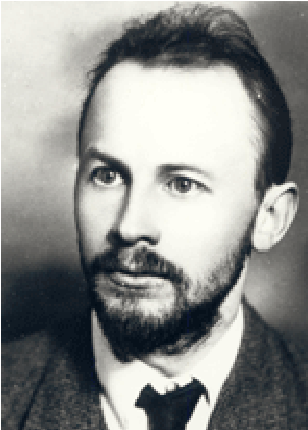
As I passed along the long, silent corridor, I encountered more signs but none that promised to meet my needs. So I reversed my steps, stopped in front of a door with the sign “Central Committee of the Party,” and knocked. A voice was heard: “Come in.” So I entered. Three people were sitting in the room. One of them turned out to be Zagorsky whom I had seen two or three days earlier in one of the Bolshevik Party clubs. To these three persons, sitting in deathly silence engaged in some kind of work, I inquired where I might find the office of the VTsIK of Soviets.
One of the three (Bukharin,[98] if I am not mistaken), got up and took his briefcase under his arm. Addressing his colleagues loudly enough so I could hear, he said:
“I’m leaving; I’ll show this comrade to the office of the VTsIK.”
He nodded in my direction and headed for the door. I thanked everyone and went into the corridor with the one I believed to be Bukharin. As before the corridor was quiet as a tomb.
My guide asked where I was from. I answered: from Ukraine. He was very interested in the terror raging in Ukraine and how I had made my way to Moscow. Arriving at the top of the stairs, we stopped to continue the conversation.
Finally, my accidental guide indicated a door to the right of the entrance to the corridor where, according to him, I would find the information I needed. And, after saying goodbye, he went down the stairs and left the building.
I went to the door, knocked, and entered. A young woman asked what I wanted.
“I would like to see the Chairman of the Executive Committee of the Soviet of Workers,’ Peasants,’ Soldiers’ and Cossack’s Deputies, Comrade Sverdlov,” I answered.
Without saying a word, the young woman sat down at a desk, took my credentials and pass, copied down some information from them, and made out another pass on which was indicated the number of the office to which I was to go.
In the office to which I was directed I found the secretary of the VTsIK of Soviets, a sturdy man, well-fed looking, but with tired features. He asked what I wanted. I explained. Then he asked for my documents. I handed them over. He found my papers interesting and started asking questions:
“So, Comrade, you are from South Russia?”
“Yes, I’m from Ukraine.”
“You were chairman of a Committee for the Defense of the Revolution during the Kerensky period?”
“Yes.”
“Then you must be a Socialist-Revolutionary?”
“No.”
“What connections do you have or have had with the Communist Party of your region?”
“I am personally acquainted with a number of Bolshevik Party activists,” I replied, and I cited the chairman of the Alexandrovsk Revkom, Comrade Mikhailevich, and some people from Yekaterinoslav.
The secretary was silent for a minute, and then began to ask me about the mood of the peasantry of South Russia, about their attitude towards the German armies and the forces of the Central Rada, what their opinion of the Soviet government was, etc.
I gave him brief answers which apparently satisfied him; actually I regretted not being able to explain more fully.
Finally he telephoned someone and then invited me to accompany him to the office of the chairman of the VTsIK, Comrade Sverdlov.
I was reminded of the stories spread by counterrevolutionaries as well as revolutionaries – even by my own friends, enemies of the politics of Lenin, Sverdlov, and Trotsky – to the effect that it was impossible to gain access to these terrestial gods. They were supposedly surrounded by a large corps of bodyguards, the commander of which would only allow visitors of whom he approved. Mere mortals need not apply.
Now I realized the absurdity of these stories as I freely approached the door of Sverdlov’s office. Sverdlov himself opened the door with a pleasant smile, exuding friendliness and, taking me by the hand, led me to an armchair.
The secretary returned to his office.
Comrade Sverdlov looked even more prosperous than his secretary. He also seemed even more interested in what had transpired in Ukraine during the last two or three months. He said to me straight out:
“So, Comrade, you have come from our turbulent South. What were you doing there?”
“I was part of the mass movement of revolutionary toilers of the Ukrainian countryside.
The working population of the Ukrainian villages took an active part in the Revolution and were striving for their total liberation. If I may say so, I was always in the vanguard of this movement. But now, because of the defeat and retreat of the whole revolutionary front from Ukraine, I find myself here for the moment.”
“What do you mean, Comrade,” interrupted Sverdlov, “everyone knows the peasants of the South are mostly kulaks and supporters of the Central Rada.”
I burst out laughing and briefly but succinctly described to him the actions of the peasants organized by the Anarchists in Gulai-Polye raion in opposition to the invasion of the GermanAustro-Hungarian expeditionary armies and the detachments of the Central Rada.
Comrade Sverdlov, evidently unsettled, nevertheless continued:
“Then why didn’t they support our Red Guard units? According to our information, the peasants of the South are infected with extreme Ukrainian chauvinism and everywhere they have welcome the German expeditionary forces and the detachments of the Central Rada with enthusiasm as their liberators.”
Agitatedly I began to refute Sverdlov’s information about the Ukrainian countryside. I made him aware of the fact that I had been the organizer and chief of several battalions of peasant volunteers who had been engaged in revolutionary struggle against the Germans and Central Rada. I knew the peasants could recruit a powerful army from their own midst to combat these enemies but the revolutionary forces lacked a focus for the moment. The Red Guard detachments fought along the railway lines, always staying close to their echelons. At the first reverse they would retreat dozens of versts, sometimes without bothering to pick up their own soldiers and without waiting to see if the enemy was pursuing them or not. The peasantry had no faith in these detachments, realizing that, without weapons and isolated in their villages, they were at the mercy of the hangmen of the Revolution. The Red Guard detachments never even bothered to send detachments into villages situated within 10–20 versts from the railway lines. They didn’t give arms to the peasants or encourage them to revolt against the enemies of the Revolution, to join the struggle being waged on their behalf...
Sverdlov listened attentively. From time to time he exclaimed:
“Is this really so?”
As examples, I cited several Red Guard detachments belonging to the groups of Bogdanov,[99] Sversky, Sablin,[100] and others. Becoming more composed, I pointed out that as long as the Red Guards stuck to the railway lines, which allowed them to take the offense rapidly but more often to retreat, they could not inspire confidence in the peasant masses. And yet these masses saw in the Revolution the means of getting rid of their oppressors – not only the great landowners and rich kulaks, but also their lackies, the State officials with their political and administrative power. Thus the peasants were consciously ready to defend themselves and their revolutionary gains against the massacres and wholesale destruction of the Prussian Junkers and the Hetmanate.
“Yes, yes, you’re right about the Red Guard detachments,” said Sverdlov. “But we have already re-organized them into the Red Army. The Red Army is growing into a powerful force, and if the southern peasantry is as revolutionary as you claim, then we’ll have a good chance to beat the Germans and overthrow the Hetman in the not too distant future. Then Soviet Power will triumph in Ukraine as well.”
“That will depend on what kind of underground work is carried on there, I said. “Personally I consider this underground work more necessary than ever today. This work must have an organizational, military character which will help the masses engage in open rebellion in the cities and in the villages against the Germans and the Hetman. Without an insurrection of an essentially revolutionary character in the interior of the Ukraine, it will be impossible to dislodge the Germans and Austrians from Ukraine and either capture the Hetman and his followers or force them to flee with their protectors. Because of the Brest Treaty and other external conditions of a purely political nature, an offensive by the Red Army is inconceivable at this time.”
While I was presenting my opinions, Comrade Sverdlov was taking notes.
“In this case I share your point of view completely,” he said. “But tell me, what are you, a Communist or a Left SR? That you are a Ukrainian I can tell by the language you use, but as to which of the two parties you belong, that I cannot determine.”
This question, while it came as no surprise (the secretary of the VTsIK had already asked it), put me in an awkward position. What should I do? Say frankly to Sverdlov that I was an Anarchistcommunist, comrade and friend of those whose organizations had been destroyed by his colleagues in the government and in his party? Or should I hide myself under another banner?
I was perplexed and Sverdlov realized it. I didn’t want to reveal my social-revolutionary and political affiliation in the middle of our interview. To dissemble was equally repugnant. That’s why, after pondering a while, I said to Sverdlov:
“Why are you so interested in my party affiliation? Aren’t my documents good enough? They show you who I am, where I’m from, and what kind of role I played in a certain region in organizing the toilers of the villages and cities, and in organizing partisan detachments and volunteer battalions to fight the Counterrevolution raging in Ukraine.
Comrade Sverdlov apologized and asked me not to doubt his honour as a revolutionary or suspect him of not trusting me. His apology seemed so genuine I felt badly and without any further hesitation I declared to him that I was an Anarchist-communist of the Bakunin-Kropotkin type.
“What sort of Anarchist-communist are you, Comrade, since you recognize the importance of organizing the labouring masses and directing them in the struggle with the power of Capital?! For me this is incomprehensible!” exclaimed Sverdlov with a disarming smile.
To his astonishment, I replied to the chairman of the VTsIK:
“Anarchism is an ideology which is too realistic not to comprehend the modern world and real events. The actions of its practitioners in these events is based on a clear understanding of the goal to be obtained and the means to be used to reach it...”
“That’s all very fine, but you don’t in the least resemble those Moscow Anarchists who set up shop on Malaya Dmitrovka,” said Sverdlov. He wanted to expand on this subject, but I interrupted him:
“The crushing by your party of the Anarchists on Malaya Dmitrovka was an unfortunate event which must not be repeated in the future in the interests of the Revolution...”[101]
Sverdlov muttered something into his beard and then quickly got up from his chair, approached me and, stooping, put his hands on my shoulders.
“Comrade,” he said, “you are well-informed about the details of our retreat from Ukraine and about the real mood of the peasantry. Ilich, our Comrade Lenin, would be delighted to listen to you. Would you like me to phone him?”
I replied that there wasn’t much more that I could tell Lenin that I hadn’t already said, but Sverdlov was already phoning Lenin and advising him that he was with a comrade who was bearing very important news about the peasants of South Russia and their attitude towards the German occupation forces. And right away he asked Lenin when he could see me.
A minute later, Sverdlov hung up and quickly wrote up a pass with his own signature allowing me access to himself. Handing me this pass, he said:
“Comrade, tomorrow at one o’clock come directly here to my office, and we shall go see Comrade Lenin... Can I count on you?”
“I’ll be here... But can I get a document from the secretariat of the VTsIK authorizing the Moscow Soviet to give me a temporary, free lodging? Otherwise I’ll have to spend the night on a park bench.”
“We’ll arrange everything tomorrow,” Sverdlov replied. And, saying goodbye to him, I left the Tsar’s palace, and made my way past the cannon and shot of various calibre with a quick glance at the Tsar’s Great Cannon.[102] Til tomorrow...
I didn’t return to the apartment belonging to the Peasant Section of the VTsIK of Soviets where Burtsev, a former cell-mate of Arshinov, was in charge. Burtsev had provided shelter for many comrades, Arshinov included, who were gradually becoming a burden on him. Instead I went to see the head of the Trade Union Centre, who had also served time with Arshinov. But the latter didn’t quite like him because of his reserve and his so-called “craziness”: the Anarchist Maslov.
I was also familiar with Comrade Maslov from prison, and I told him that since I had no place to spend the night, I was going to move in with him.
Comrade Maslov made no objection so I stayed with him. His hospitality turned out to be beyond expectations, despite my criticisms of his peculiar individualism, which prevented him from establishing fraternal relations with his former comrades in the Moscow organization of Anarcho-communists.
Chapter 18: My Meeting and Conversation With Lenin
The following day at one o’clock sharp I showed up again at Sverdlov’s office. He took me to Lenin. The latter greeted me in a paternal fashion. He grasped me by the arm and, patting me gently on the shoulder with his other hand, steered me into an armchair. After asking Sverdlov to sit down, he went to his secretary or typist and said to him:
“Please don’t disturb us till two o’clock.” Only then did he sit down opposite me and begin to ask questions.
His first question was: “What region are you from?” Then: “How did the peasants of your region interpret the slogan ‘All Power to the Local Soviets!’” and “What was their reaction to the enemies of this slogan, in particular, to the Ukrainian Central Rada?” And finally: “Did the peasants of your region rise up against the invading counterrevolutionary German and Austrian armies?... If so, what was lacking for the peasant revolts to coalesce into a general uprising in concert with the Red Guard detachments which have defended our revolutionary conquests so heroically?...”
To all these questions I gave brief replies. With his own special talent as an organizer and leader, Lenin endeavoured to pose his questions so I could elaborate in detail on each one in turn. For example, the question: “How did the peasants of your region interpret the slogan ‘All Power to the Local Soviets’?” Lenin repeated three times. And each time he was astonished at my reply:
“The peasants understood this slogan in their own way. According to their interpretation, all power, in all areas of life, must be identified with the consciousness and will of the toilers themselves. The village, volost, or raion Soviets of workers’ and peasants’ delegates were perceived as organs of revolutionary organization and the economic self-management of everyday life in the struggle of working people with the bourgeoisie and its lackeys – the right wing socialists and their coalition government.”
“Do you think this way of interpreting our slogan is correct?” asked Lenin.
“Yes,” I replied.
“In that case the peasants of your region are infected with Anarchism,” added Lenin.
“Is that bad?” I asked him.
“I don’t want to say. Actually, it’s encouraging because it means Communism will triumph all the more quickly over Capitalism and its government.”
“For me it’s flattering to hear you say so,” I said to Lenin, almost laughing.
“No, no, I’m seriously convinced this phenomenon in the life of the peasantry will speed up the victory of Communism over Capitalism,” repeated Lenin, and added: “But it’s my opinion this phenomenon in the peasantry is unnatural; it’s the result of Anarchist propaganda and won’t persist. I’m even inclined to believe this revolutionary enthusiasm, crushed by the triumphant Counterrevolution before it had a chance to give rise to an organization, has already disappeared.”
I pointed out to Lenin that a political leader should be neither a pessimist nor a skeptic.
Sverdlov interrupted me:
“So, according to you, we should encourage these Anarchist tendencies in the life of the peasant masses?”
“Oh, your party will not encourage them,” I responded.
Lenin seized the opportunity:
“And why should we encourage them? To divide the revolutionary forces of the proletariat, pave the way for the Counterrevolution, and end up destroying ourselves along with the proletariat?”
I couldn’t restrain myself and became quite upset. I pointed out to Lenin that Anarchism and the Anarchists had nothing in common with the Counterrevolution and were not guiding the proletariat in that direction.
“Is that really what I said?” asked Lenin. He went on to explain that the Anarchists, lacking mass organizations, were not in a position to organize the proletariat and the poor peasants. Consequently they were in no position to arouse them to defend, in the widest sense of the word, the conquests of the Revolution, so precious to us all.
The interview turned next to the other questions posed by Lenin. To one of them, the question about “the Red Guard detachments and the revolutionary courage with which they have defended our common revolutionary achievements,” Lenin compelled me to answer in as much detail as possible. It was clear this question troubled him; it reminded him of the performance of the Red Guard groups and detachments in Ukraine, supposedly achieving the goals set for them by Lenin and his party and in the name of which they had been sent from Petrograd and other large, but distant, cities of Russia. I remember Lenin’s emotion, the emotion of someone who was passionately struggling against a social order which he hates and wished to destroy, when I said to him:
“Since I participated in disarming dozens of echelons of Cossacks who were withdrawing from the anti-German Front at the end of December 1917 and the beginning of 1918, I am well acquainted with the ‘revolutionary courage’ of the Red Guard groups and detachments and, in particular, with their commanders... And it seems to me, Comrade Lenin, that, basing yourself on second and third hand information, you are exaggerating their performance.”
“How’s that? You don’t agree?”
“The Red Guards have shown revolutionary spirit and courage, but not in the way you describe. The struggle of the Red Guards against the haidamaks of the Central Rada and, especially, against the German troops, has known moments when the revolutionary spirit and courage, as well as the actions of the Red Guards and their leaders, were revealed to be very weak. Certainly, in most cases, this can be attributed to the fact the Red Guard detachments had been formed hastily and operated against the enemy in a way quite different from either partisan troops or regular units. I’m sure you’re aware the Red Guard detachments, regardless of their numbers, carried on the offense against the enemy by moving along the railroads. But the territory ten or fifteen versts from the railway lines was not occupied; the defenders of the Revolution or the Counterrevolution could come and go there freely. For this reason, surprise attacks almost always succeeded. It was only at railway junctions or near cities or villages on the railway lines that the Red Guards organized a Front from which to launch their attacks. But the rear areas and the environs of the attack spearheads remained in an unknown state. Because of this, the revolutionary offensive suffered. The Red Guard units had hardly finished distributing their proclamations in a given region when the counterrevolutionary forces went on the offensive and often forced the Red Guards to fall back yet again by dozens of versts along the railway lines in their echelons. In fact the people in the villages didn’t even see the Red Guards and therefore couldn’t support them.”
“What are the revolutionary propagandists doing in the villages?” Lenin asked nervously. “Are they not preparing the rural proletariat to provide fresh troops for the Red Guards passing near their neighbourhoods, or to form whole new corps of Red Guards to take up offensive positions against the Counterrevolution?”
“Let’s not get carried away. The revolutionary propagandists are very scarce in the villages and are quite ineffective! But at the same time hundreds of propagandists – secret enemies of the Revolution – are arriving in the villages on a daily basis. In many places and in a majority of cases it’s too much to expect the revolutionary agitators to create new forces and organize them against the Counterrevolution. These times require decisive actions from all revolutionaries in all areas of life as well as in the workers’ struggles. Not to take this into account, especially in Ukraine, allows the counterrevolutionaries of the Hetmanate to freely develop and consolidate their power.”
Sverdlov, glanced first at me, then at Lenin, and smiled with unconcealed delight. As for Lenin, he clasped his hands and inclined his head, lost in thought. Then he straightened up and said to me: “Everything you have reported to me I find quite deplorable.” And, turning to Sverdlov, he added:
“By re-organizing the Red Guard into the Red Army we are following the right path to the victory of the proletariat over the bourgeoisie.”
“Yes, yes,” Sverdlov hurriedly replied. Then Lenin asked me:
“What are you up to in Moscow?”
I answered that I wasn’t staying here long; in accordance with the decision of our partisan conference in Taganrog I would have to return to Ukraine early in July.
“Illegally?”
“Yes.”
Addressing Sverdlov, Lenin said:
“Anarchists are always full of self-denial, they are ready for any sacrifice. But they are short-sighted fanatics, they confuse the present with the distant future...”
And indicating this was not directed at me, he added:
“You, Comrade, I consider a realist with your feet firmly planted on the ground. If only a third of the Anarchists in Russia were like you, then we, the Communists, would be prepared to collaborate with them under certain conditions and work together with them in organizing the toiling classes.”
At that moment I felt welling up in me a profound feeling of respect for Lenin, despite my recent conviction he was responsible for the destruction of the Anarchist organizations in Moscow, which had been the signal for the destruction of similar organizations in many other cities. I began to feel embarrassed, and tried to think of an appropriate response to him. Finally I blurted out:
“The Revolution and its conquests are dear to Anarchist-communists; in that respect they are like all other true revolutionaries.”
“There’s no need to tell us that,” said Lenin, laughing. “We know the Anarchists as well as you. Most of them scarcely think about the present; but the present needs to be taken seriously and it’s disgraceful for a revolutionary not define their own position with respect to it… The majority of Anarchists think and write about the future without understanding the present. This is what divides us, the Communists, from them.”
With these words Lenin got up from his armchair and began pacing back and forth:
“Yes, yes, the Anarchists are strong in ideas about the future, but they have no grounding in the present; because of that their fanaticism is devoid of content and has no real links with this future they dream about.”
Sverdlov was wearing a malicious smile and, turning to me, he said:
“You can’t argue with that. Vladimir Ilich’s comments are true.”
Lenin hastened to add: “Do the Anarchists ever recognize their lack of a firm grounding in ‘the present’? Why they don’t even think about it.”
Responding to all this, I told Lenin and Sverdlov that I was a semi-literate peasant and was not able to dispute in a proper manner the complex view of Anarchists which Lenin had just expressed.
“But I must tell you, Comrade Lenin, that your assertion that the Anarchists don’t understand ‘the present’ realistically, that they have no real connection with, and so forth, is fundamentally mistaken. The Anarcho-communists in Ukraine (or the “South of Russia” to you Communist-Bolsheviks who try to avoid the word ‘Ukraine’) have already given plenty of proofs they are firmly planted in ‘the present.’ The whole struggle of the revolutionary Ukrainian countryside against the Central Rada has been carried out under the ideological guidance of the Anarcho-communists and also in part by the SRs (who, of course, have entirely different aims from the Anarcho-communists). Your Bolsheviks have scarcely any presence in our villages; where they exist, their influence is minimal. Almost all the communes or peasant associations in Ukraine were formed at the initiative of the Anarchocommunists. And the armed struggle of the working people against the Counterrevolution in general and the Austro-German invasion in particular has been undertaken with the ideological and organizational guidance of the Anarcho-communists exclusively. Certainly it is not in your party’s interests to give us credit for all this, but these are the facts and you can’t dispute them. The numerical strength and fighting capacity of all the revolutionary detachments which fought in Ukraine is, I believe, well known to you. It’s not without reason you have evoked the courage with which they have heroically defended our common revolutionary conquests… Among them, at least half fought under the Anarchist banner. The commanders of detachments Mokrousov, M. Nikiforova, Cherednyak,[103] Garin, Chernyak, Lunyev, and many others, the names of which would require too much time to mention, were all Anarcho-communists. And I could talk about the group to which I myself belong and all the other partisan groups and ‘battalions of volunteers’ for the defense of the Revolution which we formed and which were well-known to the Red Guard high command… All this shows sufficiently well how mistaken you are, Comrade Lenin, in your assertion that we, the Anarchocommunists, are useless and ineffective in ‘the present’ while loving to dream about ‘the future.’ The account I have given you is not subject to doubt, it is the truth, and it directly contradicts your conclusions about us. Everyone, including you, can see that we, the Anarcho-communists, are firmly grounded in ‘the present,’ that we are working and searching for the means to bring about the future we desire, and that we are in fact dealing very seriously with this problem.”
At this moment I glanced at Sverdlov. He blushed, but continued smiling. As for Lenin, spreading his arm, he said:
“Perhaps I’m mistaken…”
“Yes, yes, in this case, Comrade Lenin, you have been too hard on us, the Anarcho-communists, simply, I believe, because you are poorly informed about the real situation in Ukraine and the role we are playing there.”
“Possibly. I don’t dispute it. Mistakes always happen, especially in a situation like the current one,” replied Lenin, spreading his arms again.
And noticing I had become a little hot under the collar, he did his best to pacify me in a fatherly way, adroitly steering the discussion in another direction.
But my bad character, if I may call it that, would not allow me to interest myself in further discussion, in spite of my respect for Lenin. I felt insulted. And despite knowing I was in the presence of someone with whom there were many other topics to take up and from whom there was much to learn, my state of mind was altered. My answers were no longer as detailed; something in me snapped and I experienced a feeling of revulsion.
Lenin was hard pressed to deal with this change in my attitude. He endeavoured to defuse my anger by speaking of other things. And noticing that I was gradually regaining my composure and responding to his eloquence, he suddenly and unexpectedly asked for the second time:
“So you intend to return to Ukraine for clandestine work?”
“Yes.”
“Can I offer you my assistance.” “With pleasure,” I replied.
Turning to Sverdlov, Lenin asked, “Who is currently in charge of sending our agents to the South.”
“Either Comrade Karpenko or Zatonsky, I’ll have to check,” Sverdlov replied.
“Please phone and find out,” Lenin requested, and then turned to me.
While Sverdlov was phoning to verify who – Zatonsky or Karpenko – were directly responsible for sending people to Ukraine for underground work, Lenin tried to persuade me that the position of the Communist Party regarding the Anarchists was not as hostile as I seemed to think.
“If we have been obliged,” Lenin said, “to take energetic measures to dislodge the Anarchists from the particular building they were occupying on Malaya Dmitrovka, in which they were providing shelter to well-known bandits – both local ones and ones from out of town, the responsibility doesn’t fall on us but on the Anarchists who set up shop there. You must understand they have been authorized to occupy another building not far from Malaya Dmitrovka and they are free to carry on their work in their own way.”
“Do you have evidence,” I asked Lenin, “proving the Anarchists of the Malaya Dmitrovka were harbouring bandits?”
“Yes, the All-Russian Extraordinary Commission gathered evidence and verified it. Otherwise our party would not have authorized it to act,” answered Lenin.
Meanwhile Sverdlov had sat down with us again and announced Comrade Karpenko was in charge of passing secret agents, but that Comrade Zatonsky was also well-informed in these matters.
Lenin exclaimed immediately:
“So there, Comrade, go tomorrow or the day after or whenever it’s convenient to Comrade Karpenko and request of him anything that you need for an illegal journey to Ukraine. He’ll provide you with a reliable route to cross the border.” “What border?” I asked.
“Really, you didn’t know? There’s a border established between Russia and Ukraine. It’s guarded by German troops,” Lenin said uneasily.
“And yet you conceive of Ukraine as the ‘South of Russia,’” I remarked.
“To conceive is one thing, Comrade, and to see things as they are in reality is another,” retorted Lenin.
And before I had a chance to make a rejoinder, he added:
“You tell Karpenko I sent you. If he doesn’t believe you, he has only to phone me. Here’s the address where you can find him.”
Then we all stood up, shook hands, and after exchanging thanks, apparently cordial, I left Lenin’s office. I even forgot to remind Sverdlov to order his secretary to make the necessary note on my documents which would entitle me to a free room from the Moscow Soviet.
I quickly found myself at the gate of the Kremlin and immediately set off to see Comrade Burtsev.
Chapter 19: Meetings With New People and Gloomy Impressions. Preparations to Depart for Ukraine.
As I’ve already noted above, Comrade Burtsev was stressed by the fact we had overstayed our welcome in the apartments he was in charge of. He may have felt this way because he had become heavily involved in the Left SR milieu where he ended up after arriving at the 4th All-Russian Congress of Soviets as a delegate from one of the peasant raions of Smolensk gubernia. In the Peasant Section of the VTsIK of Soviets he was elected to be in charge of its hostel, which provided accommodation for transient members of this Section as well as permanent residents. He might also have been perturbed by the fact that he had to put up several comrades in his own apartment… Anyway it was difficult to figure out what was bothering him because he never said anything. That’s why I was reluctant to go to him. However I had to because I needed help from Arshinov who could only be found through Burtsev… So I went. And fortunately I found Burtsev in a good mood. He greeted me with outstretched arms. He told me many of the peasants arriving from the provinces had brought him bread (which at that time in Moscow was difficult to obtain: there wasn’t enough of it – workers and ordinary inhabitants with ration cards received herring or grits). In a friendly way he inquired if I was hungry, and gave me something to eat.
To my question as to whether Comrade Arshinov would be spending the night there and if he would turn up soon, Burtsev replied that it was hard to say when he would be coming but certainly not before evening. And with particular displeasure he began to tell me that none of our comrades ever did a bloody thing. They had all become loafers: after the noon lunch they spent the next twelve hours or so somewhere in the parks and the rest of the time sleeping.
“I suppose you include Arshinov among these loafers?” I asked Burtsev. “Yes.”
“But in fact he is busy working on the publication of Kropotkin’s books,” I objected.
“Is that real work?... They put out one little book a month ago, and have two more at the typesetting stage,” answered Burtsev.
This opinion of Burtsev about someone he had formerly admired was a bit of a shock to me. But I didn’t take it too seriously for I had seen Arshinov at work in his capacity as secretary of the Union for the Ideological Propaganda of Anarchism. Although this work seemed frivolous to me (at least at that given moment of the Revolution), for Arshinov and his fellow comrades – Grossman-Roshchin, Borovoi, Sandomirsky, and others – it was, evidently, quite satisfying.
However, although I could easily dismiss Burtsev’s angry words as so much hot air, his judgments tended to confirm my own conclusions after observing the state of our Anarchist movement at that time in a number of cities, including Moscow. I compared the Anarchist movement I saw with the one I would have liked to have seen – one which had an influence on the course of events… Burtsev’s tale had made a deep impression on me which I realized as I made my way to Comrade Maslov’s place to spend the night. There I would recall and ponder Burtsev’s words…
On the next day I went again to Burtsev, where I met Arshinov. Both of them professed themselves astonished that I hadn’t spent the night with them. In responding to their questions, I told Arshinov I had visited the “gods” in the Kremlin. But he didn’t ascribe any special significance to that so I stopped talking about it and announced that in the very near future I was leaving for Ukraine.
Comrade Arshinov was quite interested in my proposed departure. We had discussed it before, starting with our first meeting upon my arrival in Moscow, and now we started arguing about it again in a lively fashion. Arshinov obtained from me the promise that, based on my knowledge of the state of our movement in Moscow generally and of the Union for the Ideological Propaganda of Anarchism in particular, I would not forget to support the movement financially. Then I took off into the city to find the address of those from whom it was possible to receive a Ukrainian passport which would allow me in complete freedom to cross the Russo-Ukrainian-Hetmano-German border.
Lenin had directed me for assistance to the address of a certain Karpenko. There I ran into Comrade Mikhailevich, chairman of the Aleksandrovsk Uyezd Revkom. Talking to him about my return to Ukraine helped me to understand the top secret business of issuing false passports from regions currently occupied by the Germans and the Hetmanate regime. This business was concentrated in the hands of Comrade Zatonsky. So Mikhailevich and I went to see him.
Mikhailevich had some matter of his own to take up with Zatonsky, and went in to see him first. After a few minutes he called me in. He introduced me to Zatonsky as a person he knew well and someone who had made a name for himself as a revolutionary activist in rural Ukraine.
Zatonsky, standing, listened as I told him what I wanted. I explained that as a member of the Ukrainian Soviet government he could and should give me a suitable passport from some place occupied by the Austro-German armies so I could move freely across the border into Ukraine in the general direction of Kharkov.
He interrogated me at great length and with considerable interest: he wanted to know what region I was trying to reach and if I realized my journey involved great risk, not just in the demilitarized zone[104] or at the border itself, but inside Ukraine, etc.
To all his queries I answered that I had thought everything through.
Then, exchanging a few technical details with me and with Mikhailevich, he told me to come see him the next day…
Awaiting the next step, I made use of the time to look up the Polish socialist Petr Jagodzinsky, a friend of mine from prison. At his place I met Machajski[105] (founder of an idiosyncratic theory about the form of the class struggle between the toilers and capital). At Jagodzinsky’s I spent the time exchanging stories about what we and our other prison friends had been up to since returning home after our release.
It was then I learned that an investigatory commission of former political prisoners had been set up by the Moscow Cheka and was appealing to all former prisoners for any information about former guards in hard labour institutions. As a result the Cheka was re-arresting former guards and subjecting them to investigation.
I remember how a feeling of anger welled up in me when I thought of these oppressive guards and I conceived a wish to cause them grief. I considering going to this investigatory commission and giving evidence about a bunch of them. But such notions faded away when I focused on the question: was it permissible for a revolutionary Anarchist to nourish such feelings with regard to those whom the Revolution had vanquished? I answered myself – no. I permitted myself revenge, and implacable vengeance at that, only in relation to those who were responsible for the system which couldn’t function without prisons. This conclusion forced me to refrain from participating with other political convicts in accusing even those oppressors, the prison executioners, who, in my opinion, should have been killed on the very first day of our liberation. Such killings would not have caused any pain or sorrow among those of us political prisoners who had neither the money or the inclination to bribe these hangmen. (Such bribery was engaged in by almost all groupings of the official intelligentsia.) Everyone would have been satisfied that the Revolution couldn’t forgive any evil deeds carried out against its sons. But now, after the passage of time and the triumph of the Revolution, the life or death of these scoundrels seemed to me a matter of indifference...
With such a resolution I left Jagodzinsky’s and hurried to attend a meeting addressed by L. Trotsky.[106] His reputation as an orator was such that I, as well as many of his friends and enemies, were drawn to listen to him. His speeches were incomparably better than those of Bukharin or the pen-pusher Zinoviev.[107] He had a gift for speaking and his audience would get carried away listening to him. It’s certainly true his ability was of great help to the Bolshevik Party at that time of military crisis.
On that same day I met with Riva, who, I believe, was a key member of the Mariupol group of Anarchocommunists. She was well-regarded by the other members of this group. She and other members of the group had travelled with me from Rostov into the heart of Russia. We parted only in Astrakhan. She stuck with her friends and was delayed with them in Astrakhan.
Now she had made her way to Moscow. She was a fine comrade but somehow she got started down the slippery slope from Anarchism to Bolshevism, found herself a Bolshevik boy-friend, and disappeared into revolutionary-political conformity in the ranks of the Bolsheviks.
Late in the evening I returned to spend the night at Burtsev’s who had waited up for me and greeted me in a friendly manner. Arshinov had still not turned up. I lay down to sleep.
In the morning I went to see Zatonsky again. Now he had more precise information. He interrogated me thoroughly about why I preferred a village to a city. He told me Mikhailevich had recommended me highly. On that basis he was prepared to speak with me quite openly. He offered contacts in Kharkov:
“You know if you are going to Ukraine to organize military insurgent groups to fight German troops and the Hetman, then the Kharkov region would be the best for this. At the present time all the Anarchists and Bolsheviks are concentrating on this region...”
To Zatonsky’s candour I replied that I couldn’t allow any extraneous obligations to interfere with my chosen path in Ukraine. I couldn’t and wouldn’t tarry in any city but was headed for the villages of Zaporozhia[108] where I and my comrades had done so much work. It was my profound belief that my presence there and my readiness for any sacrifices would benefit the Ukrainian Revolution at the present time.
“Hm…, hm… Well, OK, what sort of name do you want on your passport?” Zatonsky asked me.
I wrote it out for him: Ivan Yakovlevich Shepel, of MatveyvoKurganska volost, Taganrog okrug, Yekaterinoslav gubernia. Teacher. Officer.[109]
“Why have you chosen a place at some distance from Zaporozhia?”
I replied: “So the border authorities will not suspect I am from those regions where the Revolution found its practical expression, which will hopefully allow me to avoid coming to grief before reaching my goal.”
Zatonsky chuckled and said: “You’re right.” And he then told me to come to him for a passport in two day’s time.
This was sort of a downer for me, but I couldn’t do anything about it. I said goodbye and left.
It seemed as if I would never get a passport and then I would be stuck, either in Moscow or in some other city, for a considerable length of time. And July was approaching quickly – I needed to be in Gulai-Polye or close to it by the first week of July in order to fulfill the Taganrog resolution of our Gulai-Polye revolutionaries. I was in danger of falling into the general malaise of wandering off on my own from city to city, pretending I was on some kind of mission and that my roaming about had some kind of purpose. I couldn’t stand this kind of hypocrisy – I opposed it with my whole being. That’s why the two days of waiting to get the passport were such a torment for me, especially when I ran into other revolutionaries arriving in Moscow who were almost all shameless hypocrites, claiming they cared about the fate of the Revolution in Ukraine and yet passing their time doing nothing or almost nothing about it. They behaved like doughty warriors who were resting after an unequal, but victorious, battle with the enemy. This was particularly noticeable in people from the ruling parties of the Bolsheviks and Left SRs. It was disgusting to view all this hypocrisy. But it was impossible to avoid, especially as it was found even in one’s closest associates. This hypocrisy had such a hold on the life of Moscow at that time, that one could only escape it by leaving the city, leaving this noisy, incoherent Moscow, the genuinely revolutionary spirit of which was gradually being stifled by the statist political merry-go-round. I developed a special loathing for this chaotic city, which was like a mistress to the thousands of idlers who had gathered there and who didn’t refrain from the worst sort of ass-kissing and bragging about themselves as tireless workers for the movement.
These people were needed in the villages and in other cities where they could have become, if not exactly tireless workers, at least useful for those upon whose shoulders the historical goals of the Revolution were to be carried out. But many, very many of the Anarchists, especially those with a theoretical bent, wasted their time in vain attempts to define a utopian society which was not relevant to the life of the present. Such a society lies in the future and the forms it may take are not known. These vacuous efforts, futile for working class revolutionary Anarchism, distorted the very meaning and content of Anarchist actions in the revolutionary “present.” Thanks to this nonsense, Anarchists had to recognize their own organizational insignificance, despite the fact they had been among the first to foresee the social upheaval and were duty bound, both morally and organizationally, to work towards deepening and broadening the Social Revolution. And now I was heading to be part of the suffering, as well as the rejoicing, in the struggle for the liberation of the oppressed. Were things really going to go down hill the same way for me?
No way! The second stage of the Revolution in Ukraine was going to be harsher, but also closer to the true path, I thought during the last moments before my departure from Moscow. Here the Revolution had been reduced to paper; everything proceeded according to decree. But the Ukrainian toilers, learning from bitter experience, would be able to avoid this and the Revolution would have a truly working class character; its hallmarks would be profoundly revolutionary and it would allow the toilers of town and country to brush aside any kind of party-based political adventurism.
As I focused on these thoughts, the on-going spectacle of congresses, conferences, and meetings – of Anarchists, Bolsheviks, and Left SRs – passed before me like a blur… I was wholly absorbed in my own plans and yet there was a lot going on to distract my attention. That’s why my recollections are fragmentary. For example, I attended a congress of textile workers. I recall how the delegates of the workers decided various questions in the name of their own class. And yet they were not expressing the genuine will of their class but rather the will of the political parties. For while considering themselves representatives of the proletarian class, the delegates interpreted the goals of that class from the point of view of their own party’s interests, which had to do with building a socialist State (which is as necessary to the proletariat as a fifth wheel on a cart). For the line of the political parties reduced to this: that the proletariat must create its own government and then hope this government would create new conditions of freedom and happiness. But, in the first place, this severely isolated the proletariat and its goals in the Revolution from the toiling peasantry. And without mutual co-operation for common goals, the stage was set for political and even economic reaction to develop within the urban proletariat against the rural proletariat. Secondly, this widespread knee-jerk submission of the proletarians as a class to one or another political party led to a shameful degradation in both a spiritual and a physical sense. This corresponds to the genesis and development in a huge part of the urban proletariat in both Russia and Ukraine of notions about the necessity of “its own” State political power and its dictatorship according to the interpretations of some or other political parties. In the name of this State power a section of the proletariat, incapable by itself of bringing about fundamental change (it wasn’t strong enough for that), destroyed the unity of the whole organism of the toiling classes. This vanguard created new, supposedly “revolutionary” cadres and launched a campaign against those who didn’t agree with it, even though they were not harming it in any way. Frequently the vanguard exerted itself to bring about in the near future the elimination of freedom and equality for the workers, regarded as so much rubbish artificially generated by the revolutionary moment. Trampling on these rights, the vanguard advanced. This phenomenon gave rise to a growing distrust between the toilers of the villages and the cities. The toilers have historically fought an on-going battle against the power of Capital and its servant – the State, and now they found they were still the wards of State power.
The ideologues of political adventurism, in their basic approach to any liberation movement of the toilers, exploited this distrust of some of the toilers towards the others. The ideologues had their own false view of the causes of this distrust which they built into their party program, assuring the toilers that only by following their party’s line was it possible to correctly understand and eliminate this distrust. In this way the urban proletariat, and also the labouring peasantry, lost their wholeness, their working class unity, which was the essential force they needed to draw upon for the great, all-embracing struggle for their own total liberation. Instead of mutually supporting each other, a section of the toilers yielded to this temptation of political adventurism and threw itself into the clutches of one or other of the political parties which were schooled in this adventurism. In this way the parties split the proletariat and the peasantry, and the common front of the toilers collapsed, thereby weakening the power of the working classes. Thanks to this the political parties reaped benefits for themselves and their supporters, but only at the expense of the workers and peasants. It’s true the Revolution provided a severe shock to this system. But after visiting dozens of cities I could see the political parties were still in control. In Moscow, the political centre of these cities, I saw how weak, insignificant, and disorganized were our revolutionary forces which, it seemed, had been summoned by history to carry out the Revolution which would move beyond the bourgeois-political impasse to the broad scope of revolutionary-social activism. But the political parties had taken over this activism. They didn’t bother spending any time worrying about its authentic demands. It was their destiny to take charge of the Revolution. It’s true the Revolution involved serious consequences, but in the meantime they were the bosses of the broad toiling masses. They abused their influence to force the masses to adhere to their own party line, formulated in such a way as to seem to be (as they usually put it) inevitable and indispensable.
The circumstance that two of the political parties – the Bolsheviks and the Left SRs – were lucky enough to become the head of the Revolution, and that these parties were able organizationally to seize control of the broad toiling masses in the villages and in the cities – this circumstance to a significant degree helped them to deprive the trade unions, the factory committees, and the worker-run co-operatives of the possibility of developing a sphere of genuine revolutionary self-management. These grassroots organizations could have created a starting point and operational base for moving forward in the struggle with the Counterrevolution – setting themselves definite goals, and guarding against deficiencies and errors. But the whole political course of the Revolution made the trade unions, the factory committees and the worker co-operatives – and actually the toilers themselves – not just helpless, but incapable of gaining the right to social independence and the right to reject some principles in favour of other ones more appropriate to the revolutionary situation. Instead, the grassroots organizations were subject to the control of the political parties and their State power.
The political parties, even the most left-wing ones, never seriously worried about this. They also didn’t worry about the consequences of their actions for the Russian Revolution. Carried away by their own “successes,” they managed to attract masses of toilers who trusted them blindly, even though these masses were being drawn into a morass of confusion and uncertainty which even the party members themselves could hardly comprehend or rectify… Such a situation I was now observing and I believe that many people felt the same way as I during those June days of 1918 in Russia, not only in the ranks of the broad toiling masses, but inside the Bolshevik — Left SR bloc itself. On the one hand, Wilhelm II, through his ambassador Mirbach and through the Bolsheviks themselves, had applied the brakes to the development of the Russian Revolution. And on the other hand, the proletariat and peasantry at all of their congresses were demanding a broader scope for the Revolution. Thanks to this the Bolshevik — Left SR bloc was headed for a final split and a fight was to be expected. But this is no way wiped out the crimes already committed by this bloc in relation to the broad toiling masses, by whom and in whose name the Revolution had been carried out.
So it seemed to me. And still I wondered what would happen when the broad toiling masses, which truly and deeply believed in the purity of the principles of the October Revolution, learned how these principles had been trampled on in Moscow, which they regarded as the spiritual centre of the Revolution. Like myself, they would come to the realization that, having carried out the Revolution, having fought and died for it, they had served the interests mainly of the political parties, run by a special caste of the intelligentsia; and that the latter had their own interests specific to their caste which were alien to the ideals of the broad toiling masses in whose name the Revolution had been carried out. I comforted myself with the argument that such is the course of any revolution, including the genuinely social kind. Only the latter with its elemental force is capable of sweeping away any political adventurism and passing forward on its own creative path. This, perhaps, would salvage the Revolution’s positive gains…
In the period of development of the Social Revolution, it seemed to me, the political adventurers with their demagogy trailed along in the rear. And those of them who moved forward together with the masses, but with their own evil designs, despite all their cunning frequently fell by the wayside… Only those revolutionaries who joined the ranks of the struggling masses of toilers without the duplicitous intentions of their own parties or groups – not to run the show but as fighters and resource people – only they were able to either triumph together with the masses or, if they perished, leave behind an inspirational example for future battles.


I’m not sure if there were such specimens in the restless flow of the Russian Revolution, but among those I encountered in Moscow and whom I listened to at meetings I could mention Lenin, Trotsky, Sverdlov, Kamenev,[110] and Kollontai[111] from the Bolsheviks; Spiridonova and Kamkov from the SRs; and A. Borovoi, Grossman-Roshchin, Atabekyan,[112] and Barmash from the Anarchists. But after all my musings, I was convinced more than ever of the necessity to try to get the toiling peasantry and the urban proletariat to care about each other, directly, at the local level. Already my blood was churning – I had to get to Ukraine no matter what. All my attention was focused there where, together with my people, I would take into account all the shortcomings, all the errors, of the recent past and throw myself into the cruel struggle against the satraps of Germany-Austria-Hungary and the Hetmanate and their armed counterrevolutionary bands. For I was determined either to die or to free Ukraine from their clutches.
In me arose a powerful yearning to create in Ukraine through the will and efforts of the toilers themselves a new system of life:
Nor despicable deities nor chains,
Where love and land are not for sale,
Where there is only truth, the people’s truth...
Such a system I believed to be completely possible in the present in the form of a network of free soviets which would cover the whole of Ukraine and Russia and all the other countries of the world. These would be local soviets, completely independent, self-managing economic and social entities or soviets of toilers, which is the same thing.
Through their own raion, oblast, and national congresses these local, economic and social organs of self-management would establish common procedures and reciprocal relations between themselves. They would create a federative bureau which would have the functions of liaison, collecting statistical information, and facilitating distribution. This bureau would link together the self-management units and coordinate their efforts in the interests of the whole country and all its free working population towards a well-rounded development of social construction.
I often mused about how to put into practice such a free soviet structure. It pained me at that time to see how things were going the wrong way and I said to myself that to destroy this wrong way would require great efforts and sacrifices from the toilers, a task which only they could carry out. But they were not prepared for this. Furthermore, they had been led astray by the statist politicians and became enmeshed in the schemes of these politicians. Instead of freedom new chains began to be forged for the toilers. The socialist-politicians and statist-communists, leading the toilers on this false road and forcing party obedience on them, were pleased with their success. The broad toiling masses, in whose name the Revolution had been carried out, failed to note the smug satisfaction of the politicians. Instead they even more resolutely surrendered their right to freedom and independence in life and in the struggle for new social ideals. The toilers then found their destinies essentially in the hands of their new rulers.
And thinking along these lines, I found some peace of mind in my own profound belief that in Ukraine, with a revival of the Revolution, the toilers would be more circumspect and not surrender themselves and their own tasks to the guardianship of politicians. Buoyed by this belief and drawing hope from it that I would be able to work in this direction myself, along with all my friends and ideological comrades, I decided not to spend a day more in Moscow. I made up my mind to go to Comrade Zatonsky, ask him if the Ukrainian documents he promised me were prepared, and take them if they were ready; if they weren’t ready, I intended to head off in the direction of Kursk on that very day.
Zatonsky received me in a very comradely manner. He told me the documents were ready and handed them to me right away.
Then we talked for a long time about Ukraine, about its revolutionary raions, etc. He once more suggested I stay in Kharkov, where, he assured me, I could meet many Anarchists and splendid worker-Bolsheviks and get down to serious revolutionary work against the German-Hetmanate reaction.
And again I declared I was under a tremendous obligation to be in Zaporozhia, in the villages, in the early part of July. I intended to hurry there. Any delay on my part could only reflect badly on the work begun by us, the Anarcho-communists.
Zatonsky laughed and said:
“Are Anarchists really capable of organizing themselves seriously and on a large scale? The Anarchists are only able to destroy…”
“According to your own demagogy,” I replied, and immediately added, “Some day you will see what we are capable of creating.”
He wished me success, and I left. Only as I was walking away from the meeting with Zatonsky did I honestly admit to myself that I went too far in saying we were capable of creating. As an organized force we, the Anarchists, weren’t capable of creating anything serious on a broad scale. This was brought home to me convincingly at each step of my bold attempts to see what our Anarchist organizations were up to in the cities at this stage of the Revolution. I didn’t notice anything because there was nothing going on. All the separate attempts of the many Anarchist groups to build a solid foundation for a new system of free institutions, without the State and its interventions, suffered total defeat only because they were isolated, uncoordinated attempts. One by one they were easily suppressed by the government. With their fragmented forces, the Anarchist groups were unable to oppose this foul deed of the revolutionary government. A united and powerful organization, which knew what it wanted and how to carry on work among the nameless peasantry and worker-revolutionaries, and which could bear the brunt of events, we, the Anarchists, never had in the past and didn’t have now. However, I had told the politician that we were capable of creating. But as I thought about this it seemed to me that it would have been better and more correct to say that the government was preventing us from creating anything big and serious. And I drew some solace from this thought.[113]
Chapter 20: En Route to Ukraine.
On June 29 1918, after saying goodbye to the Moscow comrades, I made my way, accompanied by Arshinov, to the Kursk railway station in Moscow. Here, while I waited for a train to Kursk, Arshinov once more reminded me that if I was able to arrive home safely I was not to forget the material suffering of Anarchist Moscow. Of course the “Anarchist Moscow” he had in mind was the Union of Ideological Propaganda of Anarchism. I only just managed to restrain myself from launching into a diatribe on the subject of the Anarchist flock of Moscow with their spiritless, empty prattling, far removed from active, productive work among the peasants. Exercising self-discipline, I acknowledged my duty as an Anarchist to render whatever assistance I could to the movement, and I replied to him that I would help if I was still among the living…
When the train arrived, Arshinov helped me board a carriage, we said goodbye, and parted, forever it seemed to me; for, following the dictates of my own temperament and conscience, I considered it my duty to be among the masses at such a terrible moment for the Revolution, to be right in the thick of things. I felt a personal responsibility for the possible defeat of the Revolution and that’s why I was appalled by the flight of so many Anarchists in the opposite direction – to Moscow – where they spent their time in aimless loafing. Ringing in my ears were the simple words of Comrade Burtsev, unpleasant but fair, according to which the majority, if not all, of our comrades arriving in Moscow frittered away their time doing almost nothing, or if they did take up something it was only because their opponents had put them to shame or maybe just to keep from starving.
I blushed from shame at the thought of such goings-on in our ranks. And if anything consoled me, it was my strong faith that if I managed to reach Gulai-Polye raion and if my other comrades also showed up there and we were able to establish good contacts with the peasants and workers of the raion, then our organizational and military work would be effective. Our work would take on a completely new perspective, both as to form and practical content: the perspective of struggle against the Counterrevolution and for the ideals of liberty, equality, and free labour.
Comforted by this thought, I considered myself, despite the crowded, stuffy, fetid wagon I was travelling in, better off than I had been in Moscow, so tempting from a distance with its promise of valuable knowledge to impart. Now I was speeding away from it towards that domain of vigorous activity – the Ukrainian revolutionary village. In this domain, in the midst of those who were capable of creating the foundations of a new life, I would find peace of mind, I told myself, and my thoughts travelled to it, to this domain…
Thus, full of enthusiasm and an indescribable feeling of joy, I arrived at Orel. Here the train stopped. I couldn’t restrain myself from getting off and then, in the crush, couldn’t get back on and had to spend more than a day in Orel.
I wandered around the city. It brought back many memories. You see, under the autocracy of the imbecile Nicholas II Romanov, this city had a katorga. In this katorga there was no limit to the brutality with which political prisoners were treated. One story about the Orlov central prison, which my friends had told me a lot about, I found particularly disturbing. There was an ambiance of antisemitism about the place which infected the staff starting from the chief warden and ending with the most ignorant guards and cell wardens. Antisemitism manifested itself from the doors of the cells, to the exit to the exercise yard, and in the exercise yard itself. At the Orel katorga almost every political prisoner who arrived at its gates was asked: “Are you a yid?” And if he answered: “No,” he was forced to make the sign of the cross. And if he refused, they beat him, saying: “This rascal is hiding his Jewishness.” They would beat him and rip off his clothes until an inspection of his sex organ would convince them that he was not a Jew. But in this case they would beat him now for not signing the cross… This was one story about the Orlov central prison, which my friends had told me a lot about, and it made my flesh crawl.
I wanted to track down the Anarchist bureau, chew the fat with the local Anarchists, and find out if the supervisors and bosses of this katorga had been liquidated. I had the feeling my state of mind would improve if I knew the Revolution had not forgiven these vile evil-doers. However I didn’t find any Anarchists in Orel; the revolutionary government of the Bolshevik — Left SR bloc had carried out its savage dance on the corpse of the Revolution here, just like everywhere else.
On the following day, in the evening, I was already in Kursk. Here I ran into lots of Anarchists and Bolsheviks. They were getting ready to leave for Ukraine. They were more confident about their trip than I because they had connections and guides. They were also not strapped for funds.
I didn’t spend much time in Kursk. I stayed only long enough to determine that Veretelnik and the other comrades had not arrived, and then I headed for the border in the direction of Belgorod.[114] I got off at Belenikhino Station and walked down the road toward the frontier. On the way I met people by the thousand – meshochniks and people of other professions – including many GulaiPolyans. One of them – the son of a Jewish family well-known to me, a certain Shapiro – gave me a hug. He told me a lot about the situation of the peasants in Gulai-Polye, without saying a word, of course, about the vile, instigative role of the Jewish Regiment of the Free Gulai-Polye Battalion which, under the direction of agents of the Ukrainian Central Rada and the Germans, carried out the initial actions which led to the Gulai-Polyan peasantry finding themselves in their present grievous situation.
From this Shapiro and a bunch of other Jewish lads I learned my mother’s house had been burned down by the German and Ukrainian authorities. My older brother Yemelyan[115] who, as a war invalid, had not taken part in any political organization, was shot. Another older brother, Savva, who had participated in the revolutionary movement since 1907, was immediately arrested upon returning after our Taganrog conference and incarcerated in the Alexandrovsk prison. During my absence from Gulai-Polye many people had been shot, mainly peasant-Anarchists. And my mother[116] had to shuffle around from one lodging to another…
This brief piece of news about life in Gulai-Polye had the effect of making me sick at heart. I was still able to turn around and go back to Moscow, that same Moscow which I learned to hate during my stay there. The thought of going back there caused me even more distress. I stayed on the road. The crowds of people streaming non-stop from Ukraine into Russia had happy smiles on their faces, apparently because they had been successful in bringing something with them across the border.
I thought things over for a long time. The Gulai-Polyans whom I had just met and who were going in the opposite direction had advised me not to enter Ukraine. But my thinking impelled me to do just the opposite. I reminded myself of my responsibility to make my way to Gulai-Polye, an intention which I had advocated eloquently at the Taganrog conference of Gulai-Polyans and which had been unanimously approved at that conference. It was because of that decision that I was returning to Ukraine. I overcame my feeling of illness and encouraged myself with the thought that although it may have been necessary for someone from my family to die for the people’s freedom, yet their death would sooner or later be answered with other deaths – this I swore before my own conscience. And so, comforted by this thought, I continued on my way.
Now I wasn’t thinking about anything else except how to succeed in getting past the German border guards. Following the example of others, I hired a cart, got on it with my suitcase, and calmly, just like a normal citizen of Hetmanate-German Ukraine, passed through both the Red Army and the German pickets.
No problem at all. Nobody touched a thing. I paid off my driver, set my suitcase on the ground and sat on it to rest, simply because the other border-crossers were doing the same thing.
Quickly dismissing the idea that I might be pursued, I approached one after another of my fellow-travellers to try to find out where the nearest train station was located. They all pointed back to Belenikhino Station in the Red zone. But the name of this stop, where we were sitting, nobody seemed to know. But I did learn that a train from Belgorod would be stopping just where the passengers were sitting and we would be able to board it.
A short time later trains started arriving, one after another, to pick up passengers and head back to Belgorod and farther, to Kharkov.
There were a lot of passengers. The trains filled up in the twinkling of an eye, not just through the doors but through the windows as well. The roofs of the wagons were also crowded. I waited for an opportunity to board a wagon through a door, and as a result I remained at the embarkment point until it was dark. Mind you, there were wagons for railway employees which had extra room, but the German authorities had prohibited this space from being used by passengers. Moreover, the railway employees of the Hetman’s regime had become so “Ukrainized,” that they refused to answer questions addressed to them in Russian.
For example, I wanted to find out from them whether a certain echelon was going beyond Belgorod. I ended up approaching a whole series of wagons, but not one of the railway workers would respond to my question. Only later, when I was exhausted and was passing by one of these wagons, did one of them call me over and warn me not to address them with the word “Tovarishch” [comrade], but to say instead “Shanovny Dobrodiyu” [Dear Sir] or else I would never get anything out of them.
I was taken aback by this demand, but there was nothing I could do about it. Since I was not fluent in my own native tongue, I was compelled to mutilate it in my utterances to those surrounding me to the point that it became embarrassing…[117]
I thought about this situation for a bit and, to tell the truth, it made me furious and here’s why.
I set myself the question: what is at the root of this demand that I speak in a language in which it is difficult for me to express myself? I realized this demand did not issue from the ranks of Ukrainian working people. It was a demand of those phony “Ukrainians” which emerged from under the jackboots of the German-Austro-Hungarian junkers and were trying to ingratiate themselves with the conquerors in a fashionable way. I was convinced that for such Ukrainians language was the only thing that mattered, not the total freedom of Ukraine and its population of working people. Despite the fact that they outwardly posed as friends of Ukrainian independence, intrinsically they were firmly in thrall, along with their Hetman Skoropadsky, to Wilhelm the German and Karl the Austro-Hungarian, because of their political opposition to the Revolution. These “Ukrainians” didn’t understand one simple truth: that the freedom and independence of Ukraine are meaningless without the freedom and independence of its working people – without this Ukraine is nothing…
During the night, with no small difficulty and at considerable risk, I climbed up on the roof of one of the wagons with a bunch of adventurous types like myself and travelled in this style to Belgorod. There I changed into my officer’s uniform which corresponded to the document I was carrying. This allowed me to travel on to Kharkov without hindrance.[118]
In Kharkov I was delayed for several hours before boarding a train going to Rostov. I soon arrived at Sinelnikovo (about 60 – 70 versts from Gulai-Polye). There was no limit to my joy. I was so carried away that I might well have fallen into the hands of German and Hetmanate agents if I had not been put on my guard by the fact that Sinelnikovo, which I was familiar with, was no longer the same as it had been only two and a half months earlier. Now I couldn’t see anything Ukrainian or Russian about the station, the road to town, or the town itself. Everywhere – on the doors of the station, on plaques hanging on the locomotives – signs were displayed announcing: “Deutsch Vaterland” (German Territory). Strolling along the platforms or sitting in groups were soldiers of the counterrevolutionary armies who were part of this “German Territory.”
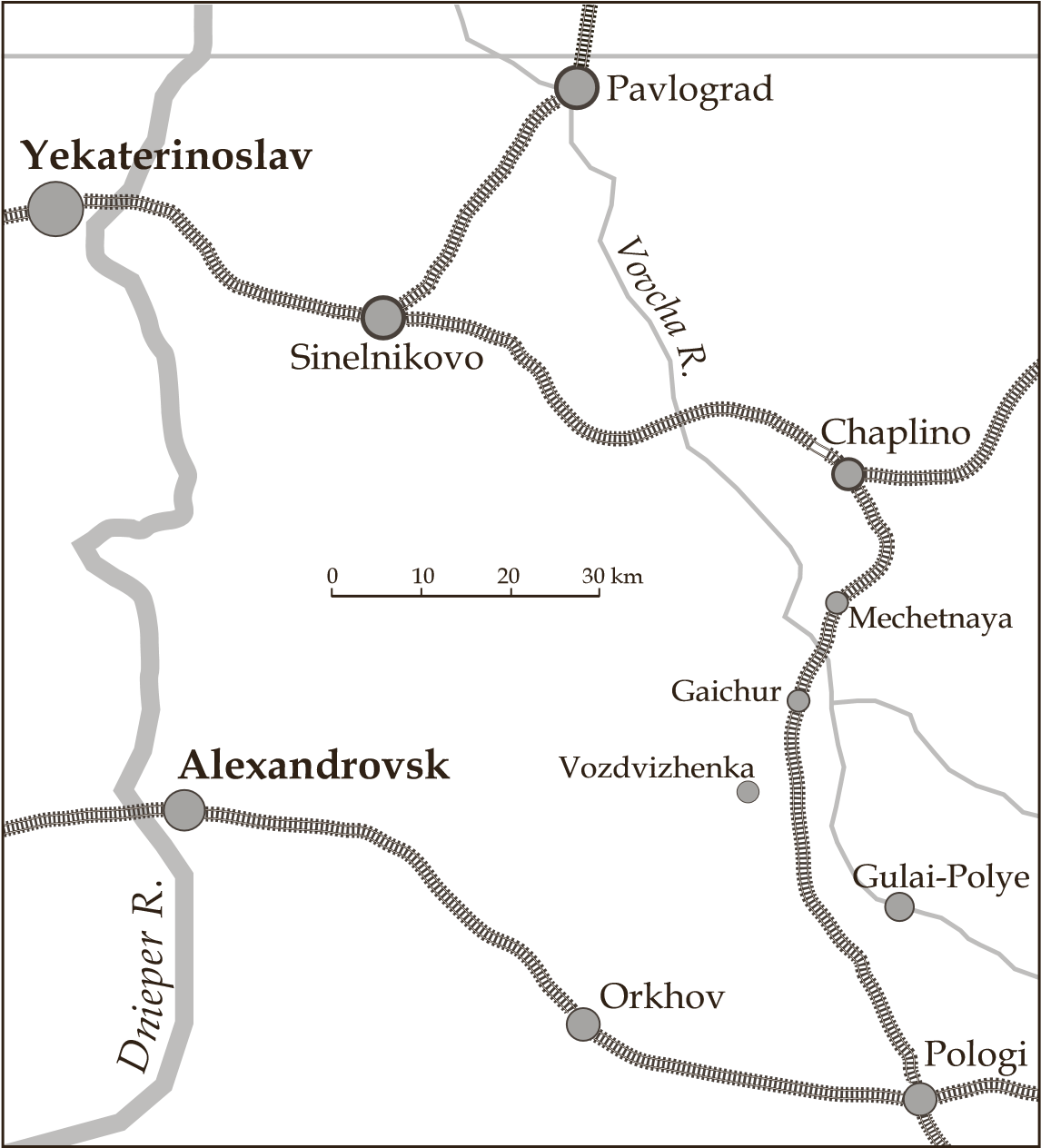
This put a damper on my enthusiasm. I kept wondering: where am I? Did I really rush out of Moscow to end up in such a place? And I couldn’t help but chuckle at all those signs!...
But my mirth quickly turned to terror when one of the Jews from Gulai-Polye approached me and, offering me his hand, called me by name. I was terror-stricken although I knew he was a good guy who would never betray me to the authorities. I asked him to be careful about how he used my name and that very minute I rushed away, changed into civilian clothes, and boarded the first available train heading in the direction of Gulai-Polye.
Now my situation changed somewhat. From Belgorod to Sinelnikovo – nearly 400 versts – I’d been lucky (I was helped by my military uniform, my ensign’s epaulets, and my phoney officer’s manners). But now, from Sinelnikovo to Mechetnaya, around 30 – 40 versts, my journey became extraordinarily dangerous. Each minute I expected death. I somehow got away with posing as a “true Hetmanite” thanks to the stupidity of the Hetman’s civil guards. But this disguise only worked up to Mechetnaya Station. From then on my name began to be mentioned frequently in the wagon. And at one of the stops the Gulai-Polye peasant Kogan and others told me German police were looking for me in the other wagons.
I quickly passed the suitcase with my things to Kogan; I told him to take it to Gulai-Polye and then I threw my jacket over my shoulders, got out of the wagon and hid in some bushes. When the train moved on, I got up and left.
I trudged 25 versts on foot to reach my goal – the village of Rozhdestvenka. As I approached the village I could see in the distance, to the left of it, Gulai-Polye itself, some 20 versts distant. In my heart I felt a tender love for this one name: Gulai-Polye… However, in Rozhdestvenka the peasant Z. Kleshnya and his family told me unhappy tidings about Gulai-Polye, about the life of the toiling population there, about the shootings of its best sons, etc.
It wasn’t difficult for me to get in touch with the Gulai-Polye peasants and worker-Anarchists (at least those who were not well known as Anarchists by the nationalist Ukrainian and bourgeois Jewish swine who betrayed all revolutionaries to the German butchers to be executed). I was able to communicate by letter to the survivors and informed them that in the next day or so I would be visiting them in order to discuss a series of very important problems of a revolutionary-military nature. But the reply I received was to forbear from visiting Gulai-Polye until they sent one of their own to fetch me. I felt like a prisoner because here I was in Ukraine and couldn’t wait to start organizing an uprising as we had planned in the spring.
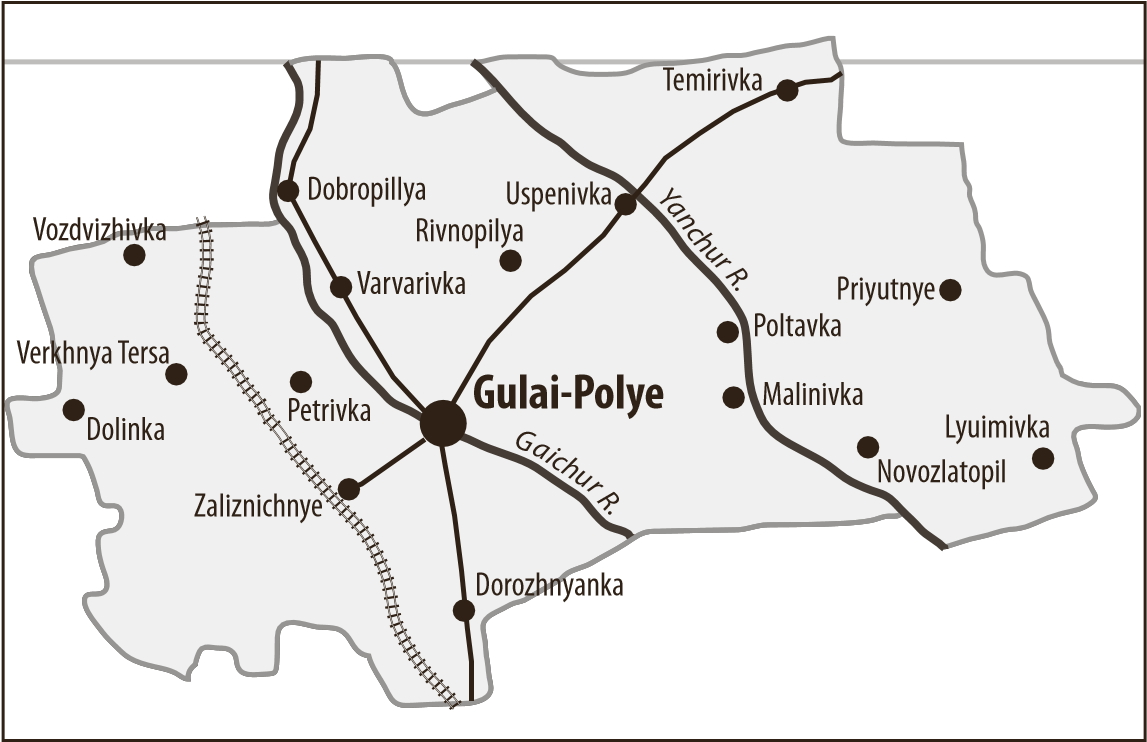
Gulai-Polye raion was destined to be the focal point of the revolutionary peasant insurrection which developed under the ideological and organizational leadership of myself along with our entire group.
Gulai-Polye with its population of revolutionary toilers and its desire to revive the now frozen Revolution became the nucleus of the uprising. I and other peasant-Anarchists devoted to the cause of the Social Revolution created an operational base in Gulai-Polye from which the toilers of our raion could deliver a blow against the butchers of the Revolution – the German-Austro-Hungarian junkers and the Hetmanshchina. Through our efforts, our valour, and our revolutionary courage we did everything possible to draw the toiling population of other villages and raions to our cause.
Of course, all this wasn’t done in the twinkling of an eye, by waving a “magic wand,” as so many socialist-politicians, Bolsheviks, and even Anarchists seemed to imagine. These clowns had no understanding of the broad masses and typically kept at a distance from them, confining their activities to writing blather for others; blather, moreover, which was usually a substitute for real knowledge of their subject.
All this demanded from us the greatest efforts and persistence in order to act in unison to convince the broad toiling masses of our commitment to the cause, not only in words, but in dealing with the practical life of the masses. Our job was to help the masses in the struggle to find their own revolutionary path, and to protect that path from the folly of the false friends of the Revolution, more often than not appearing in the ranks of the masses under the banner of socialism.
I have already touched on this subject in the first volume of my notes (The Russian Revolution in Ukraine). It will be an ongoing theme as well in my next books, i.e. the third and fourth volumes, which will deal with the practical and organizational aspects of the peasant revolutionary insurrection led by me in Ukraine, becoming synonymous with the Ukrainian Revolution.[119]
Notes by Volin
Notes to Chapter 5
In this chapter, as well as in few other places in this book, N. Makhno subjects the activity of the Anarchists during the Revolution to a sharp critique. I find his critique cannot be accepted as a whole without some fundamental reservations. I can understand very well that, during his travels through Russia in the summer of 1918, Makhno was deeply shaken by the disintegration of the Anarchist movement and the demoralization among the Anarchists he encountered. His anger and dismay are natural and touching. But I suggest that in his chagrin and in the heat of his anger, and also because of his lack of information about many of the events which took place among the Anarchists of Petrograd, Moscow, and other cities, Makhno was unable to judge the situation with the necessary breadth, depth, and impartiality. Hence the inevitable exaggerations and, at times, baseless attacks. I shall recall some basic facts either entirely overlooked by Makhno or insufficiently taken into account by him.
In the first place, one must note the Anarchist movement was barely tolerated by the Bolsheviks starting from November 1917, and was already compelled at that time to struggle against all kinds of obstacles placed in its way by the government, only to be finally defeated and suppressed in Great Russia in April 1918. At the time of Makhno’s journey, the ranks of the movement had been depleted, and the demoralization of the numerically insignificant and traumatized remnants was entirely natural.
Secondly, one must understand that, in comparison with the political parties (socialist, etc.), the Anarchists in Russia at the time the Revolution broke out were only a handful of people, selflessly devoted to the Revolution but, due to the very nature of things, helpless to play a large role in this Revolution. One must be aware that, on the one hand, none of the broad masses of the cities and villages had the slightest conception of Anarchism and Syndicalism; and that, on the other hand, a certain interval of time was necessary for the Anarchists themselves in order to organize their own forces and engage in work on a broad scope. It is completely unfair to characterize the Anarchists from beginning to end as being “split into a whole bunch of groups and grouplets which did not even share a common goal, never mind the capability of unified action at the moment of revolution.” In Petrograd there was the Alliance of Anarcho-syndicalist Propaganda which initiated solid, broad-based organizational work despite all sorts of obstacles and published, starting in August 1917, a weekly (and for a time daily) newspaper – Golos Truda [Voice of Labour] – and which had a good chance of creating a strong movement if events had not intervened, leading to its suppression in April 1918. (Makhno apparently was not aware of the work in the North, since he never mentions it.) In Moscow the comparatively large Federation of Anarchist Groups was also suppressed by the Bolshevik government in 1918. In other cities work had also quickly started up. Repression put an end to it. It is undoubtedly true that in the villages Anarchist work was not carried on at all, simply for a lack of resources and time. But this failure was due to the circumstances, and not to the Anarchists themselves who, at the time, had more than enough work to do in the cities. And then all the work which had been started was liquidated by the crushing defeat of April and its attendant staggering losses in comrades who were imprisoned, banished, or shot.
Thirdly and finally, one must mention that, after the suppression of the Anarchist movement in Great Russia, a whole series of comrades didn’t lay down their weapons but made their way to Ukraine, where they founded the strong, although not long-lived – also suppressed – Nabat Confederation, which subsequently established direct links with the peasant movement of the Makhnovshchina and gave to it many dedicated workers.
In general, the Russian Anarchists, despite their own numerical weakness and huge impediments, carried out significant work in the Revolution and did the best they could under the circumstances. One can only be amazed that, despite all the difficulties, their ideas and work were sufficiently influential to compel the Bolsheviks to resort to a prolonged, violent struggle with this influence.
To reproach the Anarchists for the organizational deficiencies of their movement is completely unfair. It was certainly necessary to struggle to build a large organization. But from this it doesn’t follow that one should exaggerate the deficiencies and undervalue the merits of the Anarchists. In any case, an evaluation of the Anarchist movement in the Russian Revolution requires a broad, deep, and objective analysis, and not just chagrin and indignation. The reproaches and accusations scattered throughout the memoirs of N. Makhno are neither fitting nor objective nor are they distinguished, regrettably, by a broad and deep understanding.
I shall comment briefly on one more point.
To speak of “droves” of Anarchists supposedly moving over to work for the Bolsheviks amounts, on the one hand, to the exaggeration of a problem; and on the other hand, to the ignoring of important facts.
It is quite true that, after the suppression, a certain number of Anarchists “accepted” Bolshevism and entered into some kind of relations with it. This phenomenon was labelled at the time “Soviet Anarchism.” And the comrades who drew closer to the Bolsheviks were called “Soviet Anarchists.” But, in the first place, it is quite impossible to speak about “droves” of such Anarchists. And, in the second place, and this is the main thing – the positions of “Soviet Anarchism” were sharply rejected by the overwhelming majority of Anarchists. I shall cite the text of a resolution on this subject, unanimously adopted at a congress of the Nabat Confederation of Anarchist Organizations of Ukraine (in April, 1919): “The Congress considers it necessary openly and directly to declare that the representatives of so-called ‘Soviet Anarchism,’ basing themselves on the recognition and support of ‘Soviet power,’ by so doing automatically cease to be Anarchists.”
One more comment. I have never heard of Anarchists who considered it necessary only “to advise,” and not to work and to do so in a responsible way. On the contrary, always and everywhere Anarchists insisted and are still insisting on the necessity namely to work: but not over the masses, but together with the masses, in their very midst, helping them with instructions, explanations, propaganda, advice, and setting an example – but of course taking full responsibility for this work in harmony with the masses themselves. If Anarchists sometimes mention they can only “advise,” then they add – but not “direct”; that is, they contrast providing help through advice (and, of course, practical advice) to the principle of direction and compulsion. More precisely, if at times Anarchists speak about the impossibility of taking on responsibility, then they mean responsibility in the sense of power which is a false responsibility. Here Makhno either didn’t understand the problem or, as sometimes happens with him, he was taking a pot-shot at certain Anarchists he was not fond of “who learned how to speak and write pretentiously.” It is also possible that some of the “phony Anarchists” he met may have uttered such inane thoughts. But such thinking is entirely foreign to real Anarchists and Makhno, by trying to ascribe such nonsense to them, is flinging at them an undeserved rebuke.
Notes to Chapters 8, 9, 12, and Some Others
In all these chapters, Makhno, along with an insufficiently broad and objective appraisal of the activity of Anarchists and the causes of their weakness, takes a position which is, in my opinion, not sufficiently thought through and not very impartial. Frequently, and at times harshly, he contrasts the merits of his own class – the peasantry – with the deficiencies of the class of urban workers and with the weaknesses of representatives of the intelligentsia in the Anarchist movement. From time to time he shows, along with a fanatical faith in the peasantry (more precisely, for the Ukrainian peasantry), a cautious, distrusting, and suspicious attitude towards anything non-peasant (and non-Ukrainian). Much in the opinions and actions of Makhno is explained by this attitude.
Meanwhile it is impossible not to note that such an approach to the very complex problem of the mutual strengths and weaknesses, of the mutual relations and roles, of the various layers of the population in a real revolutionary situation, and also to the problems of the situation and role of Anarchists in the Revolution – such an approach is one-sided and superficial.
This is not the place, of course, to submit this problem to an exhaustive analysis. We shall limit ourselves only to some brief remarks.
In the first place, it is indisputable that the peasantry, the urban workers, and the Anarchist intelligentsia each possess their own specific good and bad qualities. It is necessary to study those qualities and other characteristics as well. It is necessary to compare some with others in order to get a correct appraisal of the situation. Makhno sees in the Ukrainian peasantry only good qualities and harps on the deficiencies of other class elements. He has unconditional faith in the power and invincibility of his own peasantry, and he is compelled by this faith to devote his entire being to the matter of peasant insurrection in Ukraine. However the fact is this insurrection was also demoralized and crushed. It is obvious that the defeat of the other forces in the Russian Revolution and the downfall of the Anarchists was the result not only of their deficiencies and weaknesses, but also because of a whole series of general, objective causes. Makhno does not consider these general causes and does not analyze objectively the pluses and minuses of the various forces in the Revolution. We understand his anger and the we respect the authenticity of his thoughts and feelings, but we cannot acknowledge the correctness of his opinions and conclusions.
In the second place, Makhno completely ignores the fact that each of the elements taking part in the Revolution – the peasantry, the workers, and the intelligentsia – has its own special task. He measures everything with his own – peasant – measuring rod. He does not see the chief task of the Anarchist intelligentsia is the organization of broad-based propaganda; the task of workerAnarchists is organizational work among the masses of workers; and the task of peasant-Anarchists is to carry on similar work among the peasant masses. Nothing is more natural than that Makhno, as a peasant, should develop his own work among the peasant masses. But he refuses to understand that the urban Anarchists – workers and intelligentsia – were confronted with a huge task which they could fulfill only by remaining where they were, on their own turf. And finally, he loses sight of the fact that the specific conditions of revolution in Ukraine (its occupation by the Germans, the weakness of the government, etc.) gave the possibility for a genuine revolution to hold out and resist longer than in Great Russia, where the new government could quickly suppress the movement. Makhno also loses sight of the fact that the peasant insurrection in Ukraine was, to a significant degree, triggered by foreign occupation and the rule of the Hetman. Had these special conditions not been present, the Ukrainian peasantry might well have behaved the same as the peasantry in Great Russia.
Makhno fulfilled his own task in Ukraine in brilliant fashion. But he doesn’t appreciate that the workers, peasants, and Anarchists of Great Russia simply did not have the time, nor the strength, nor favourable conditions for the fulfillment of their revolutionary tasks.
For me it is somewhat strange to be defending Russian Anarchists from Makhno’s criticisms, since I am only too aware of the defects of the Anarchist movement and have struggled for a long time against the disorganization in our ranks, and for the organizational unity of all Anarchist forces. At the same time, I myself criticized many Russian comrades for the fact that, after the defeat of the Anarchist movement in Great Russia, they did not move to Ukraine to help the mass movement there. So if I object here to Nestor Makhno, I do so because of the one-sided and exaggerated form of his critique.
Fairness demands I take note of the fact there are places in Makhno’s notes where he comes close to a more objective view of things (see, for example, the end of Chapter 15). Unfortunately, these brief, well thought-out and just remarks remain almost unnoticed in his generally superficial approach to the issues touched upon, and are overwhelmed in his basically one-sided appraisal of events.
It is curious in this connection that Makhno, by his own admission (cf. Chapter 13), had little reflected on the question of Syndicalism. But the fact remains that the absence in Russia before the Revolution of a syndicalist movement explains much of the weakness of the Anarchist movement in the Revolution. I must add that in our own days the problem of the unification and organization of Anarchist forces in various countries is decided, in my opinion, not in the form of the gathering of all Anarchists under the banner of “Peasant Anarcho-Communism” as it would seem in Nestor Makhno’s Russia, but in a completely different, much broader-based and freer form. But this is not the place to dwell on that thought.
Appendix
The Call
Let us rise in revolt, brethren, and with us the people Beneath the black flag of Anarchy will revolt.
We will surge boldly forward, under the fire
Of enemy bullets in the battle For faith in libertarian communism, Our just regime.
We shall cast down all thrones and Bring low the power of Capital. We will seize the gold and purple scepter And pay no more honor to anything.
Through savage struggle
We shall rid ourselves of the State and its laws.
We have suffered long under the yoke
Of chains, prisons and teeming gangs of executioners.
The time has come to rise in rebellion and close ranks.
Forward beneath the black flag of Anarchy, on to the great struggle! Enough of serving tyrants as their tools, That is the source of all their might.
Insurrection, brethren, labouring people!
We will sweep away all carrion.
That’s the way we shall reply to the lies of tyrants, We free workers, armed with our determination.
Long live freedom, brethren. Long live the free commune.
Death to all tyrants and their jailers!
Let us rise, brethren, on the agreed signal,
Beneath the black flag of Anarchy, against every one of them, the tyrants.
Let us destroy all authorities and their cowardly restraints, That push us into bloody battle!
– Nestor Makhno
Letter to Kropotkin
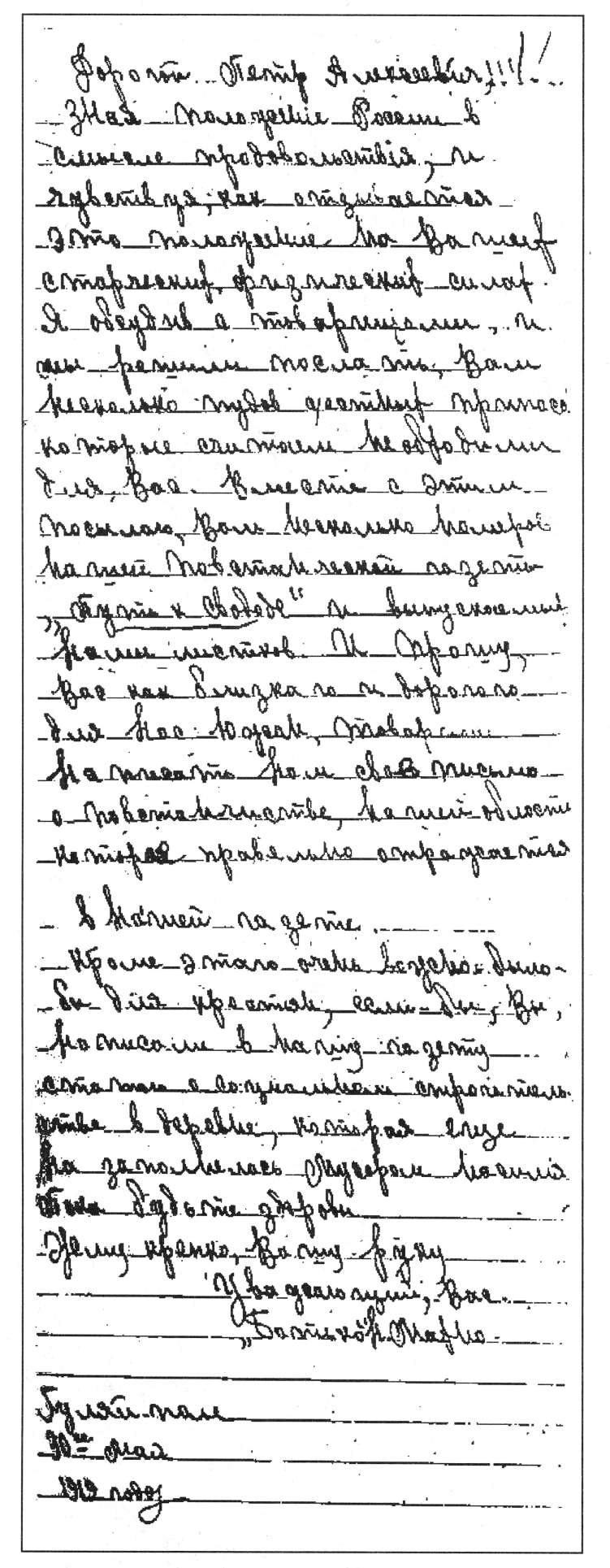
Dear Petr Alekseyevich!!!.. Knowing the food supply situation in Russia and considering how this might affect your old bones, I talked things over with some of my comrades and we decided to send you a few poods of victuals which we think you should have. Along with this I’m sending you several issues of our insurgent newspaper, “The Road to Freedom” and leaflets published by us. And I ask you as a comrade who is close and dear to us southerners to write us a letter about the insurgency of our region which is accurately described in our newspaper.
Besides this it would be very important for the peasants if you could write an article for our newspaper about social construction in villages which have not yet succumbed to the world of violence.
Stay healthy.
firmly I press your hand{1}
Respectfully yours
“Batko” N. Makhno
Gulai-Polye,
30th May
1919
From the Memoirs of Aleksei Chubenko{2}
...When the Germans entered [Gulai-Polye] they unleashed a monstrous reign of terror and search for weapons. A bunch of Gulai-Polyans were hanged including Makhno’s oldest brother, Karp.{3}
Makhno fled to the Soviet armed forces and made his way with them to Taganrog where he met Marusya Nikoforova, with whom he retreated to Tsaritsyn. [Then] he left for Moscow and was in Moscow until July 1918. As for myself, being a commissar of the railway junction of Tsarevokonstantinovka, I was captured by the Germans and handed over to the Petlyurists{4} – to the ataman of the 1st Khortitsa Cossak Troop. After a severe beating in which I had 11 teeth knocked out and ribs broken, I was led out to the Dnieper at 1 a.m. to be shot. There were four of us, of whom two were shot and two, including myself, escaped. I ran away with Comrade Kiryakov who, incidentally, was wounded in the hand by a bullet after we had jumped in the river. They were firing at us but we swam underwater and were able to hide among some rocks along the bank. When the killers left, we swam to the far bank of the Dnieper where workers from a brick plant gave us clothes and brought us to the road.
After my escape I made my way to Moscow to Vikzheldor{5} where I got an appointment to Kursk-Yamskaya: at the northern depot on the Moscow-Kursk-Nizhegorodskaya-Muromskaya railway. And I served there until July and of course there was absolutely no food and I often went hungry.
I don’t remember the exact date in July when I went into the railway station to buy a newspaper and ran into Makhno, who was travelling to Ukraine to start a revolt against the government of Hetman Skoropadsky. He told me “nothing” was going on in Moscow – there was a complete split between the Communists and Anarchists and “in general the only thing being created in Moscow is rubbish.” I invited him to my apartment where we sat down and began to talk about how to survive, since we were both hungry as dogs. He started telling me I should leave with him. I thought about this a bit and asked if he had any papers. He showed me two sets of documents for officers: one for a staff-captain, the other for a lieutenant. I looked over these papers and uniforms and decided to go with him since I knew very well what was happening in Ukraine, how hundred of innocent people had been killed. I decided to go and avenge my close comrades, totally innocent, who had been murdered. I wanted vengeance on the bourgeoisie!
At that moment there flared up inside me hatred and intense anger and I decided on the spot that raising a revolt in the rear of the enemy was as necessary to me as breathing. A revolt could revive the Social Revolution in Ukraine and a partisan movement would be the means of liberating the toiling masses. Mind you, it never occurred to me this movement would acquire such a mass character. Makhno didn’t think so either. This was obvious from his plan of action. In the beginning he intended to commit isolated acts of terror carried out by a small group, which would assign to individuals the task of killing the Hetman Skoropadsky’s henchmen and, if the opportunity arose, Skoropadsky himself. This small group would also occupy itself with annihilating the Varta which was behaving ferociously at that time, as well as carrying out expropriations of Ukrainian banks to provide ourselves with operating funds, since we had none. Besides, Makhno noted, “If there are people who are hiding from Skoropadsky’s regime, then we can expect to be successful, for those people, living in the forests and swamps, will come to us and show no mercy to any of the Hetman’s agents.” He went on to say he had people he could count on.
After pondering this matter carefully, I decided to go with Makhno; I packed my things and left.
We travelled to Belenikhino Station, passed through the Soviet frontier post, and put on our epaulets.{6} Of course that stirred up the people we ran into and they cursed us and almost made a big scene out of it.
We arrived in Belgorod. Here we got officers’ tickets giving us the right to travel on the railroad. As far as Lozovaya Station things were going well. But at Lozovaya there was some kind of parade going on involving a German General. While waiting to change trains we went to watch the parade and got into trouble when one German officer told us we weren’t conducting ourselves appropriately in the presence of the General. But we managed to extricate ourselves from this situation and travel further. Before reaching Gaichur Station we got off the train since we were afraid that at that station we would run into people who recognized us. Setting off on foot, we made our way to Vozdvizhenka...
Glossary
| ataman | elected Cossack chieftain. |
| batrak | poor peasant who was forced to hire out as a day labourer. Makhno’s father was a batrak. |
| Bolshevik | member of the radical wing of the Russian Social-Democratic Labour Party, which became a separate party formally in 1912. In March 1918 the party changed its name to the Russian Communist Party (Bolsheviks). |
| bulka | Russian roll made with wheat flour similar to a hamburger bun. |
| Cheka | Extraordinary Commission, the original secret police organization set up by the Bolsheviks shortly after taking power. Its functionaries were known as Chekists. |
| dessiatin | unit of land measurement in tsarist Russia equivalent to 2.7 acres. |
| echelon | troop train. |
| GAK | Anarcho-communist Group of Gulai-Polye, originally founded in 1905 by Vladimir Antoni and Alexander Semenyuta and revived after the February Revolution. As a member of this organization, Nestor Makhno was governed by its internal rules throughout the Civil War. |
| gubernia | adminstrative unit which can roughly be translated as “province”. Yekaterinoslav was the administrative centre of a gubernia (also named Yekaterinoslav) which included several uyezds (including Alexandrovsk uyezd). |
| haidamak | elite soldier of the Ukrainian nationalist armed forces. An archaic term which harks back to Ukrainian Cossack warriors of the 18th century. |
| Hetman | traditional title for leader of Ukrainian Cossacks. |
| junker | member of the German officer caste. |
| katorga | hard labour prison or the regime in such a prison which was applied to convicted political prisoners in the Russian empire; these convicts were known as katorzhniks. |
| khutor | isolated farmstead, usually containing a number of living quarters for farm workers. |
| kontrrazvedka | intelligence service. |
| krug | Cossack assembly with legislative power. |
| Left SR | member of the Left Socialist-Revolutionary Party, formed in October 1917 from the left-wing of the SR Party. |
| Makhnovshchina | the Makhnovist movement (a pejorative term in Soviet historiography, it has gradually acquired a neutral hue). |
| Maximalist | member of a political party which split from the SRs in 1906 and rejected electoral politics. The Party was financed mainly through bank robberies. |
| Menshevik | member of the moderate wing of the Russian Social Democratic Labour Party, which became a separate party formally in 1912. |
| meschochnik | speculator (literally, a person carrying a bag). |
| nabat | tocsin, or alarm bell. |
| Narkom | People’s Commissar. |
| okrug | administrative division found in Cossack regions and equivalent to a uyezd. |
| pood | unit of weight equal to 16.4 kilograms. |
| pomeshchik | owner of a large landed estate. |
| rada | council, the Ukrainian equivalent of “soviet”. |
| raion | administrative unit, a subdivision of a uyezd. The village of Gulai-Polye was the administrative centre of a raion (also named Gulai-Polye) which included several other (much smaller) villages and hamlets. |
| Revkom | Revolutionary Committee. After the October Revolution of 1917 local soviets set up Revkoms to organize the military defense of the Revolution. |
| SD | Social-Democrat. Makhno generally uses this term to refer to the Mensheviks rather than the Bolsheviks. |
| SR | member of the Socialist-Revolutionary Party (there were both Russian and Ukrainian variants) which claimed to represent the views of the peasantry. |
| serednyak | “middle” peasant, i.e. economically somewhere between a poor peasant (bednyak) and a rich peasant (kulak). In Soviet times the definition of serednyak became a political rather than scientific matter. |
| shampol | rod used for cleaning rifles but also used as an instrument of corporal punishment. |
| SR | member of the Socialist-Revolutionary Party (PSR), the largest left-wing party in Russia, which claimed to represent the interests of the peasantry. Socialist but non-Marxist, it was prone to factionalism and underwent a number of splits. In Ukraine were found nationalist variants of the SR Party. |
| uyezd | aadministrative unit, a subdivision of a gubernia. Alexandrovsk was the administrative centre of a uyezd (also named Alexandrovsk) which included several raions (including Gulai-Polye raion). |
| varenik | dumpling with a filling – the Russian version of the Ukrainian pyrogy. |
| Varta | literally “Guard”, the Ukrainian State militia set up by the Hetmanate regime – Skoropadsky’s police force verst unit of length: 3,500 feet or 1.06 kilometres. |
| volost | administrative unit which could be the equivalent of a gubernia, uyezd, or raion depending on the location and historical tradition (volost units were common in Cossack regions). |
| VTsIK of Soviets | All-Russian Central Executive Committee, the highest legislative body of the Russian Soviet Socialist Republic which functioned starting from 1917. |
| Whites | The White movement was the main counterrevolutionary force in the Russian Civil War. Officially democratic, it included monarchist and proto-fascist elements. |
Chronology February — July 1918
Well-established dates are in bold-face type, the rest are guesstimates.
| February 9 | Treaty between the Central Powers (Germany, Austro-Hungary, Bulgaria, and Turkey) and the Ukrainian Central Rada leads to the invasion of Ukraine by a German expeditionary army. |
| March 3 | Treaty of Brest-Litovsk between the Soviet Republic and the Central Powers. The Bolsheviks agree to pull their troops out of Ukraine but their puppet Ukrainian government continues to offer armed resistance to the invasion. |
| March 12 | Moscow becomes capital of the Soviet State, replacing Petrograd. |
| April 12–13 | Moscow Anarchists suppressed. |
| April 14 | Makhno leaves Gulai-Polye for a brief visit to the Red military headquarters. |
| April 15–16 | A nationalist coup in Gulai-Polye leads to the disarming of the Anarchists and the arrest of many of their activists. |
| April 16 | A peasant demonstration in Gulai-Polye results in the release of the Anarchists who go into hiding or flee to the east. |
| April 18 | Makhno leaves Tsarevokonstantinovka for Taganrog. |
| April 22 | German troops arrive in Gulai-Polye. |
| April 22–26 | Arrest and trial of Maria Nikiforova in Taganrog. |
| April 29 | German-backed coup in Kiev brings Skoropadsky to power as head of the Hetmanate State |
| April 30 | Taganrog Conference of the Anarcho-communist Group of Gulai-Polye (GAK). |
| May 2 | Makhno visits Rostov-on-Don. |
| May 6–12 | Makhno visits Tsaritsyn. |
| May 8 | German troops and White Cossacks capture Rostov. |
| May 13 | Makhno arrives in Saratov. |
| May 15 | Anarchists routed from the Hotel Rossiya in Saratov. |
| May 16 | Makhno leaves Saratov for Astrakhan. |
| May 16–19 | Revolt by Baltic and Black Sea sailors in Saratov. |
| May 18 — May 31 | Makhno visits Astrakhan. |
| May 25 | Czech Legion revolts, joins enemies of Bolshevik regime. |
| June 2 | Makhno’s second visit to Saratov. |
| June 2 | Makhno sets out for Moscow by train. |
| June 4 | Makhno visits Tambov. |
| June 8 | Makhno arrives in Moscow. |
| June 26 | Makhno’s interview with Sverdlov. |
| June 27 | Makhno’s interview with Lenin. |
| June 29 | Makhno leaves Moscow for Ukraine by train. |
| July 1 | White Cossacks begin siege of Tsaritsyn. |
| July 2 | Makhno arrives in Kursk. |
| July 4 | Fifth All-Russian Congress of Soviets opens in Moscow. |
| July 6 | Makhno arrives in Rozhdesvtenka, near Gulai-Polye. |
| July 6–7 | Left SR revolt in Moscow and other cities. |
References
Arshinov, Peter. 1974. History of the Makhnovist Movement (1918–1921). Detroit/ Chicago: Black & Red.
Azarov, V. 2008. Kontrrazvedka: The Story of the Makhnovist Intelligence Service. Edmonton: Black Cat Press.
Berkman, Alexander. n.d. Some Reminiscences of Kropotkin. International Institute of Social History. Available online at: http://dwardmac.pitzer.edu/Anarchist_Archives/bright/berkman/reminiscences/reminiscences.html.
Bruskaya, Polina. 2007. Махно: историко-художественная повесть [Makhno: a literary-historical narrative], Maryland: Commercial Graphics.
Chop, V. M. 1998. Нестор Иванович Махно [Nestor Ivanovich Makhno]. Zaporozhia: RA “Tandem-U”. Also available online at: www.makhno.ru/lit/chop/1.php.
Danilova, V., and T. Shanina, eds. 2006. Нестор Махно. Крестьянское движение на Украине. 1918–1921: Документы и материалы [Nestor Makhno. Peasant movement in Ukraine. 1918–1921: Documents and materials]. Moscow: ROSSPEN. Dubovik, A. V. n.d. Разгром московских анархистов. 12 апреля 1918 г. [The crushing of the Moscow Anarchists. 12 April 1918]. Available online at: socialist.memo.ru.
Fyodorovsky, Yuly. Пархоменко и Махно [Parkhomenko and Makhno]. Bratyaslavyanye, No. 8, August 2001: Available online at http://br-sl.newmail.ru/2006/4/i4-06-3-4.html.
Golovanov, Vasily. 2008. Нестор Махно [Nestor Makhno]. Moscow: Molodaya Gvardiya.
Makhno, Nestor. 2006. The Russian Revolution in Ukraine. Edmonton: Black Cat Press.
———————. 2004. Нестор И. Махно – на чужбине 1923–1934 гг., записки и статьи [Nestor I. Makhno – abroad 1923–1934, notes and articles]. Edited by Alexandre Skirda. Paris: Hromada. Available online at http://a-read.narod.ru/livre_makhno1.pdf.
———————. 1928. Махновщина и ее вчерашние союзники-большевики. (Ответ на книгу М. Кубанина «Махновщина») [The Makhnovshchina and its erstwhile allies — the Bolsheviks. (Response to the book of M. Kubanin “Makhnovshchina”)]. Paris: Izd-vo “Biblioteki makhnovtsev”.
Palij, Michael. 1976. The Anarchism of Nestor Makhno, 1918–1921. Seattle/London: University of Washington Press.
Политические партии России. Конец XIX – первая треть XX века. Энциклопедия. [Political parties of Russia. End of the 19th – first third of the 20th century. Encyclopedia.] 1996. Moscow: ROSSPEN. Available online at: http://spb-anarchists.anho.org/rosspen.htm.
Pirumova, N. M. 1972. Петр Алексеевич Кропоткин. Publication of “Nauk”. Moscow. 1972. Available online at: http://vivovoco.rsl.ru/vv/books/kropotkin/intro.htm.
Savchenko, V. A. 2005. Махно [Makhno]. Kharkov: Folio.
———————. 2006. Двенадцать войн за Украину [Twelve Wars for Ukraine]. Kharkov: Folio. Available online at http://militera.lib.ru/h/savchenko_va/index.html.
Semanov, S.N. 2004. Махно: судьба атамана [Makhno: the destiny of an ataman]. Moscow: AST Press.
Semanov, S.N. 2005. Махно: вожак анархистов [Makhno: leader of the anarchists], Moscow: Veche.
Shubin, Aleksandr. 2005. Анархия – мать порядка: Между красными и белыми [Anarchy – the mother of order: Between reds and whites]. Moscow: Eksmo/Yauza.
Skirda, Alexandre. 2004. Nestor Makhno – Anarchy’s Cossack, Edinburgh/Oakland: AK Press.
Sysyn, Frank. 1977. Nestor Makhno and the Ukrainian Revolution. In The Ukraine, 1917–1921: A Study in Revolution. Edited by T. Hunczak. Cambridge: Harvard Ukrainian Research Institute.
Voline (Vsevelod Volin). 1974. The Unknown Revolution 1917–1921. Detroit/Chicago: Black & Red.
Wheeler-Bennett, John W. 1971. Brest-Litovsk – the Forgotten Peace. New York: Norton.
Yashchenko, V. G. 2007. Разгром анархистов в царицыне (апрель 1918 г.) [Defeat of the Anarchists at Tsaritsyn (April 1918)]. Available at: http://a-pesni.golosa.info/grvojna/makhno/rebels/razgromvcar.htm.
Yermakov, V. D. 1997. Анархистское движение в России: истороя и современность [The Anarchist movment in Russia: its history up to the present]. Saint-Petersburg: Akademiya Kultury.
[1] Makhno (2006). References are listed at page 188.
[2] For Lenin’s speech on the ratification of the Peace Treaty delivered on March 14 1918, see Wheeler-Bennett (1971), pp. 409–426, where the term “breathing space” [peredyshka] is used several times.
[3] See Shubin (2005), pp. 95–96; Yermakov (1997), p. 71.
[4] See Dubovik.
[5] Savchenko (2006), Ch. 3.
[6] The Russian historian S. N. Semanov claims to have found proof of the meeting in “Kremlin documents” but does not specify them [Semanov (2004), p. 97].
[7] Lenin, V. I., Биографическая хроника [Biographical chronicle], Moscow (1974), p. 569; cited in Golovanov (2008), p. 70.
[8] See Fyodorovsky (2001).
[9] For example Polina Bruskaya has one of Makhno’s comrades encouraging him to ingratiate himself with Kropotkin by addressing him as “Prince,” much to the chagrin of the old Anarchist [Bruskaya (2007)].
[10] Quoted in Savinkov (2005), p. 51.
[11] Arshinov (1974), p. 228.
[12] See Semanov (2005), p. 72.
[13] “Разъяснение” [“Explanation”] in Makhno (2004).
[14] “По поводу ‘разъяснения’ Волина” [“Apropos of Volin’s ‘explanation’”] in Makhno (2004).
[15] Voline (1974), p. 705.
[16] “Над свежей могилой Т. Н. Рогдаева” [“Over the fresh grave of Comrade N. Rogdaev”] in Makhno (2004). In 1919 Makhno invited the legendary Anarcho-communist Nicolai Rogdaev to join the Makhnovist movement in Ukraine. According to Makhno, Rogdaev declined because he was unable to get along with Volin, whom he described as a “back-stabber.”
[17] Skirda (2004), p. 286. The piece was titled “Pages of Gloom from the Russian Revolution.”
[18] IThis was not the future Marshal of the Soviet Union A. Z. Yegorov, but rather V. N. Yegorov (1869–1948), a career tsarist officer who had thrown in his lot with the Bolsheviks and was in charge of trying to slow down the advance of the invading German Army.
[19] Makhno was disposed to suffer nervous breakdowns when exposed to severe stress. He quickly recovered from these episodes but never tried to conceal them. See Chop (1998).
[20] Savely (Savva) Makhno (1868–1920) was the second oldest of Nestor’s four brothers. A war veteran, he occupied military and supply positions in the Makhnovist movement.
[21] “Free battalions” in this context refers to military units which acted independently and were not subordinate to a central command headquarters. At various points in the Civil War the Makhnovists and other Anarchist armed formations were integrated into the Red Army at which point they ceased to be “free.”
[22] The Anarchist detachment from Gulai-Polye which had been dispatched to Chaplino was disarmed with the aid of orders forged with N. Makhno’s signature. See Makhno (2006), p. 217.
[23] Makhno is referring to Yefim Taranovsky (1888–1921), a peasant Anarchist who had served as a lieutenant in the Russian Army. He went on to hold responsible positions in the Makhnovist movement despite his blunder in April 1918.
[24] The members of the Ukrainian Central Rada were mostly members of socialist parties.
[25] AThe Ukrainian Anarchist Maria (Marusya) Grigorevna Nikiforova (1885–1919) was a native of Alexandrovsk who began her career as a left-wing terrorist at the age of 16. She organized an independent detachment which was one of the most effective military formations in the armed forces of the Revolution in Ukraine in 1918. Her detachment took part in heavy fighting in Yelizavetgrad and Alexandrovsk.
[26] UTsIK = Ukrainian Central Executive Committee. The Ukrainian government Makhno is referring to was the short-lived ruling organ of the Ukrainian People’s Republic (December 1917 — April 1918). This body dissolved itself on April 18 1918 (its authority at the time hardly extended beyond the Taganrog city limits) and morphed into the “All-Ukrainian Bureau for Directing the Partisan Resistance Against the German Occupiers.”
[27] Vladimir Petrovich Zatonsky (1888–1938), a former Menshevik, was chairman of the UTsIK of Soviets of the Ukrainian People’s Republic in the spring of 1918. In the comic opera atmosphere of the final days of the Ukrainian People’s Republic, Zatonsky himself was briefly arrested by the Left SR faction of his government.
[28] Vladimir Aleksandrovich Antonov-Ovseyenko (1883–1938) was commander-inchief of the Soviet forces of South Russia in March — May, 1918.
[29] This armoured train was built at the gigantic Bryansk steel rolling mill in Yekaterinoslav, named after the engineering firm which built it in the 1880’s. The mill had 10,000 workers in 1917. The mill was nationalized in 1918 by the Soviet government and turned out several armoured trains to do battle with the invading German-Austrian forces.
[30] “Skromny” is Russian for “the modest one,” so it may have been ironic.
[31] The veteran Bolshevik Andrei Sergeievich Bubnov (1883–1940) was a member of the government of the Ukrainian Socialist Soviet Republic as well as the Central Committee of the Communist Party (Bolsheviks) of Ukraine.
[32] Nikiforova’s movements in the remainder of 1918 are obscure (the same can be said for many prominent revolutionaries) but in January 1919 she was put on trial in Moscow charged with the same crimes for which she had been exonerated in Taganrog. She did not gain a complete acquittal on this occasion but was merely prohibited from military activities for six months (she later got this reduced to three months). After the trial she joined Makhno in Gulai-Polye where she was assigned duties related to health care and education. When Makhno was declared an outlaw by Soviet power in June 1919, Nikiforova launched her own underground campaign against both the Whites and Reds. Her personal role in this campaign came to an end in September 1919 when she was executed by the Whites.
[33] Aleksei Semenovich Marchenko (1893–1921), came from a poor peasant family and served as a non-commissioned officer in the tsarist army. He was an Anarchocommunist from 1917.
[34] Isidor Yefimovich Luty (1893–1919) was a peasant whose trade was house painting. He was an Anarchist.
[35] Boris Veretelnik (?- 1919) was an iron worker who had been employed at the Kriger factory in Gulai-Polye as well as the gigantic Putilov works in Petrograd. He took part in the 1905 Revolution and was a Socialist-Revolutionary until 1918, when he became an Anarchist.
[36] Simon Karetnik (1893–1920) was a batrak whose activity as a revolutionary Anarchist began shortly after the 1905 Revolution.
[37] Aleksandr Konstantinovich Semenyuta (1883–1910) was a Gulai-Polye Anarchist who had a strong influence on the young Nestor Makhno. The son of a former serf, he deserted from the army in 1903 and was one of the organizers of the Gulai-Polye “Union of Poor Peasants,” an Anarcho-communist group which embarked on a campaign of terror and expropriation. He was killed in a shoot-out with police.
[38] Yevokim Kolyada was a peasant Anarchist from the village of Petropavlovka in Aleksandrovsk uyezd. He commanded a detachment from his native village in 1918 and later held various senior posts in the Insurgent Army (Makhnovists). He was killed in battle with the Reds.
[39] WMakhno is referring to Anastasya Kuzminichna Vasetskaya (1897–1981), a native of Gulai-Polye. They corresponded while he was in prison and were married in May 1917, apparently at her mother’s insistence.
[40] Mikhail Lavrentevich Polonsky made an appearance in Ch. 26 of the first volume of Makhno’s memoirs [see Makhno (2006)]. He was a Left SR at that time (his brother was a Bolshevik) and had occasional disagreements with Makhno but this did not prevent him from being entrusted with important military assignments. In December 1919, Polonsky, now a Bolshevik but holding a command position in the Makhnovist Insurgent Army, was arrested and shot for attempting to assassinate Makhno.
[41] Aleksandr Mikhailvich Belenkovich (1893–1937) held several command positions in the Red Army during the Civil War. Later he worked in the aviation industry and, like so many other Bolshevik activists, perished in the Great Terror. Makhno’s spelling of his name, “Belinkevich,” has been corrected.
[42] One of the oddities of the Russian Civil War was the maintenance of regular train traffic across military fronts. Trains were a valuable source of food and other supplies and as such it was in the interests of the combatants to keep them running. A train journey across enemy lines is described in Alexei Tolstoy’s novel 1918. It was also possible to communicate with the other side by means of post, telegraph, and telephone.
[43] Nakhichevan was a town originally settled by Armenians in the 18th century close to Rostov-on-Don. It was merged with Rostov in 1928.
[44] There is an echo here of the rumours circulating in Russia at the time that agents of the White movement were posing as Anarchists. See Yermakov (1997), p. 73.
[45] Grigori Borzenko was an Anarchist sailor who later returned to Ukraine to take part in the revolutionary underground in Odessa.
[46] This structure was located in the central park in Rostov-on-Don.
[47] Makhno apparently means the Red Cossack Fyodr Grigorevich Podtyolkov (18861918), the most prominent figure in the short-lived Don Soviet Republic. Contrary to the rumour Makhno repeats, Podtyolkov stayed in Rostov until the bitter end, breaking out to the north with a small detachment as the city fell to a combined assault by Germans and White Cossacks on May 8 1918. Three days later Podtyolkov’s detachment was liquidated by White Cossacks in an incident described in Mikhail Sholokhov’s And Quiet Flows the Don.
[48] Makhno was 5 ft. 1 in. tall.
[49] Sergei Konstantinovich Minin (1882–1962) was a Bolshevik from 1905 and held high party and military posts in Tsaritsyn during the Civil War.
[50] Aleksandr Vasilyevich Kolchak (1870–1920), who had been an admiral in the tsarist navy, was not even in Russia in May 1918 and only became a prominent White leader after October 1918. In May 1918 the main opposition to the Bolsheviks in Siberia was provided by moderate socialists.
[51] Bolshevik sources generally identify Petr Petrenko as an Anarchist. V. AntonovOvseyenko, commander-in-chief of the Soviet forces in Ukraine, considered his detachment one of the most reliable in an army plagued by desertion and panic. On March 24 1918, Petrenko engaged the Germans at Zvenigorodka, one of the few instances in which more than token resistance was offered the invaders. See Savchenko (2006).
[52] Andrei Vasilovich Polupanov (1888–1956) commanded a detachment of sailors from the Black Sea Fleet.
[53] Aleksandr Ilyich Dutov (1879–1921), ataman of the Orenberg Cossacks, had started an anti-Bolshevik revolt as early as November 1917.
[54] Makhno is being ironic – there was no such polity.
[55] Kliment Yefremovich Voroshilov (1881–1969), a veteran Bolshevik, was present in Tsaritsyn to build the 10th Army from conscripts and units retreating from Ukraine. He was associated through much of his career with Josif Stalin who was also active in Tsaritsyn in 1918 (indeed that was why the city was named after him in 1925) but did not arrive until June after Makhno had left.
[56] According to one Bolshevik witness, Petrenko on this occasion inquired, “How come the chairman of your Soviet is a Jew?” See Yashchenko (2007).
[57] Alexei Vasilevich Mokrousov (1887–1959) was the only Anarchist commander to survive not only the Civil War but Stalin’s purges. He later put his guerilla experience to good use in the Spanish Civil War and World War II. Googling his name in Russian or Ukrainian turns up thousands of entries because a huge Crimean resort is named after him.
[58] This ephemeral Soviet republic was in existence from May 30 to July 7 1918.
[59] Indeed Makhno found himself in the same position as Petrenko in June 1919, when Voroshilov, now occupying the dual positions of Narkom of Internal Affairs in the Ukrainian Soviet government and commander of the 2nd Ukrainian Red Army, invited him to a meeting for “negotiations.” Voroshilov was under orders from Trotsky to arrest Makhno, who would undoubtedly have been shot. Warned in advance by a Red intelligence officer, Makhno barely made his escape. See Makhno (1928), p. 55.
[60] Grigory Semenovich Vasilevsky (1889–1921) was a Gulai-Polye Anarchist from 1910 and a personal friend of Nestor Makhno. A participant in the experiment with agricultural communes, he later served as an adjutant in the staff of the Makhnovist Insurgent Army and in the army’s kontrrazvedka. Killed in battle with the Reds.
[61] Makhno never saw Anastasya again. After his departure she gave birth to a son, Aleksandr, who lived for only a few days. In early July Tsaritsyn was besieged by White Cossacks and the communards had to flee further to Saratov. There Anastasya received a report of Makhno’s death in the Ukrainian underground. She remarried before discovering her error. After the Civil War she returned to her native region of Ukraine and was living in Pologi, near Gulai-Polye, at the time of her death in 1981.
[62] Hermann von Eichhorn (1848 — 1918), German Field Marshal, was military governor of Ukraine in 1918. He was killed on July 30 1918 by a Left SR assassin.
[63] Pavel Petrovich Skoropadsky (1873–1945), an aristocratic landowner and former tsarist general, was the German puppet ruler of Ukraine from April to December 1918.
[64] The Smolny Institute in Petrograd (formerly a prestigious school for noble girls) was the headquarters of the Bolshevik Party for several months after the October Revolution.
[65] Anya Levin (1891–1971) was a well-known Anarchist who later emigrated to France.
[66] A translation of the poem, written in 1912, is reproduced in the Appendix. Several poems by Nestor Makhno have survived.
[67] Makhno is referring to the indigenous peoples of the Caucasus Mountains, e.g. Chechens, Ossetians, etc.
[68] Makhno gives the official name of the Cheka.
[69] UAleksei Alekseyevich Borovoi (1875–1935) was a highly educated Anarchist who had spent many years abroad before the Revolution. In the early 1900’s he developed his own brand of Individualist Anarchist but later became a supporter of Anarcho-syndicalism. In 1918 he was a professor at Moscow University and one of the founding members of the Union for the Ideological Propaganda of Anarchism.
[70] The veteran Anarchist Vladimir Vladimirovich Barmash (1879–1937) had been arrested by the Cheka in connection with the events of April 12 but was released a few weeks later. In 1919–1920 he joined the Makhnovist Insurgent Army to work in its cultural-educational section.
[71] The philospher-poet Aba Lvovich Gordin (1887–1964) elaborated an ideological tendency known as PanAnarchism which would allow individuals to join or leave the jurisdiction of any government they choose without leaving their place of residence. After the Russian Civil War he emigrated to the U.S.A.
[72] The former Anarcho-communist terrorist German Borisovich Sandomirsky (18821938) welcomed the October Revolution and was entrusted with important government posts in the early Soviet Union.
[73] Arshinov was a machinist by trade who had worked in railway workshops.
[74] The Anarchist poet Lev Chorny (1878–1921) developed a tendency called “Associational Anarchism” which advocated the free association of independent individuals. He suffered severe repression under both the tsarist and Soviet governments. Arrested during the events of April 12 1918, he was soon released.
[75] At the time Makhno wrote this unkind assessment he must surely have been aware that Chorny, unlike many of the Russian Anarchists, had refused to compromise with the Soviet regime and had been arrested and shot by the Cheka in 1921 on trumped up charges.
[76] Safon Ivanovich Burtsev (1881–1938) was an Anarchist peasant from Smolensk gubernia who participated in the revolution of 1905–1907. For belonging to an Anarchist organization he was sentenced in 1911 to eight years of katorga.
[77] The Ukrainian Anarchist Yuda Solomonovich Grossman-Roshchin (1883–1934) was active in 1903–1908 as a organizer, propagandist, and terrorist after which he went abroad and came under the influence of French Anarcho-syndicalist ideas. Returning to Russia in 1917 he was active in the legal Anarchist press in Petrograd and Moscow.
[78] Golos Truda began as the monthly newspaper of the Anarcho-syndicalist Union of Russian Workers in the United States and Canada, published in New York from 1911. In 1917 the newspaper was moved to Russia where it came out weekly until suppressed by the Bolsheviks. The Golos Truda collective continued to operate bookshops and carry on publishing activities until 1929.
[79] Shapiro was to cause Makhno considerable distress in exile by accusing him in the Anarchist press of antisemitism. Makhno may be trying to draw attention here to Shapiro’s Great Russian chauvinism.
[80] The Dvintsy regiment was a group of several hundred soldiers who had been imprisoned in a fortress in Dvinsk (now the city of Daugavpils in Latvia) for mutinous behaviour at the Front facing the German Army. They were transferred to Butyrki prison in Moscow where many of them were released in September 1917 following a hunger strike. They stayed together as a cohesive unit and played a crucial role as the Bolsheviks’ Moscow strike force in the October Revolution. Many of them were killed in the fighting and were buried with full honours in the Kremlin wall, close to where they had fallen. After the fighting was over, the Dvintsy were disbanded when the new authorities realized the regiment was under Anarchist influence. The Anarchist Grachov was soon shot in an incident termed an “unfortunate accident” by the Bolsheviks but considered murder by the Anarchists.
[81] Grossman-Roshchin was noted within the Anarchist movement for changing his opinions drastically. After being an Anarcho-communist bezmotivnik who preached terror and expropriation, he became an equally fanatical Anarcho-syndicalist. He spent time with the Makhnovist movement in 1919 doing educational work at which point he started calling himself an Anarcho-Bolshevik. After the Civil War he was engaged in literary work in the Soviet press. At the time Makhno wrote his memoirs, he would have been aware that in 1926 Grossman-Roshchin had a letter published in Pravda announcing his support for Bolshevism. See Political Parties of Russia... (1996).
[82] Petr Alekseyevich Kropotkin (1842–1921), the founder of Anarcho-communism, the political tendency to which Makhno belonged, had returned to Russia in 1917 after many years abroad and spent his last years mainly in literary work. His reputation in the revolutionary movement was such that he had ready access to Lenin which he used to try to ameliorate the conditions of life of the peasantry, as well as his fellow Anarchists and intellectuals.
[83] Kropotkin was living on Novinsky Boulevard in Moscow in a house which had belonged to the upper class Trubetskoi family but had now been nationalized and broken up into apartments . He had been given a “charter of immunity” which meant he didn’t have to worry about requisitions, but the building was crowded and noisy and Kropotkin found it difficult to work there. See Pirumova (1972), Ch. 8.
[84] At the height of the Civil War in 1919 Makhno found time to write Kropotkin and send him a food package (see Appendix). Kropotkin mentioned to Alexander Berkman that he received food supplies from Makhno. See Berkman, “Reminiscences.”
[85] The world-famous writer Maxim Gorky (1868–1936) had a stormy relationship with the ruling Bolsheviks. In 1918 he published articles critical of the new rulers which were not to reprinted in Russia until the end of the Soviet Union.
[86] The Menshevik leader L. Martov (1873–1923) had once been a colleague of Lenin’s and coined the term “Leninism” (in an abusive sense). Like Makhno he suffered from tuberculosis.
[87] The aristocrat Wilhelm Mirbach (1871–1918) was charged with overseeing the implementation of the one-sided Treaty of Brest-Litovsk. He was assassinated by the Left SRs on July 6 1918 in a bid to destabilize the Bolshevik government and provoke war between Germany and Russia.
[88] Yevno Azef (1869–1918) was a member of the Central Committee of the Socialist Revolutionary Party and the head of its terrorist organization when he was exposed as a police agent. Kropotkin was a member of the revolutionary “Court of Honour” which heard testimony against Azef in 1908.
[89] The Polish revolutionary Feliks Edmundovich Dzerzhinsky (1877–1926) was the dreaded founder and first chairman of the Soviet secret police.
[90] The Left SRs Grigory Davidovich Zaks (1882–1937) and Vyacheslav Aleksandrov were both assistants of Dzerzhinsky in May-June 1918.
[91] Alexei Andreievich Arakcheyev (1769–1834) was a Russian statesman whose name became a watchword for stifling reactionary oppression.
[92] Maria Aleksandrovna Spiridonova (1884–1941) was one of the principal figures in the Bolshevik — Left SR government in 1917–1918, becoming, in the words of John Reed, “the most popular and influential woman in Russia.” She supported Lenin’s position on the Treaty of Brest-Litovsk in March 1918, but broke with him in May — June over questions related to the “food dictatorship,” kombeds (Committees of the Poor), and re-introduction of the death penalty.
[93] The Left SR Boris Davidovich Kamkov (1885–1938) held a cabinet-level portfolio (foreign affairs) in the early Bolshevik-Left SR governments (December 1917 — March 1918) but broke with the Bolsheviks over the Treaty of Brest-Litovsk. In June 1918 he was engaged in planning a terrorist campaign to sabotage the Treaty.
[94] The Left Socialist-Revolutionary Party had 80,000 members in June 1918 and was headed by a Central Committee which normally had 15 members.
[95] The Moscow Soviet referred Makhno to the Kremlin because they could only process Russians and his documents indicated he was from Ukraine, now a foreign country and no longer part of Russia. This was one of the consequences of the Treaty of Brest-Litovsk.
[96] IYakov Mikhailvich Sverdlov (1885–1919) was a member of the Bolshevik elite. As chairman of the All-Russian Central Executive Committee (VTsIK) of Soviets in 1918 he was the de facto head of state of the Russian Soviet Republic.
[97] Latvian troops were one of the mainstays of the early Soviet government. Unlike most soldiers from the old tsarist army they were unable to return to their home territory because it was occupied by the Germans.
[98] Nicolai Ivanovich Bukharin (1888–1938) became the editor of Pravda, the official voice of Soviet Communism, after the October Revolution. After the Treaty of BrestLitovsk he was the leading member of a left opposition inside the Bolshevik Party opposing the treaty.
[99] The worker-Bolshevik Mikhail Sergeyevich Bogdanov (1881–1937) held various military posts during the Civil War.
[100] Yury Volodimirovich Sablin (1897–1937) had been a lieutenant in the tsarist army and commanded Red forces in Ukraine opposing the German-Austrian invasion. In 1918 he was a Left SR and took part in the revolt of that party in July 1918.
[101] The magnificent building at #6 Malaya Dmitrovka had been the home of the Moscow Merchants’ Club before the Revolution. The Anarchists occupied it in January 1918. After Sverdlov’s death from influenza in 1919, it was turned into Sverdlov Communist University, a training school for party cadres. Ironically, Lenin delivered a famous lecture there on “The State” in July 1919. The facility still exists and has been a youth theatre for decades.
[102] The Tsar’s Great Bell (never rung) and Tsar’s Great Cannon (never fired) are of brobdignanian proportions.
[103] A barber by trade, the Anarcho-communist Max Cherednyak (1883-?) had been a terrorist before 1917 and in 1918 led a detachment of Anarchist miners from the Donbas in battles against the Germans and Don Cossacks.
[104] A buffer zone, roughly 10 km wide, had been set up along the border between Ukraine and Russia to prevent clashes between German and Soviet troops.
[105] The Polish Anarcho-syndicalist Jan Wacław Machajski (1866–1926) applied Marxism to the Marxists and came up with an Anarchist critique of Soviet-style societies.
[106] Lev Davidovich Trotsky (1879–1940) was Narkom of Army and Naval Affairs of the Bolshevik government in June 1918. Exactly one year later he ordered the liquidation of the Makhnovist movement.
[107] Gregory Yevseyevich Zinoviev (1883–1936) was the Bolshevik party boss of Petrograd. He was regarded as one of the party’s leading theoreticians.
[108] Makhno is referring not to an administrative unit but to the lower reaches of the Dnieper River.
[109] This is the source of the persistent story that Makhno was a teacher.
[110] Lev Borisovich Kamenev (1883–1936) was chairman of the Moscow Soviet in 1918. In May 1919 he paid an inspection visit to Gulai-Polye. Afterwards he wrote, “In the person of Makhno I saw an honourable and courageous fighter who, under difficult conditions, lacking basic necessities, collected his forces and heroically fought the White Guard and foreign aggressors.” [Danilova, V., and T. Shanina, ed. (2006), p. 136.]
[111] Alexandra Mikhailovna Kollontai (1872–1952) was Narkom for Social Welfare in the early Soviet governments but resigned in protest against the Treaty of Brest-Litovsk. In 1919 she played a leading role in the Soviet occupation of Ukraine and visited GulaiPolye, which she described as a latter-day “Zaporozhian sech” (Cossack stronghold).
[112] The physician Aleksandr Moyseyevich Atabekyan (1868–1933) was a close friend of Kropotkin but condemned the latter’s support of the Russian war effort in World War I.
[113] A year later, when Makhno had been declared an outlaw by the Soviet regime, Zatonsky entered his life again. Makhno was married to Galina Kuzmenko in her home village of Pishchany Brod in July 1919, apparently at the insistence of her father. Later a punitive detachment led by Zatonsky arrived at the village and executed everyone connected with the wedding, including Makhno’s father-in-law, the priest, and several schoolteacher friends of Galina. A school-boy who protested against the murder of his teacher was also executed. Galina’s mother escaped death by jumping out a window in her home and hiding in bushes. Learning of this massacre, Makhno sent his deputy Fyodor Shchus to deal with the situation. Shchus captured several members of the detachment still in the village and executed them but Zatonsky had already left the area. Later Zatonsky’s detachment was liquidated in a clash with the Makhnovists but Zatonsky again survived.
[114] Unmentioned by Makhno is the fact that he ran into an old comrade in Kursk who accompanied him on the rest of his journey. This was the Anarchist Alexei Vasilevich Chubenko (1889–193?), a machinist from the railway shops of Yekaterinoslav. Chubenko later occupied command positions in the Makhnovist Insurgent Army and was entrusted with diplomatic missions. His memoirs were only published in 2006 although available to researchers earlier (see Appendix). Makhno’s reticence about his companion is probably related to Chubenko’s acceptance of a Soviet amnesty in the spring of 1921.
[115] Yemelyan Ivanovich Makhno (1877–1918) left a wife and four children. He was invalided from the Russo-Japanese War (1904–1905), not World War I as many researchers have assumed.
[116] Yedokia Matreyevna Mikhnenko was 71 in 1918. Her husband, Ivan Rodionovich Mikhnenko had died in 1890 when Nestor was less than two years old. Ivan had shortened his surname to “Mikhno” and Nestor changed it again to “Makhno” – name changes of this sort were common in Ukraine in that era. Four of Yevdokia’s five sons perished in the Civil War.
[117] Historians sympathetic to Ukrainian nationalism have milked this episode in their effort to show Makhno was a Russified Ukrainian peasant without a national consciousness. However Makhno’s native region was virtually bilingual and the Ukrainian spoken by its peasantry was a dialect quite different from the language of the nationalist intelligentsia in Kiev. See Palij (1976), pp. 75–76; Sysyn (1977), pp. 301–302.
[118] Throughout the Civil War Makhno was known to don disguises and carry out his own reconnaissance missions. See, e.g. Azarov (2008), p. 22. His repertoire included female impersonations. This harks back to his membership in an amateur theatre group as a teenager.
[119] In fact only the third volume was ever published (in 1937) and the manuscript of Volume 4 (if it existed) along with the rest of Makhno’s archive has not survived.
{1} Standard closing salutation used in Russian written communications.
{2} Chubenko’s memoirs, or “diary” as the document is called, was written at the request of the Soviet secret police while Chubenko was in their custody following his surrender to the Communists in the spring of 1921. Like other repentant Anarchists, Chubenko was required to issue a public confession in which he accused Makhno of acting like a “tsar,” helping the counterrevolutionaries, betraying the Revolution, etc. See Danilova & Shanina (2006), pp. 601–602, 733–734.
{3} Nestor Makhno’s non-political oldest brother Polykarp Ivanovich Makhno (18671919) was not in fact executed by the Germans; Chubenko is probably confusing him with Nestor’s next oldest brother Yemelyan. In 1919 Karp was beaten to death by the Whites, leaving a large family.
{4} Symon Vasilievich Petlura (1879–1926) was the leading military figure in the Ukrainian nationalist movement.
{5} The Bolshevik-controlled railway workers’ union. Chubenko had been a railway worker before the Revolution.
{6} Epaulets (shoulder straps) were associated with the officers’ uniforms of the tsarist regime, a symbol of the social inequality of the exploiting and exploited classes. As such they were not part of the uniforms of the revolutionary armed forces. In the Red Army epaulets were not restored until 1943.